
Sustainability
White Paper
LED Sign Technology and Sustainability: Energy Efficiency, Longevity, and Environmental Impact
Executive Summary
Sustainability in electronic infrastructure is increasingly evaluated through measurable performance factors such as energy efficiency, operational lifespan, maintenance frequency, and material usage. Outdoor LED signs present a unique opportunity to reduce environmental impact when engineered for long service life, low power consumption, and minimal maintenance.
This white paper examines how modern LED sign technology contributes to sustainability goals and identifies the engineering choices that produce measurable environmental benefits.
Scope and definitions
This paper evaluates sustainability considerations in outdoor LED sign systems through energy use, lifespan, maintenance, and lifecycle environmental impact.
- Sustainability refers to reducing total environmental impact over the operational life of an LED sign, including energy consumption, material use, maintenance activity, and end-of-life disposal
- Energy efficiency describes the amount of electrical power required to achieve a given level of visual performance
- Operational lifespan refers to the duration an LED sign remains functional and effective before replacement is required
- Maintenance frequency includes service visits, component replacement, and associated material and transportation impacts
- Lifecycle environmental impact evaluates environmental cost from manufacturing through disposal using lifecycle assessment principles.
Energy Efficiency as a Sustainability Driver
Light-emitting diode (LED) technology is significantly more energy-efficient than legacy illumination and display technologies. Studies conducted by the U.S. Department of Energy show that LED-based display systems consume approximately 30–50% less energy than older lighting and signage technologies performing comparable functions.¹ Reduced energy demand directly lowers greenhouse gas emissions associated with electricity generation.
Reduced Power Consumption Through System Design
Beyond the LED diode itself, system-level design plays a critical role in sustainability. Efficient power supplies, optimized driver architectures, and common-cathode configurations reduce electrical losses and overall power draw in outdoor LED signs.² These design choices also reduce heat generation, supporting long-term component reliability and sustained efficiency.
Longevity and Material Conservation
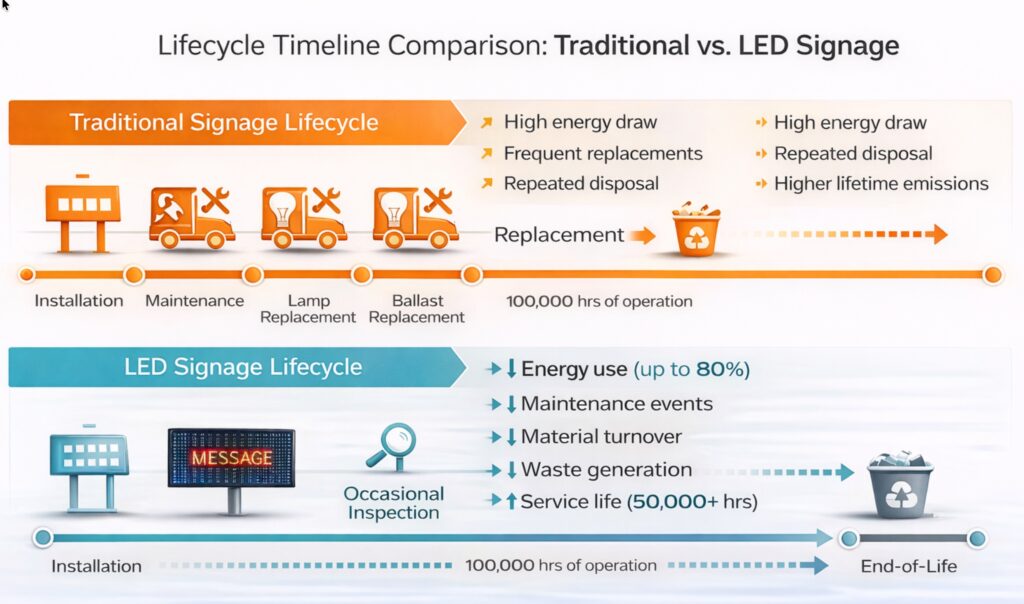
Product lifespan directly impacts environmental footprint. High-quality LED diodes are rated for operating lifetimes of up to 100,000 hours under proper thermal conditions, significantly extending replacement cycles compared to traditional signage technologies.³ Longer service life reduces raw material extraction, manufacturing demand, and transportation impacts associated with frequent replacement.
Maintenance Reduction and Environmental Impact
Maintenance activities contribute to environmental impact through service vehicle emissions, replacement parts, and waste generation. Industry maintenance data indicates that systems engineered without moving parts require take asubstantially fewer service visits over their operational life.⁴ Reduced maintenance frequency lowers fuel consumption, material waste, and operational disruption.
Lifecycle Assessment and Total Environmental Cost
Lifecycle assessment (LCA) evaluates environmental impact from manufacturing through end-of-life disposal. International standards consistently demonstrate that longer-lasting electronic systems exhibit lower total environmental cost per year of service, even when initial material usage is higher.⁵ For outdoor LED signs, extended lifespan and reduced maintenance significantly improve lifecycle sustainability metrics.
Electronic Waste Reduction
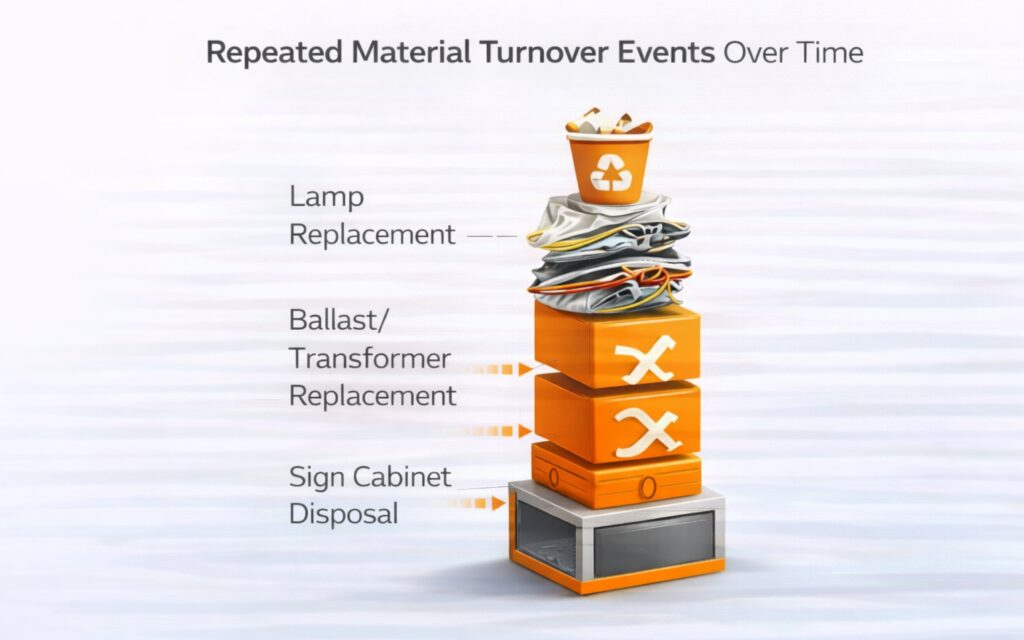
Electronic waste is a growing global concern. Extending the service life of LED signs reduces the frequency of disposal and replacement, lowering the volume of electronic waste entering recycling and landfill streams.⁶ Durable electronic systems play a measurable role in reducing global e-waste accumulation.
Carbon Emissions and Indirect Environmental Benefits
Reduced electricity consumption provides indirect sustainability benefits by lowering carbon emissions associated with power generation. The U.S. Department of Energy estimates that widespread adoption of LED lighting technologies can reduce millions of metric tons of carbon dioxide emissions annually through energy savings alone.¹ These reductions compound over the long service life typical of outdoor LED signage.
Engineering Implications for Sustainable LED Sign Design
Sustainable LED signage is achieved through engineering decisions that prioritize efficiency, durability, and reliability. By reducing energy consumption, extending service life, and minimizing maintenance requirements, outdoor LED signs can support environmental objectives while maintaining high performance and visibility.
Limitations and Statement on Evidence
This white paper is based on publicly available technical standards, independent research, and established engineering principles. Actual environmental performance may vary depending on system configuration, operating conditions, and installation environment. This document is intended to support technical evaluation and comparative analysis and does not constitute a product-specific performance guarantee.
References
- 1. U.S. Department of Energy (DOE). Energy Savings Forecast of Solid-State Lighting.
- IEEE Power Electronics Society. Efficiency Improvements in LED Driver Architectures.
- Illuminating Engineering Society (IES). TM-21: Projecting Long-Term Lumen Maintenance of LED Light Sources.
- International Sign Association (ISA). Maintenance and Service Trends in Digital Signage.
- ISO 14040 / ISO 14044. Environmental Management — Life Cycle Assessment Principles.
- United Nations Environment Programme (UNEP). Global E-Waste Monitor.
Fast Facts
- 30–50% Energy Reduction: Independent studies by the U.S. Department of Energy indicate that LED-based signage consumes significantly less power than legacy display technologies.
- 100,000-Hour Operational Life: High-quality LED diodes are engineered for extended replacement cycles, reducing the raw material extraction and manufacturing demand associated with frequent sign replacement
- Zero Moving Parts: Systems engineered without fans or moving components require substantially fewer service visits, directly lowering fuel consumption and maintenance-related emissions.
Frequently Asked Questions
LED digital signs are significantly more efficient, typically using up to 80% less electricity than legacy neon, incandescent, or fluorescent signage. This substantial drop in power consumption directly reduces operational costs while maintaining high visibility and brightness.
Yes. Most professional LED signs are built with recyclable materials, including aluminum frames, copper wiring, and circuit boards. Approximately 95% of an LED display can be reclaimed through specialized electronic waste (e-waste) recycling programs rather than ending up in a landfill.
LED signs are a much cleaner alternative because they contain no hazardous gases, such as mercury or argon, which are commonly found in neon and fluorescent tubes. This makes LEDs safer to handle, easier to dispose of, and better for the local environment.
LED displays actually offer better control over light spill than traditional signs. Modern units feature precise brightness control and automatic dimming sensors that adjust the output based on ambient light. This ensures the sign is visible during the day while reducing unnecessary light pollution at night.
They can. Because LED signage contributes to energy efficiency and material sustainability—two key metrics for most environmental standards—they can help a facility earn points toward LEED or other green certifications.