
White Paper
Reducing Failure Points in LED Signs Through 100% Solid-State Design
Executive Summary
Solid-state design in LED sign cabinets generally refers to an architecture that minimizes or eliminates moving parts (for example, replacing fan-forced airflow with passive thermal pathways and sealed enclosures). From a reliability perspective, this matters because moving parts introduce wear-out mechanisms, and elevated internal temperatures accelerate aging of key electronic components. Across electronics industries, the Arrhenius-based “10°C rule” is commonly used to approximate that many temperature-driven failure mechanisms accelerate significantly with heat; for electrolytic capacitors specifically, multiple technical sources describe lifetime reductions on the order of half for each 10°C increase in operating temperature. [1–4]
This paper summarizes the most defensible, non-competitor evidence supporting why fanless, solid-state cabinet design can reduce unplanned downtime and lower the frequency of service interventions. It focuses on measurable engineering drivers (failure modes and thermal acceleration), and avoids unsupported percentage claims about maintenance savings unless a project provides field data.
Scope and definitions
What “solid-state” means in this paper
- No moving parts required for normal cooling or operation (for example, no cabinet fans or motor-driven airflow).
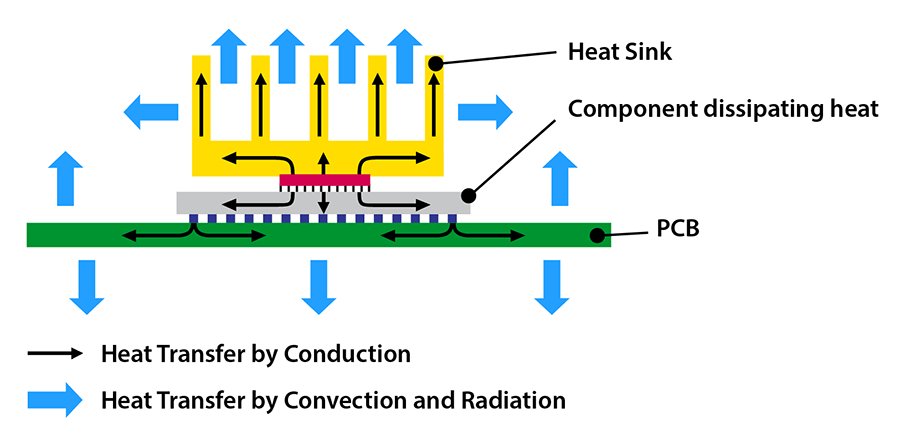
- Thermal management is achieved through passive methods: conduction paths, heat spreaders/ sinks, cabinet-as-radiator designs, and controlled airflow by enclosure design.
- Cabinet design favors environmental protection (dust, moisture, pollutants) to reduce contamination-driven faults.
Note: “Solid-state” is used here as an architectural concept for cabinet reliability, not as a claim that every component is immutable. Power conversion, LED drive electronics, and connectors still exist and must be engineered correctly.
Reliability fundamentals: why fewer parts usually means fewer failures
In reliability engineering, each additional component can add failure modes and increase the probability that at least one component fails over time. While high-quality design and redundancy can mitigate this, the simplest way to reduce failure exposure is often to reduce the number of wear-out components and the number of interconnects that can loosen, corrode, or degrade.
Mechanical wear-out is a known reliability category
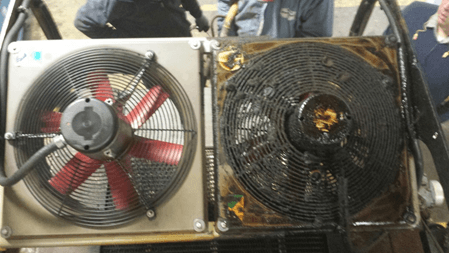
Cooling fans are a common example of a wear-out component: bearings, motor electronics, and housings can degrade under real-world environmental stressors such as dust, humidity, and heat. A PHM Society conference paper reviewing fan failure modes describes internal failures including motor and bearing issues, and external failures including casing degradation. [5]
Thermal Management Without Mechanical Cooling
In LED signs, thermal stress is not a theoretical concern; power conversion and LED drive circuits generate significant heat. If heat is not reliably moved to the outside, internal temperatures rise, accelerating the aging of temperature-sensitive components.
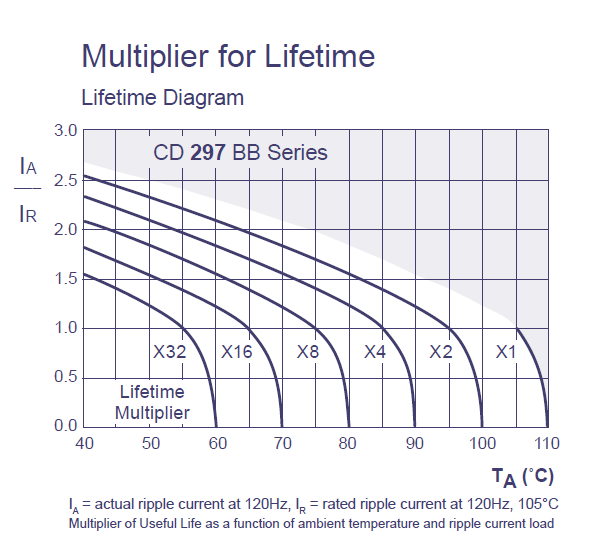
The 10°C Rule: A 10°C increase above rated temperature can reduce electronic component lifespan by 50%.
Capacitor Sensitivity: Electrolytic capacitors are responsible for an estimated 30% to 60% of driver circuitry failures in outdoor power electronics.
System lifetime vs. LED diode lifetime
A frequent misunderstanding in LED products is equating LED lumen maintenance (for example, L70 projections) with complete system lifetime. The Illuminating Engineering Society (IES) explicitly cautions against using LED lumen maintenance life as the sole metric for determining solid-state product lifetime. [6]
Similarly, U.S. Department of Energy guidance notes that using LED device lumen maintenance as a proxy for total system lifetime can be misleading, because lumen maintenance is only one component of overall reliability and other components often determine system life. [7]
How solid-state cabinet design can reduce service interventions
Mechanism 1: removing fan-driven failure modes
If a cabinet design does not rely on fans for cooling, it removes fan-specific failure modes (bearing wear, motor/electronics failure, casing degradation) from the system’s fault tree. This does not make the product “failure-proof,” but it reduces the number of pathways that can lead to overheating and downstream component stress. [5]
Mechanism 2: stabilizing temperature to slow aging
Fanless thermal strategies emphasize consistent heat conduction and radiation through designed pathways. Because temperature is a key accelerator for aging in components such as electrolytic capacitors, keeping internal temperatures lower and avoiding thermal spikes can materially extend component life. [1–4]
Mechanism 3: reducing contamination-driven faults
In many outdoor electronics deployments, environmental contamination (dust, moisture, pollutants) contributes to corrosion, blocked airflow, and intermittent connections. Fanless and sealed or semi-sealed cabinet designs canreduce the amount of external contaminants pulled into the cabinet compared with forced-air designs that continuously exchange air with the environment. The magnitude of benefit depends on gasket design, pressure equalization strategies, and serviceability considerations.
The financial benefit of solid-state architecture is realized through the reduction of unplanned service interventions, or “truck rolls”.Cost Model: Expected Annual Service Cost = (Service events per year) $\times$ (Cost per service event). Industry Benchmarks: In 2026, the average cost of a “truck roll” ranges from $200 to $500, with specialized labor and equipment for large-format signs often pushing total costs toward $1,100 per event.Operational Uptime: By eliminating fan-specific failure modes (bearing wear, motor failure), owners can significantly reduce these high-cost interventions. Design and procurement checklist (what to ask, regardless of vendor)
- How is heat moved from power supplies and drivers to the outside environment (conduction paths, heat spreaders, cabinet-as-radiator features)?
- What is the cooling dependency: does the cabinet rely on fans or forced airflow for normal operation?
- What is the environmental protection approach (sealing strategy, corrosion mitigation, ingress protection targets)?
- How are temperature-sensitive components specified (capacitor ratings, thermal derating approach, junction temperature margins)?
- What is the service philosophy (front-service vs. rear-service, modular replacement strategy, time-to-repair assumptions)?
- What evidence is provided for reliability claims (third-party tests, published reliability models, standards-based reporting)?
Environmental factors interact to accelerate system degradation. Combined exposure to heat, moisture, and contaminants produces substantially higher failure rates than isolated stress conditions. [11]
Design Strategies for Environmental Reliability is improved through sealed, fanless architectures, corrosionresistant materials, and controlled thermal pathways. Designs that minimize air exchange while maintaining effective heat dissipation demonstrate longer service life and reduced maintenance frequency. [12]
Engineering Implications for Outdoor LED Sign Systems: environmental exposure must be treated as a primary design constraint. LED signs engineered to withstand temperature extremes, moisture, ultraviolet exposure, and airborne contaminants achieve higher reliability, lower maintenance costs, and more predictable long-term performance.
A Practical Cost Model for Service-Event Impact
Limitations and Statement on Evidence
This paper intentionally avoids hard percentage claims (for example, “X% fewer truck rolls”) unless they are supported by verifiable, non-competitor published data or a project’s own service history. The strongest broadly applicable evidence for solid-state cabinet design focuses on (1) eliminating mechanical wear-out mechanisms such as fans and (2) reducing thermal stress, which is well established as a life accelerator for key electronic components. [1–7]
References
- Gupta, A., et al. (2018). A Review of Degradation Behavior and Modeling of Capacitors (NREL/TP-5D00-71386). National Renewable Energy Laboratory (NREL). https://docs.nrel.gov/docs/fy19osti/71386.pdf
- Heliotronics (cited in NREL) (2005 (cited) / 2006 (report)). Statement on 10°C temperature increase halving electrolytic capacitor lifetime (as cited). NREL Report: Review of PV Inverter Technology Cost and Performance. https://docs.nrel.gov/docs/fy06osti/38771.pdf
- Electronics Cooling (2017). Does a 10°C Increase in Temperature Really Reduce the Life of Electronics by Half?. Electronics-Cooling.com. https://www.electronics-cooling.com/2017/08/10c-increase-temperature-really-reduce-life-electronics-half/
- United Chemi-Con (2022). Lifetime of Aluminum Electrolytic Capacitors (FAQ). Chemi-Con (manufacturer technical FAQ). https://www.chemi-con.co.jp/en/faq/detail.php?id=alLifetime
- Banimilhim, A., et al. (2023). Cooling Fan Failure Modes to Enable Development of Automotive ECU Fan Health Monitoring System. PHM Society Conference Proceedings. https://papers.phmsociety.org/index.php/phmconf/article/download/3521/phmc_23_3521
- Illuminating Engineering Society (IES) (2018). PS-10-18: IES Position on LED Product Lifetime Prediction. IES Position Statement. https://ies. org/advocacy/ps-10-18/
- U.S. Department of Energy (SSL Program) (2011). LED Luminaire Lifetime: Recommendations for Testing and Reporting. U.S. DOE Solid-State Lighting Program. https://www1.eere.energy.gov/buildings/publications/pdfs/ssl/led_luminaire-lifetime-guide.pdf
- ENERGY STAR (Accessed 2026-01). Signage Displays (Program Overview). ENERGY STAR. https://www.energystar.gov/products/signage_ displays
Fast Facts
- The 10°C Rule: In power electronics, a mere 10°C increase in internal temperature can reduce the operational lifespan of key components, such as electrolytic capacitors, by as much as 50%.
- Fanless Reliability: By eliminating mechanical cooling fans, you remove common “wear-out” failure modes like bearing failure and motor degradation, significantly reducing the frequency of unplanned service events.
- Reduced “Truck Rolls”: Solid-state engineering minimizes service interventions; in the current market, a single specialized service visit (or “truck roll”) for a large-format sign can cost an owner upwards of $1,100 per event.
Frequently Asked Questions
In outdoor signage, a 100% solid-state design refers to an architecture that has no moving parts. Instead of relying on mechanical fans for cooling, these signs use passive thermal pathways and heat sinks to dissipate warmth, leading to higher reliability and less internal dust contamination.
Mechanical fans are highly susceptible to environmental stressors like moisture, fine dust, and heat, which cause bearings to seize and motors to burn out over time. A fan failure often leads to rapid internal overheating, which can trigger a cascade of secondary component failures.
Actually, a well-engineered solid-state sign can run cooler because it uses the entire cabinet as a radiator. By emphasizing consistent heat conduction, these designs avoid the "thermal spikes" that occur when a mechanical fan fails, effectively stabilizing the temperature to slow the aging of sensitive electronics.
Heat is a primary "life accelerator" for electronics. For example, electrolytic capacitors—which account for 30% to 60% of driver circuitry failures—are extremely sensitive to temperature. Keeping internal temperatures lower through solid-state design is the most effective way to extend total system life.
LEDs are actually more efficient in cold weather because the reduced heat stress extends the life of the semiconductors. In extreme heat, high-quality signs utilize internal thermal management systems to dissipate heat and prevent component degradation.