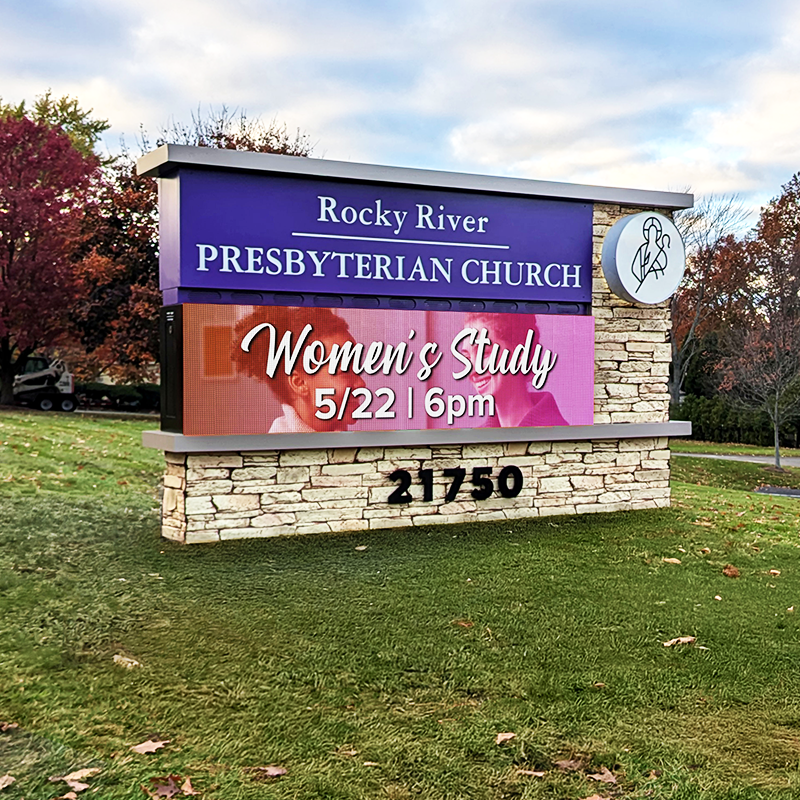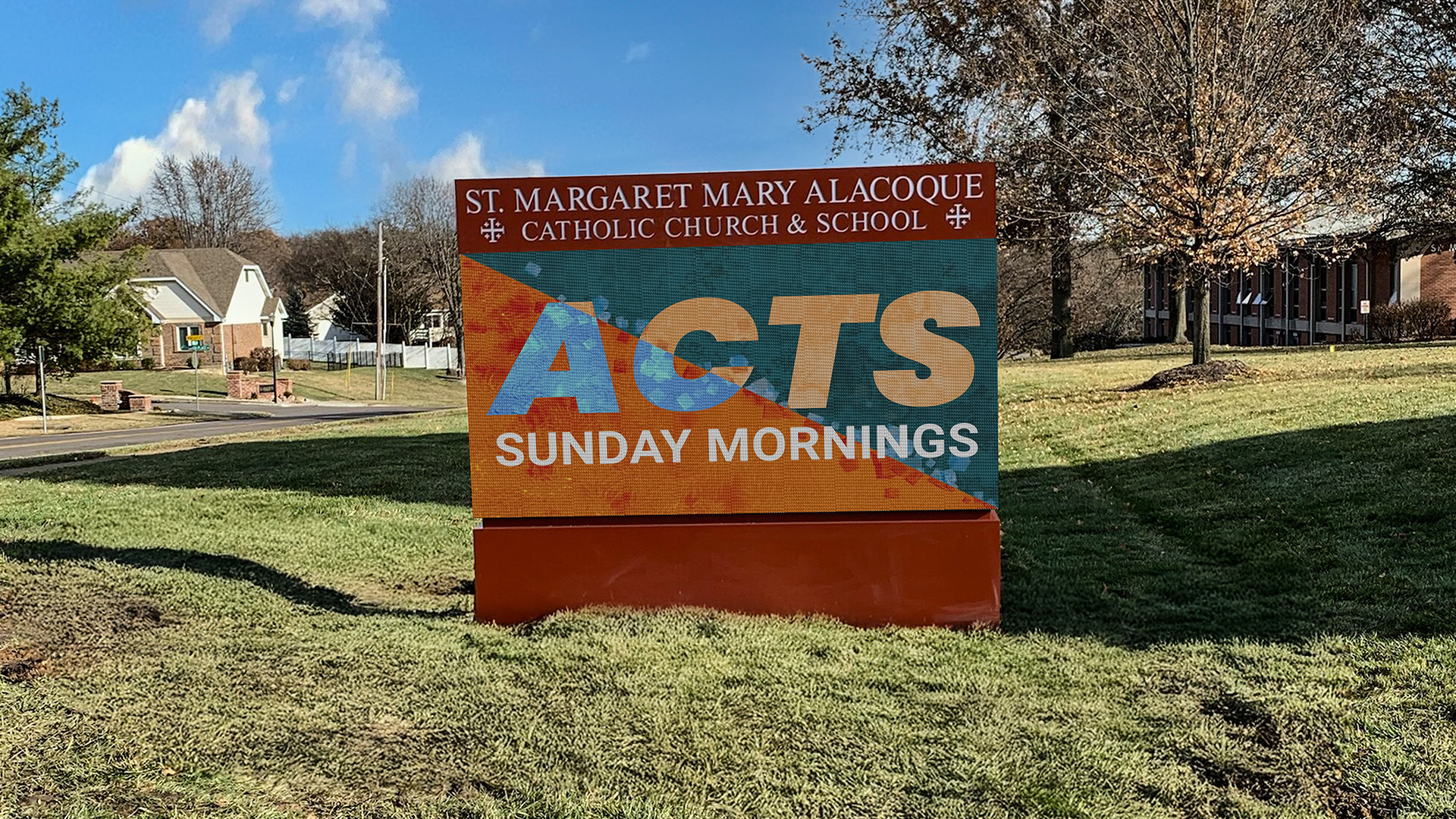
What church sign messages actually bring new visitors in? The strongest messages are usually the simplest ones. Clear service times, event invitations, family-focused announcements, and warm welcome language tend to work better than vague slogans or church-insider wording. That matters because many first-time visitors check a church online before ever attending, and a sign often helps create that first local impression. Pushpay reports that 80% of people visit a church’s website before attending in person, and 75% of church visitors make a credibility judgment based on the website. In other words, the sign and the website work together. A strong church LED sign can help spark interest, reduce uncertainty, and encourage someone to take the next step.
Church outreach starts with clarity
A church sign has a hard job. It has to communicate in just a few seconds, often to people who are driving by, distracted, or not actively looking for a church at that moment. That is why outreach messages usually work best when they are direct, friendly, and specific. A sign that says “Sunday Worship 10 AM” or “Easter Service This Sunday” gives a clear next step. A sign that says something abstract may feel meaningful to current members, but it does not always tell a newcomer why they should come or what to expect.
That kind of clarity matters even more today because invitation still works, but not as easily as it once did. Barna found that twenty years ago, 65% of churchless Americans were open to being invited to church by a friend. Today, that number has dropped to 47%. That does not mean outreach is ineffective. It means churches have less room for vague messaging and more need for welcoming, low-pressure communication.
Welcome messages still matter
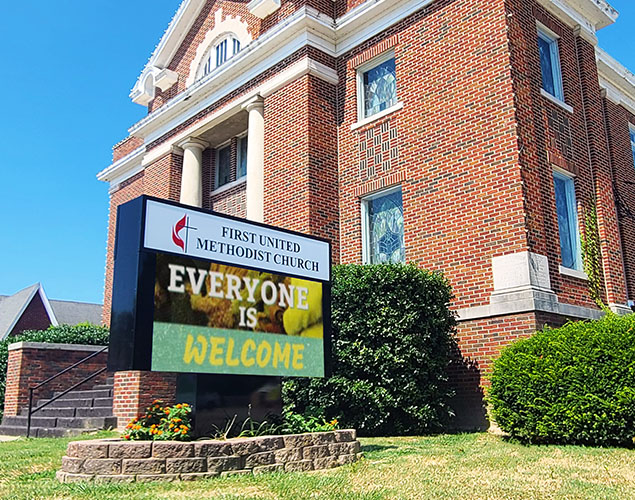
People who have never visited your church are often trying to answer a few simple questions before they ever consider walking in. Is this place welcoming? Will I know what to do when I get there? Can I bring my kids? Will I feel out of place?
That is why welcome-style messages are still some of the most effective church sign messages. Phrases like “You’re Welcome Here,” “Join Us Sunday at 10,” or “Casual Dress, Kids Ministry Available” lower anxiety. They feel approachable. They make the experience seem easier and more human.
This fits with what Pushpay found about visitor behavior. Since most people look at a church website before attending, the sign does not need to do everything by itself. It needs to create enough interest and comfort to make someone look you up or remember your church name later. A good welcome message does exactly that.
Specific event messages often outperform generic slogans
A lot of church signs fall into the habit of posting broad inspirational phrases. Those messages are not always bad, but they are often forgettable. For someone who is not already part of the church, they may not feel relevant enough to prompt action.
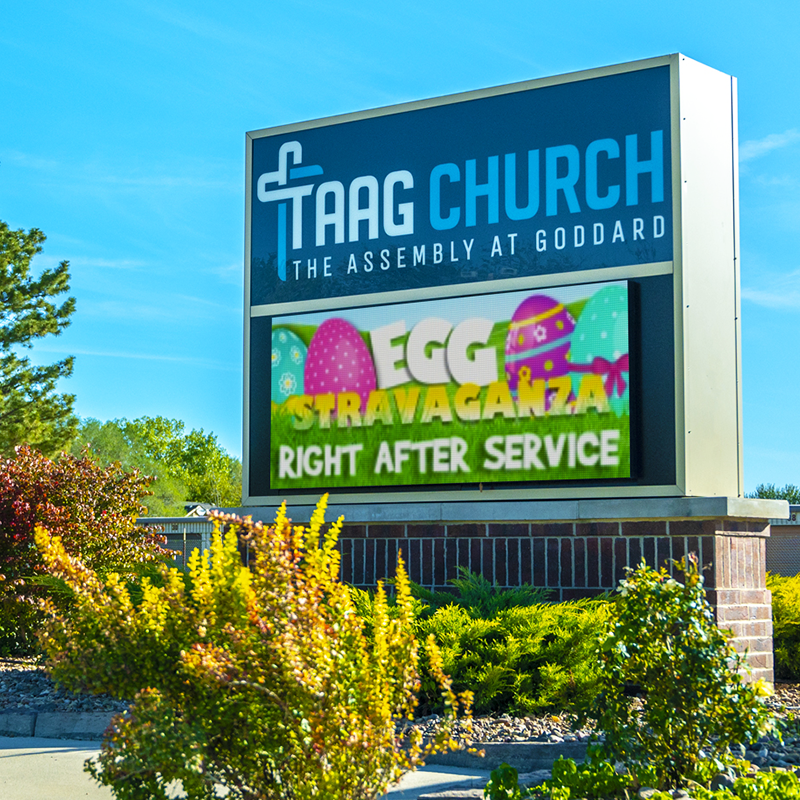
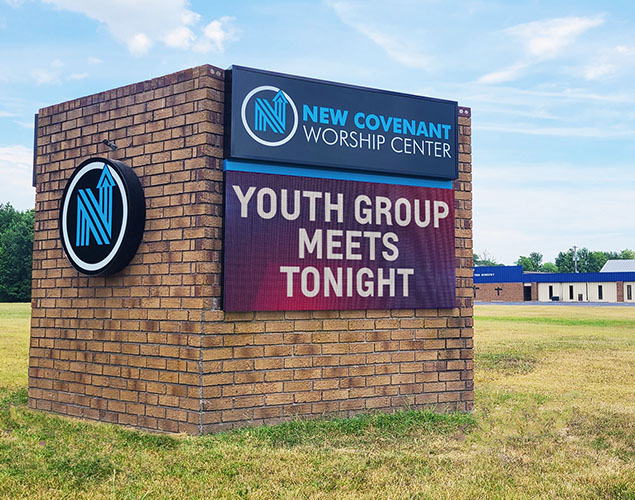
Specific event-based messages usually do better because they answer the question, “Why should I pay attention right now?” A message about a holiday service, youth event, free community dinner, vacation Bible school, grief support group, or outreach ministry gives people something concrete. It turns the sign from a decoration into an invitation.
That approach also lines up with Barna’s research on younger adults. Among Millennials who do not attend church, 39% say they can find God elsewhere, 35% say church is not personally relevant, and 31% say church is boring. Those numbers suggest churches should not assume that a generic spiritual phrase will feel compelling. Relevance matters. A clear event or practical point of connection is often stronger.
Family-focused messages create a natural entry point
For many churches, one of the easiest ways to connect with new visitors is through family messaging. Parents often want to know whether a church has children’s programming, youth activities, or family-friendly events before they decide to attend. Even if the sign only has room for a few words, a message like “Kids Ministry Every Sunday,” “Youth Night Wednesday,” or “Family Movie Night Friday” signals that the church is thinking about real life, not just Sunday morning tradition.
This also works because it gives people a practical reason to visit. Instead of asking them to make a big spiritual leap all at once, it gives them a simple first step. Churches often grow through familiarity. A family event, community activity, or kid-focused program can be the first connection that later leads to regular attendance.
Community outreach messages can bring in people who would not respond to a service invitation
Not everyone will respond first to “Join us Sunday.” Some people respond better to signs that show the church is active in the community. Food drives, blood drives, back-to-school events, support groups, holiday outreach, and service projects all make the church feel visible and engaged.
These messages also reflect something important about spiritual openness today. Barna found that 44% of U.S. adults say they are more open to God today than they were before the pandemic. That means there is still meaningful openness, even if people are cautious about organized religion or unsure about stepping into a church building. Community-centered sign messages can meet people where they are. They show that the church is present, active, and relevant to everyday needs
Repetition matters more than many churches realize
A church sign message may be strong, but people still need to see it at the right time. Regular attendance patterns are softer than they used to be, which means churches cannot assume people saw last week’s message or already know what is happening.
Barna research has shown that church participation and attendance habits have become less consistent over time, even among people who still identify as Christian. That makes repeated, practical communication more important. A church sign should not be treated as a one-time announcement board. It should be treated as an ongoing communication tool that reinforces service times, seasonal events, community outreach, and key ministries again and again.
What kinds of church sign messages work best?
In practice, the strongest church LED sign messages usually fall into a few categories.
- Welcome messages work because they lower anxiety and make the church feel approachable.
- Service-time messages work because they tell people exactly when to come.
- Event messages work because they give people a specific reason to visit now, not someday.
- Family and youth messages work because they connect to a common need and often create a first point of contact.
- Community outreach messages work because they show the church is active, visible, and involved in real-life concerns.
The common thread is not cleverness. It is clarity. A church sign does not need to be cute or complicated. It needs to help someone understand what your church offers, why it matters, and what they can do next.
The message should fit the moment
A church sign is not just about promotion. It is about timing. The best message in December may not be the best message in July. Easter, Christmas, back-to-school season, VBS, fall ministry launch, and community outreach events all create different opportunities.
That is where LED signs have an advantage over static signs. Messages can be updated quickly, scheduled in advance, and adjusted as the calendar changes. A church can keep the sign fresh without the repeated cost and delay of replacing printed materials. That flexibility makes it easier to stay relevant, especially during busy outreach seasons.
Why church LED signs work best when the message feels human
At the end of the day, most people are not looking for a polished slogan. They are looking for a reason to believe they will be welcome, understood, and able to find what they need. A church sign that feels warm, clear, and grounded in real life can do a lot more than fill space at the road.
That is why the best church sign messages often sound simple. They are not trying to impress. They are trying to connect.
When the message is clear, relevant, and easy to act on, the sign becomes more than a display. It becomes part of the church’s outreach.
Frequently Asked Questions About LED Signs for Churches
How much does a digital church sign cost?
The investment for an outdoor electronic message center varies widely based on size, resolution (pixel pitch), and installation requirements. Typically, commercial-grade digital church signs range from $15,000 to $40,000. Data indicates that facilities allocating approximately 10% of their annual operating budget to modernizing their physical signage experience the fastest overall return on investment through community engagement.
Do digital church signs increase attendance?
Yes. Upgrading to a dynamic digital display is one of the most cost-effective outreach strategies available. Studies show that organizations installing a new LED electronic message center experience a 15% to 150% increase in overall awareness and foot traffic. Because the cost per thousand impressions (CPM) for a digital sign is less than $0.15—significantly lower than direct mail or local broadcast media—it provides a highly efficient way to reach the local community.
What are the zoning laws for electronic church signs?
Most municipalities have specific ordinances governing the operation of digital signage to prevent distractions. These regulations typically dictate maximum brightness levels (commonly capped at 0.3 foot-candles above ambient light at night) and strict “hold times,” which is the minimum duration a static message must remain on the screen before transitioning. The standard hold time required by many local zoning boards is between 8 and 10 seconds.
How long do outdoor LED church signs last? High-quality, commercial-grade LED signs utilizing solid-state engineering are highly durable. The standard operational lifespan of the LED modules is approximately 100,000 hours. This translates to roughly 10 to 11 years of continuous, 24/7 operation before the display experiences any noticeable degradation in maximum brightness.
Help More People Notice Your Church
If your church wants a better way to share service times, promote events, and stay visible in the community, NEXT LED Signs can help. Our digital displays give churches and houses of worship a flexible way to communicate with members, visitors, and the people driving by every day.
Call 888-359-9412 or visit Contact Us to talk about your project.