LED signs can require a larger upfront investment than traditional signage, but they also give businesses more flexibility, stronger visibility, lower long-term operating costs, and more control over messaging. When a sign can advertise daily, promote multiple offers, support seasonal campaigns, and reduce replacement or printing costs, the return on investment can build over time.
Business owners often look at LED signs through one question first:
How much does it cost?
That question matters. However, it does not tell the full story.
A better question is:
What value can this sign create over its useful life?
An outdoor LED sign is not just a display. It is a marketing tool, communication system, and long-term business asset. Unlike static signs that stay the same until they are physically replaced, digital LED signs allow businesses to change messages, promote events, highlight offers, share updates, and stay visible throughout the day.
That flexibility is one reason LED signs can create strong long-term ROI for businesses, schools, churches, medical practices, restaurants, auto dealerships, municipalities, and entertainment venues.
LED Signs Reduce Ongoing Advertising and Printing Costs
Traditional signage can be effective, but many traditional advertising methods come with repeated costs.
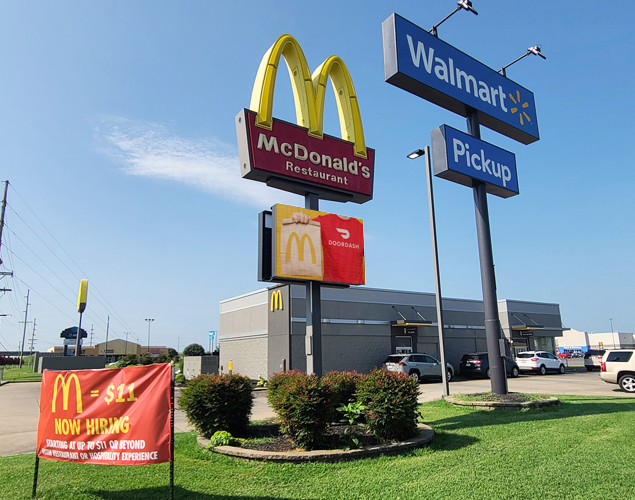
Printed banners need to be designed, produced, delivered, installed, removed, and replaced. Temporary signs wear out. Promotional materials become outdated. Static messaging cannot respond quickly when business priorities change.
LED signs change that pattern.
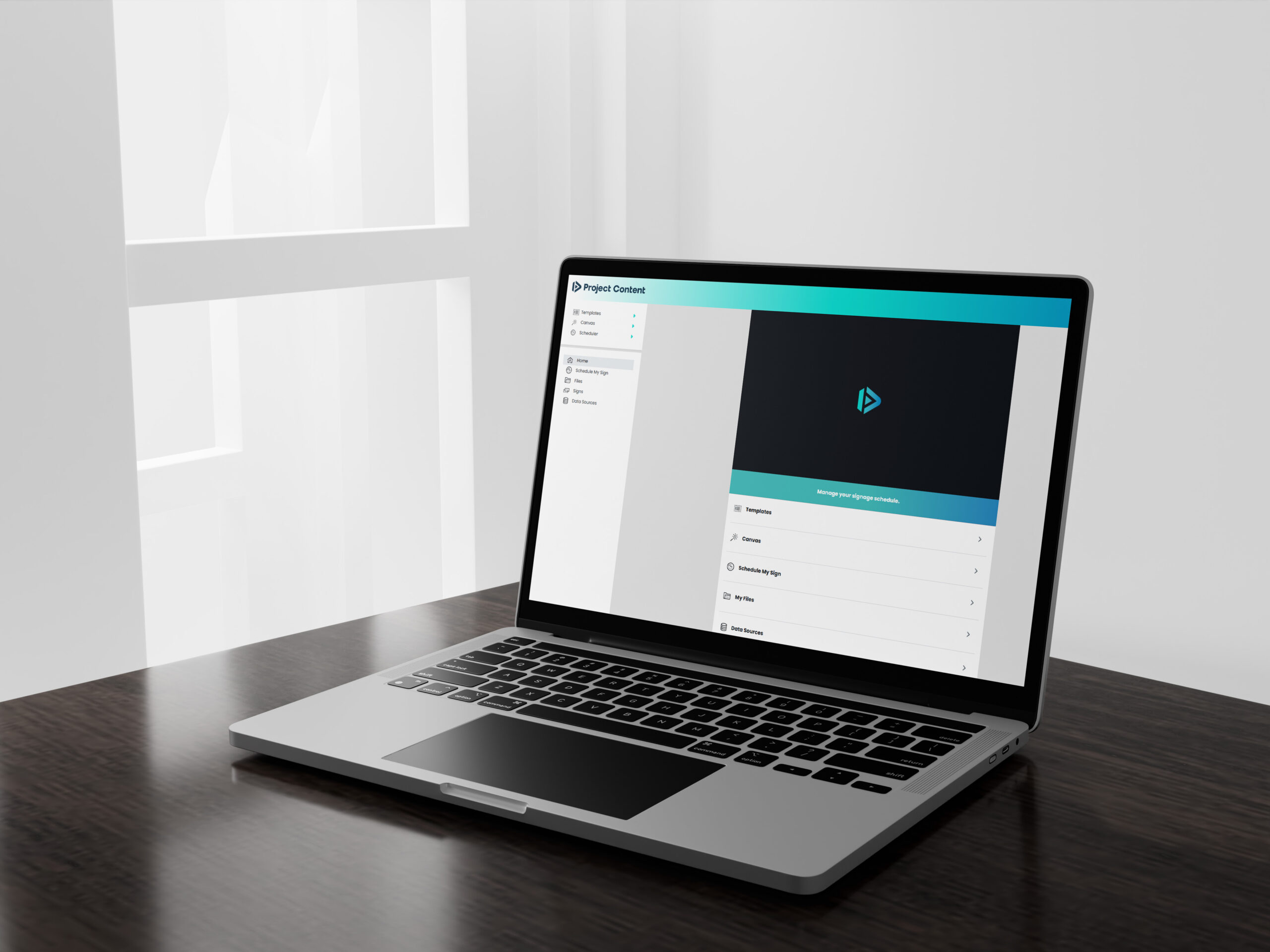
With a programmable LED sign, businesses can update messages digitally instead of ordering new printed materials every time they want to promote a sale, event, service, hiring need, or seasonal campaign.
That matters because the sign can support many messages from one installation.
- A retail business can promote weekend specials.
- A school can share event reminders.
- A church can announce service times and community programs.
- A medical practice can display service updates.
- An auto dealership can promote inventory, financing messages, or service department offers.
- A restaurant can highlight daily specials, limited-time items, or drive-through messages.
Instead of paying for a new sign every time the message changes, businesses can keep updating the same LED display.
Over time, that flexibility can reduce the cost of repeated printing and make the sign more useful across departments, seasons, and campaigns.
Energy Efficiency Supports Long-Term Operating Value
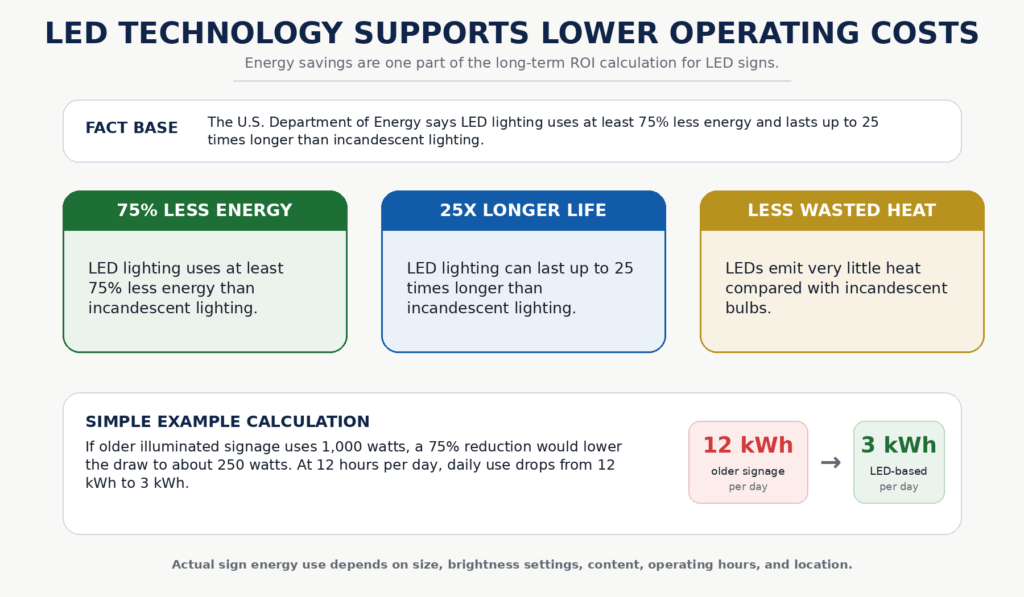
LED technology is known for energy efficiency compared with older lighting types. The U.S. Department of Energy notes that LEDs emit very little heat compared with incandescent bulbs, which release most of their energy as heat. The DOE also notes that quality LED lighting products typically last much longer than other lighting types.
For businesses, this matters because signs often operate for long hours. Outdoor signs may run every day. Some displays may operate from early morning into the evening. In high-visibility locations, businesses depend on consistent brightness and reliability.
Energy efficiency does not mean the sign costs nothing to operate. However, LED technology helps reduce waste compared with older illuminated sign technologies. Lower energy use, longer component life, and fewer replacement needs can all contribute to long-term value.
That is part of the ROI equation.
A sign’s purchase price matters, but so do the costs of operating it, maintaining it, updating it, and keeping it visible over time.
LED technology is widely recognized for energy efficiency. The U.S. Department of Energy says LED lighting uses at least 75% less energy and lasts up to 25 times longer than incandescent lighting. Actual LED sign energy use depends on sign size, brightness settings, operating hours, content, and environment, but the same efficiency advantage is one reason LED signs can lower long-term operating costs compared with older illuminated signage technologies.
Visibility Is One of the Biggest ROI Factors
A sign cannot create value if people do not notice it.
That is why visibility is one of the most important reasons businesses invest in outdoor LED signs.
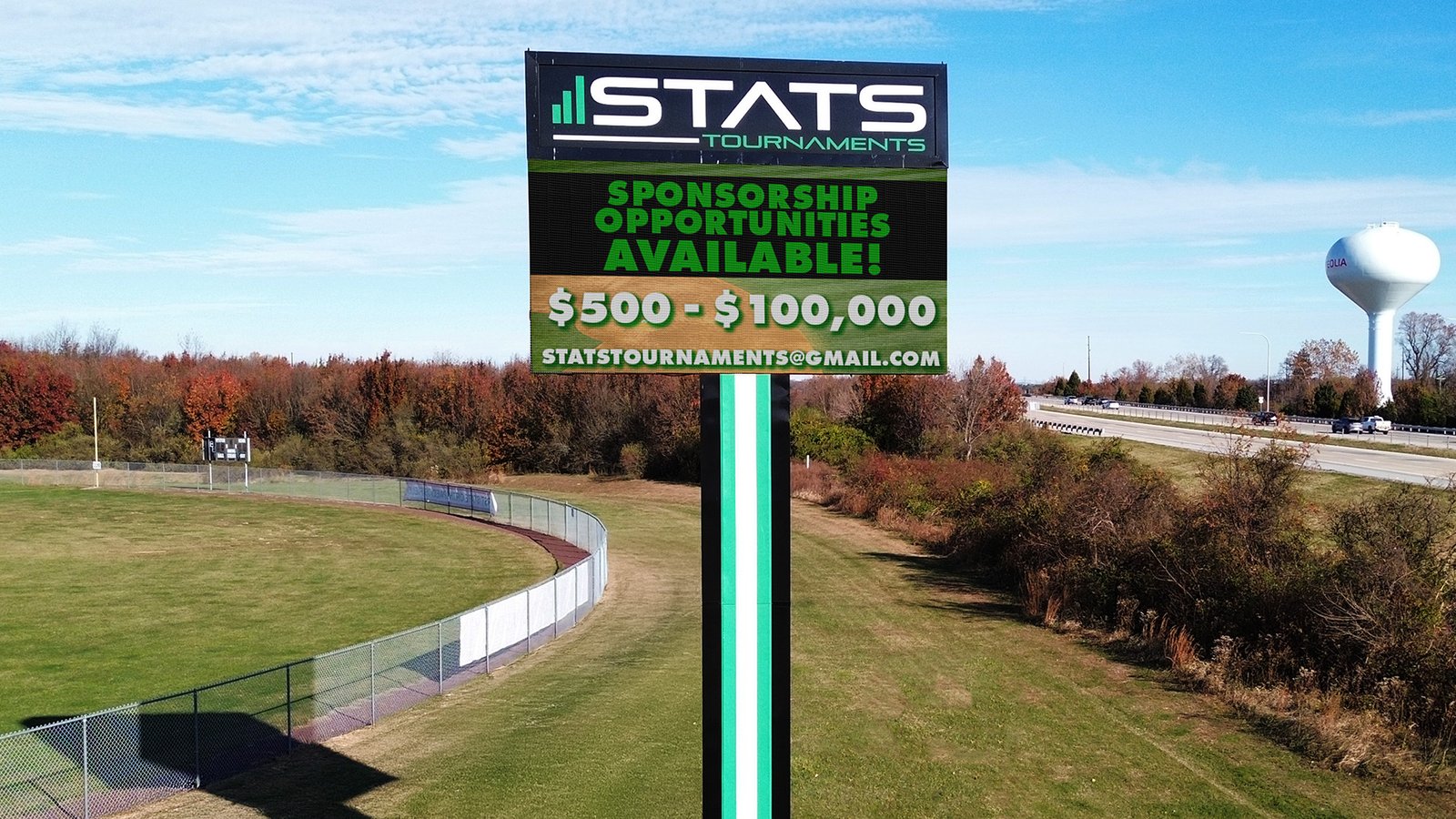
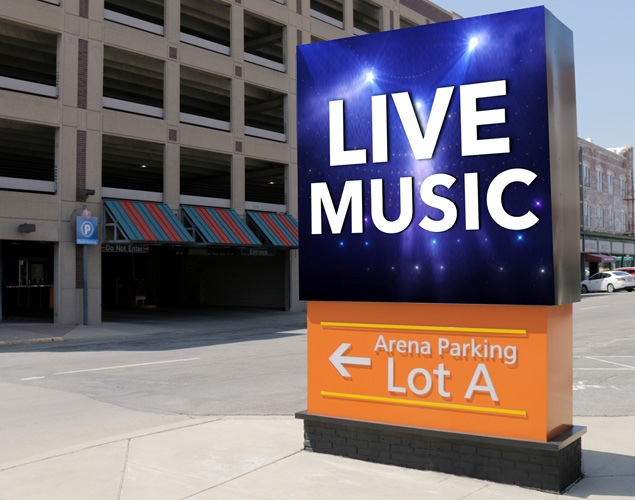
Digital LED signs can display bright, clear messages that help businesses stand out from surrounding traffic, buildings, and competing signage. They can also rotate multiple messages, allowing one sign to promote more than one offer, department, event, or call to action.
That visibility can influence real-world customer behavior.
Digital out-of-home advertising research from the Out of Home Advertising Association of America found that 73% of consumers view DOOH ads favorably, and 76% of recent DOOH ad viewers reported taking action because of a DOOH ad.
Those numbers matter because outdoor LED signs often work in the same basic environment: people are moving through the real world, seeing messages near roads, businesses, schools, restaurants, and public spaces.
A clear LED message can remind someone to stop, call, visit, attend, register, donate, schedule, or ask for more information.
That is why ROI should not be measured only by the cost of the sign. It should also consider the value of increased visibility and repeated exposure.
The Bottom Line on LED Sign ROI
LED signs can cost more upfront than some traditional signage options. However, they can also deliver more value over time.
They reduce the need for repeated printed promotions. They support changing messages. They increase visibility. They help businesses respond quickly to seasons, events, offers, and customer needs. They can also improve communication across schools, churches, municipalities, healthcare facilities, restaurants, retailers, and many other organizations.
The real value comes from using the sign consistently and strategically.
A digital LED sign is not just something a business buys once and forgets. It is a long-term communication tool. When the sign is visible, reliable, easy to update, and supported by strong content, it can become one of the most useful marketing assets on the property.
Frequently ask questions about LED signed ROI
How does the Small Business Administration measure LED sign revenue growth?
The U.S. Small Business Administration (SBA) and the Sign Research Foundation indicate that installing an electronic message center typically drives an immediate baseline sales increase between 15% and 150%. Because an LED sign functions as a storefront’s primary physical advertising tool, the SBA views it as a highly cost-effective marketing investment, with the cost-per-thousand-impressions drawing significantly lower capital than local print, television, or digital ad campaigns.
How much does it cost to power an outdoor LED sign each month?
On average, a standard medium-sized outdoor monument LED sign costs between $20 and $30 per month in electricity, assuming a typical commercial utility rate of 14 cents per kilowatt-hour. Exact energy consumption varies based on your sign size, operational hours, and your programming content. Displays running solid white backgrounds or maximum brightness during direct sunlight draw more wattage than those configured with darker background templates and automated night-dimming sensors.
How do municipalities and local zoning laws impact digital sign ROI?
Zoning ordinances can directly dictate your total return on investment by placing structural limits on sign size, height, placement, and content execution. Many local municipalities enforce strict regulations regarding message hold times, light emission limits measured in nits, and the use of motion graphics or animations. Securing professional engineering documentation and checking local setbacks before purchasing hardware ensures you do not face code violations or fines that artificially extend your payback period.
What hidden operational costs should be factored into an LED sign budget?
To calculate a realistic total cost of ownership and true long-term ROI, buyers must look beyond the initial hardware price tag to factor in structural installation, concrete foundation pouring, dedicated electrical line routing, software licensing fees, and permanent maintenance reserves. Opting for hardware featuring fanless thermal cooling loops reduces these downstream operational costs by eliminating air filters that require routine manual replacement and cleaning.

Talk With NEXT LED Signs
NEXT LED Signs helps businesses, schools, churches, municipalities, and organizations choose indoor and outdoor LED signs based on visibility, location, content goals, and long-term value.
Contact NEXT LED Signs to discuss the best LED sign options for your location, audience, and budget. You can also call 888-359-9558 to talk with our team about your project.