
LED White Papers
and Technical Guides.
Technical guidance on LED display engineering, performance, reliability, and long-term ownership.
Understand
Learn LED sign technology in plain language.
Compare
Evaluate products, features, and manufacturers.
Plan
Use practical guides and real projects to make confident decisions
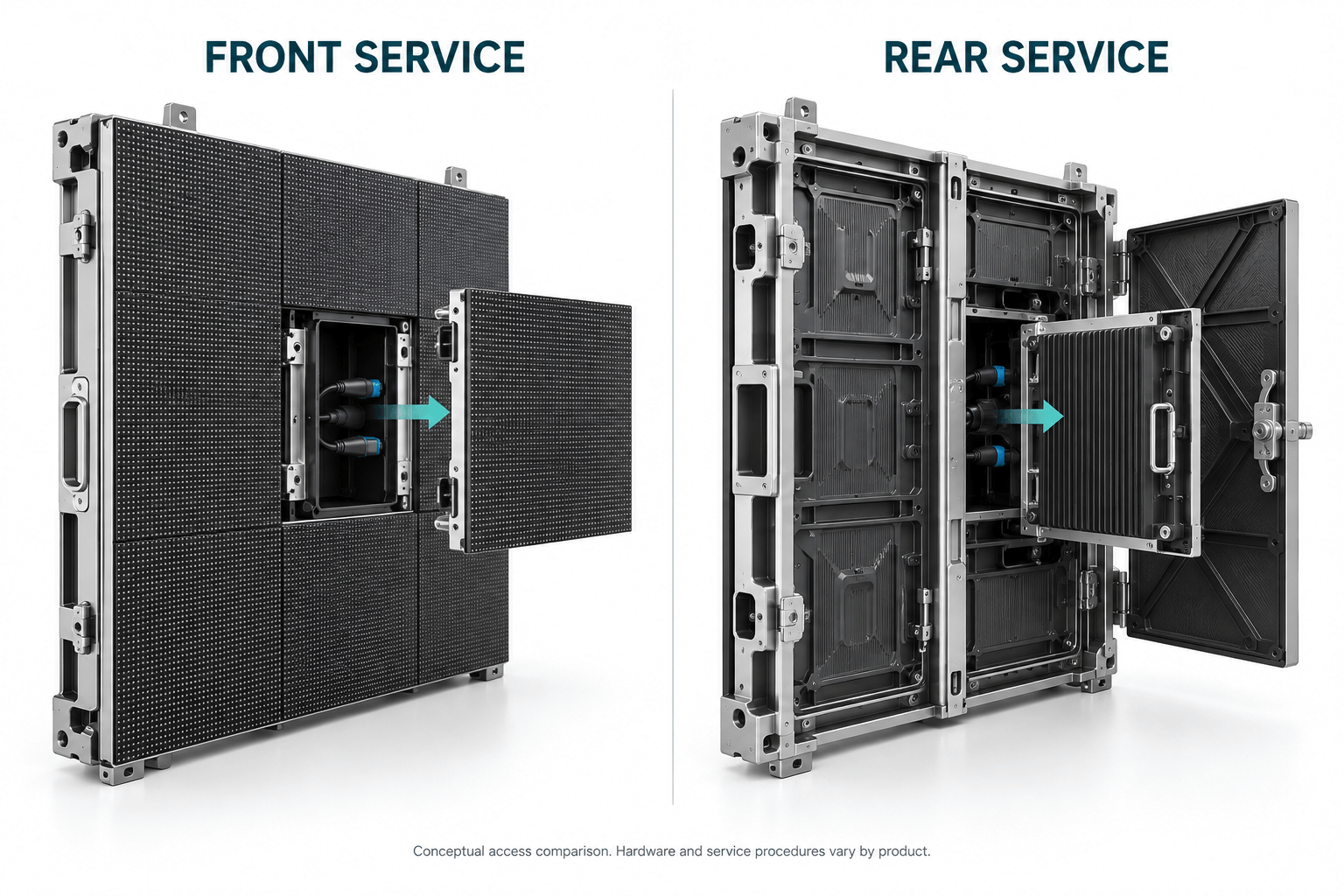
True Labor Cost Breakdown
Compare front-service and rear-service LED sign maintenance, including access requirements, remote diagnostics, spare-parts kits, and the labor costs of bucket-truck and crane visits.
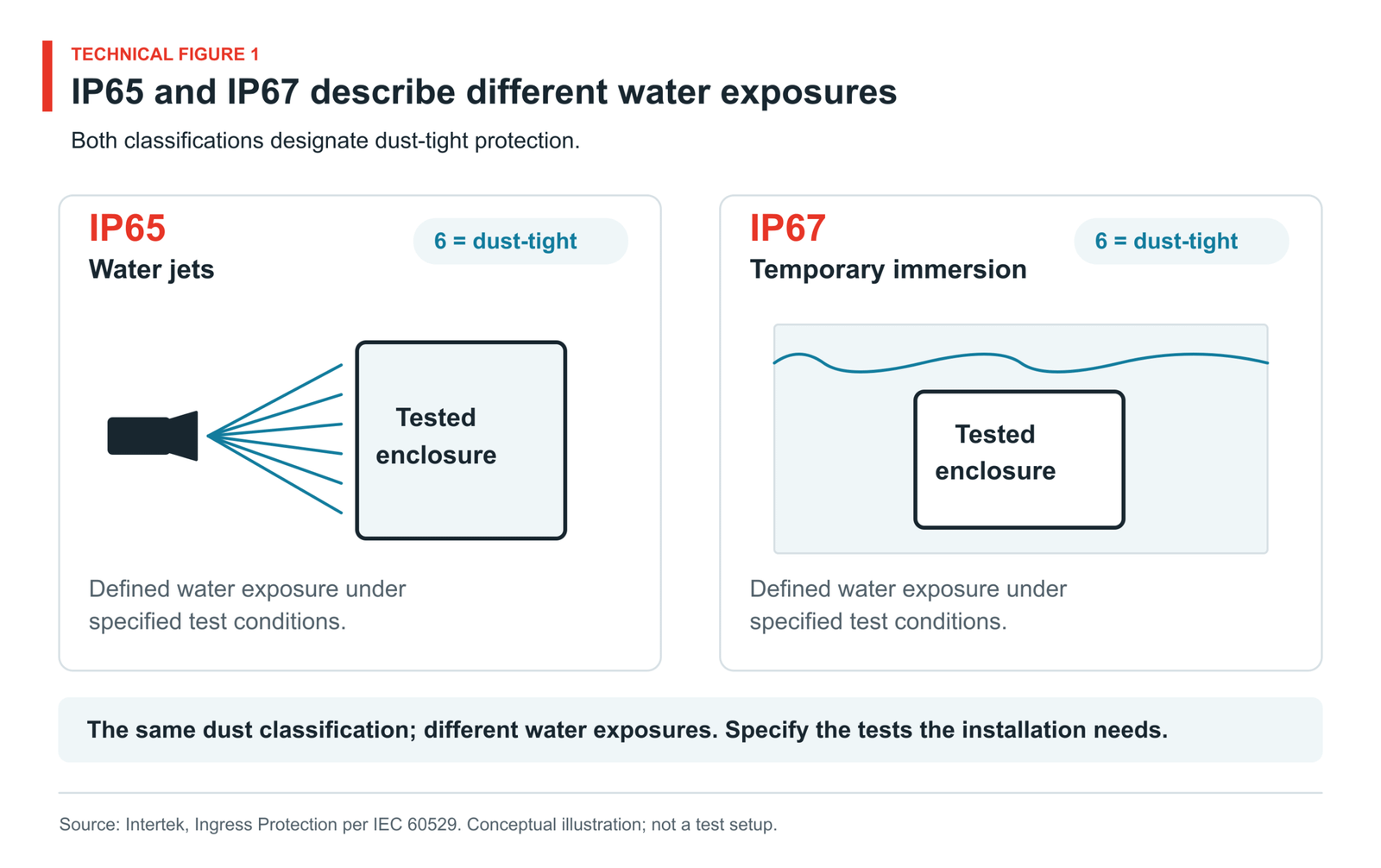
Ingress Protection Demystified
IP65 vs. IP67 for Harsh Climates
This paper explains module-level and cabinet-level sealing, the limits of IP ratings, and the additional evidence needed to evaluate humidity, corrosion, freezing conditions, dust, and field reliability.
Why Won’t My Computer Connect to My LED Sign?
Network Isolation and Port Configuration: Resolving Router and Firewall Communication Handshakes in Cloud-Managed Displays
This technical paper breaks down the network routing mechanics behind display connectivity drops, isolates the primary firewall and router configuration hurdles, and provides a structured engineering workflow to establish secure, reliable display communications
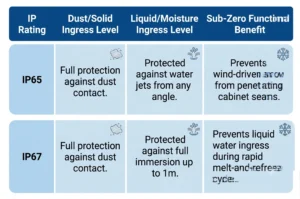
Cold-Weather Performance:
Keeping Digital Signs Running in Snow and Extreme Cold
This paper examines Thermal Dissipation in Sub-Zero Environments: How Weather-Sealed Outdoor Enclosures Leverage Internal Electrical Heat Currents
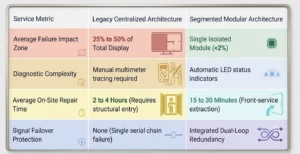
Why is half of my sign black?
Diagnosing LED tile outages
This paper examines Modular Serviceability Standards: Minimizing Diagnostic Downtime Through Segmented Hardware Architecture
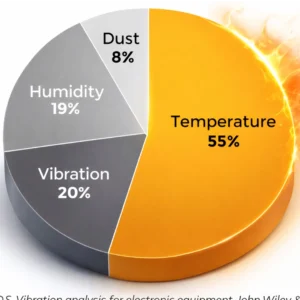
Thermal Management in Outdoor LED Signs
Why Heat Determines Lifespan
Heat is the primary cause of component failure in outdoor displays, and this analysis outlines the hardware cooling standards required to protect long-term electronic reliability.
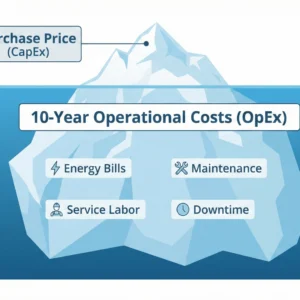
Total Cost of Ownership (TCO) in LED Signs
It’s Calculating Total Cost of Ownership (TCO)
A true financial evaluation of an LED sign must account for recurring energy consumption and “truck rolls,” as engineering decisions made at purchase directly dictate lifecycle costs.
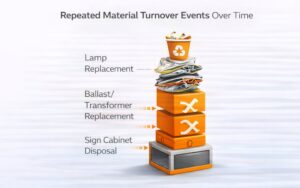
LED Sign Technology and Sustainability
Sustainability in LED Display Engineering
Modern engineering improves environmental outcomes by reducing energy consumption by up to 50% and extending operational lifespan to minimize electronic waste.
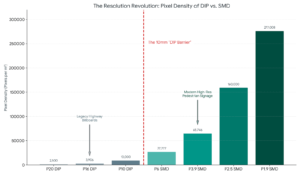
The Evolution of SMD Pixel Technology in Outdoor LED Signs
Breaking the 10MM Barrier
Surface Mount Device (SMD) technology has redefined outdoor resolution, providing higher pixel density and better viewing angles without sacrificing the durability of traditional displays
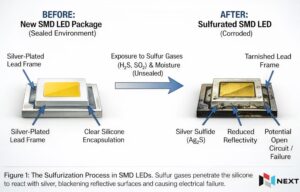
Environmental Exposure and Reliability in Outdoor LED Signs
Protecting LED Signs from Environmental Stress
Outdoor displays face continuous stress from moisture, UV radiation, and airborne pollutants, necessitating advanced sealing methods to mitigate long-term performance risks
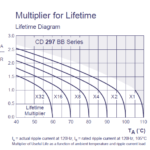
Reducing Failure Points in LED Signs
The Case for 100% Solid-State Design
By removing mechanical fans, solid-state design eliminates common pathways for overheating and significantly reduces unplanned service events

Resource Library





Frequently Asked Questions About LED Signs
The primary distinction lies in the physical architecture of the light source. DIP (Dual In-line Package) uses three separate colored bulbs (Red, Green, Blue) soldered through the PCB, whereas SMD (Surface Mount Device) integrates all three colors into a single, surface-mounted chip.
Technical Performance
Comparison:
| Performance Feature | DIP (Legacy Powerhouse) | SMD (Modern Standard) |
|---|---|---|
| Peak Brightness | 8,000 – 12,000+ NITs | 5,000 – 7,500 NITs |
| Horizontal Viewing Angle | ~100° Degree | ~140° – 160° Degree |
| Color Blending | Separate R, G, B Bulbs | Integrated 3-in-1 Chip |
| Best Application | Long-Distance Billboards | Schools, Retail, Monuments |
Expert Insight: While DIP is often touted for raw brightness, NEXT LED Signs utilizes high-efficiency SMD chips for 95% of projects because the superior color uniformity and wider viewing angles provide a significantly better Return on Investment (ROI) for local business signage.
Calculation is based on the Retina Point—the distance at which the human eye can no longer distinguish individual pixels. The industry standard "1-to-1 Rule" states that for every 1mm of pixel pitch, you need approximately 3.28 feet (1 meter) of viewing distance.
Quick Reference Math:
| Pixel Pitch (mm) | Min. Viewing Distance | Retina Point (Sharpest) |
|---|---|---|
| P2.5 | 8.2 Feet | 16 Feet |
| P4 | 13.1 Feet | 26 Feet |
| P6 | 19.7 Feet | 40 Feet |
| P10 | 32.8 Feet | 65 Feet |
Think of the refresh rate as how fast the sign's "brain" updates the image. Most people won't see a flicker if it's over 1,920Hz. However, if people are taking photos or videos of your sign with their smartphones, you want a higher rate (like 3,840Hz) to make sure those annoying "scan lines" don't show up in their pictures. We aim for high-definition standards so your sign looks great both in person and on social media.
Refresh Rate Performance
| Refresh Rate | Performance Level | Impact on Cameras |
|---|---|---|
| 1,920 Hz | Professional Standard | May show "scan lines" on mobile phones. |
| 3,840 Hz | High-Definition | Crystal clear on all modern smartphones. |
| 7,680 Hz | Broadcast Grade | Required for TV and professional video. |
Heat is the #1 enemy of an LED sign. Most signs use mechanical fans to cool things down, but those fans suck in dirt, moisture, and even bugs. At NEXT LED Signs, we use 100% solid-state engineering. This means we use passive aluminum heat sinks to pull heat away from the electronics without ever opening the cabinet to the outside air. It’s a cleaner, more reliable way to keep your sign running for a decade or more.
"Explosions" are definitely a myth, but fire is a real risk with low-quality, uncertified equipment. We take safety seriously by using UL-certified materials that are designed to be self-extinguishing. We also use top-tier power supplies and run them at only 60-70% of their total capacity. By using solid-state design and removing friction-heavy fans, we eliminate the most common causes of overheating and electrical fires.
Security is a major part of our architecture. Our signs don't just "stream" content over the open internet. They use a closed-loop system with Asynchronous Controllers. This means the sign stores its files locally in an encrypted format. We also isolate the sign's network using secure cellular bridges or dedicated VLANs, so your business's private data stays completely separate from your signage.

Need Specific Technical Data?
Every project has unique requirements. If you have questions about pixel pitch, power infrastructure, or environmental protection, our technical experts are here to provide the answers. Call us at 888-359-9558 to speak to one of our experts.