
White Paper
Thermal Management in Outdoor LED Signs: Why Heat Determines Lifespan
Executive Summary
Thermal management is one of the most critical—and often misunderstood—factors in outdoor LED sign reliability. While LED diodes are inherently durable, excessive heat accelerates degradation across power supplies, drivers, and electronic components.
This white paper explains how heat affects LED systems, identifies common thermal failure mechanisms, and outlines why effective thermal design is essential for long-term outdoor performance.
Scope and definitions
This document examines thermal management as a reliability and longevity factor in outdoor LED signs. It focuses on engineering considerations rather than installation methods.
- Thermal Management: Control of heat within electronic systems.
- Junction Temperature: Internal operating temperature of semiconductor devices.
- Passive Cooling: Heat dissipation without mechanical airflow.
LED Junction Temperature and Lumen Maintenance
LED lumen maintenance is directly tied to junction temperature. Industry standards such as L70 and L80 ratings assume operation within defined thermal limits. When junction temperatures exceed recommended thresholds, lumen depreciation accelerates and useful life shortens²
Power Supplies as Thermal Weak Points
Power supplies are among the most heat-sensitive components in an outdoor LED sign. Electrolytic capacitors within these supplies experience accelerated aging at elevated temperatures, making thermal exposure a leading cause of early power supply failure³
Active Cooling Limitations in Outdoor Enclosures
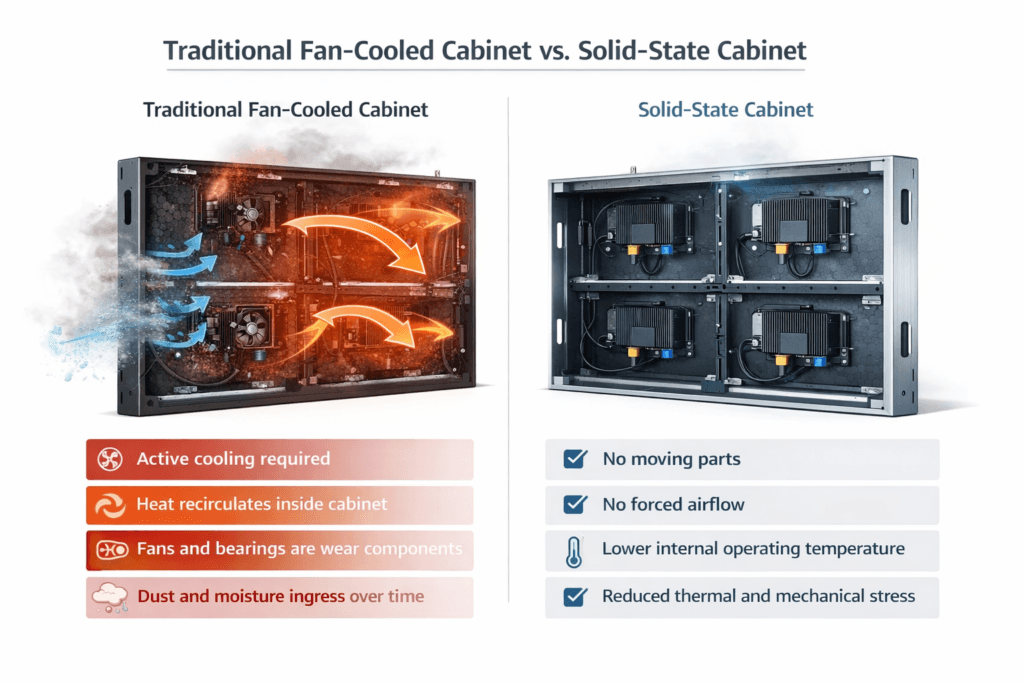
Fan-based cooling systems attempt to manage heat through forced airflow. However, fans introduce mechanical failure points and create airflow paths that draw dust and moisture into the cabinet. Studies of outdoor electronics show that fan degradation significantly increases internal temperatures over time⁴
Passive Thermal Design and Heat Dissipation
Passive thermal management relies on conduction, convection, and radiation to dissipate heat without moving parts. High-conductivity materials, optimized heat sinks, and cabinet designs that function as radiators maintain stable internal temperatures while eliminating mechanical failure risks⁵
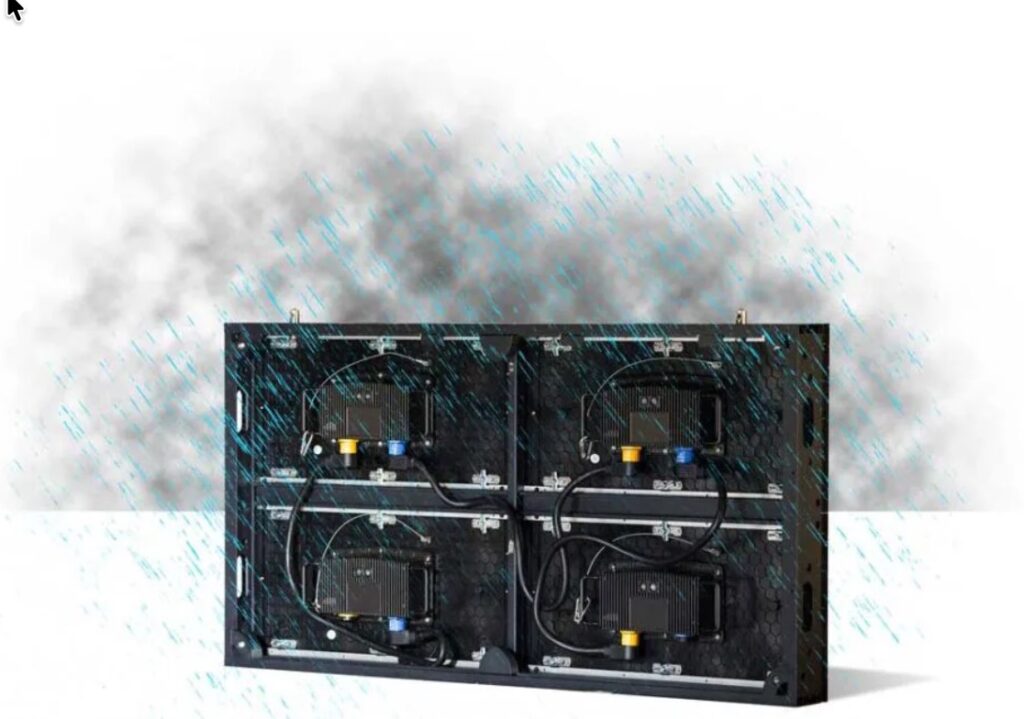
Figure 1. Sealed Solid-State LED Cabinet Architecture (Rear Interior View)
This image shows the rear interior of a sealed solid-state LED sign cabinet with passively cooled power and control electronics housed inside a closed enclosure.
Figure Note: This cabinet design does not rely on fan-driven airflow or external air exchange for thermal management. Eliminating forced-air cooling paths reduces potential ingress routes for dust, pollen, and moisture, and removes mechanical wear mechanisms associated with rotating components in outdoor electronic enclosures.¹–³
Environmental Sealing and Thermal Stability
Sealed outdoor enclosures prevent moisture and contaminant ingress, but require effective thermal pathways to avoid heat buildup. Well-designed sealed systems balance ingress protection with efficient heat dissipation, maintaining component reliability in extreme weather conditions⁶
LED Junction Temperature and Lumen Maintenance
LED lumen maintenance is directly tied to junction temperature. Industry standards such as L70 and L80 ratings assume operation within defined thermal limits. When junction temperatures exceed recommended thresholds, lumen depreciation accelerates and useful life shortens²
Power Supplies as Thermal Weak Points
Power supplies are among the most heat-sensitive components in an outdoor LED sign. Electrolytic capacitors within these supplies experience accelerated aging at elevated temperatures, making thermal exposure a leading cause of early power supply failure³
Active Cooling Limitations in Outdoor Enclosures
Fan-based cooling systems attempt to manage heat through forced airflow. However, fans introduce mechanical failure points and create airflow paths that draw dust and moisture into the cabinet. Studies of outdoor electronics show that fan degradation significantly increases internal temperatures over time⁴
Engineering Implications for Outdoor LED Signs
Effective thermal management is not an optional feature but a foundational design requirement. Outdoor LED signs that control heat through passive design, material selection, and system architecture achieve longer lifespans, reduced maintenance, and greater reliability
References
Limitations and Statement on Evidence
This paper intentionally avoids specific numeric lifespan or failure-rate claims unless they are supported by verifiable, non-competitor published research or documented field performance. The evidence presented focuses on broadly accepted engineering principles related to thermal management in electronic systems, including the impact of sustained operating temperatures, heat dissipation methods, and enclosure design on component reliability. These factors are widely recognized as primary contributors to long-term performance and service stability in outdoor LED display systems. [references]
- Journal of Electronic Packaging. Temperature Effects on Electronic Component Lifetime (Arrhenius Model).
- Illuminating Engineering Society (IES). TM-21 and TM-28: Lumen Maintenance and Thermal Performance.
- IEEE Power Electronics Society. Reliability of Power Supplies in High-Temperature Environments.
- Reliability Engineering & System Safety Journal. Cooling Fan Failure and Thermal Risk in Outdoor Electronics.
- U.S. Department of Energy (DOE). Thermal Management in Solid-State Lighting Systems.
- IPC. Environmental Protection and Thermal Design for Outdoor Electronic Assemblies.
- International Sign Association (ISA). Maintenance Drivers in Digital Signage Installations.
Fast Facts
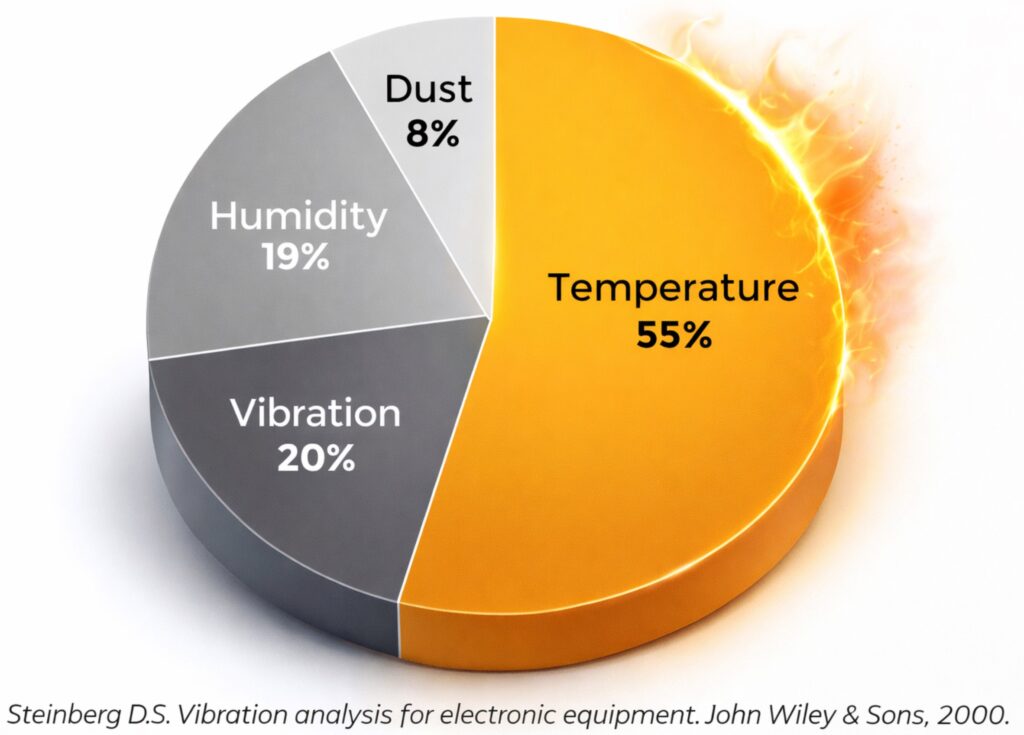
- The 55% Reliability Factor: Independent reliability engineering studies show that temperature is responsible for 55% of all electronic component failures, far outweighing vibration, humidity, or dust.
- Heat-Sensitive Power Supplies: Electrolytic capacitors within power supplies are the “weak points” of a sign; they experience accelerated aging at elevated temperatures, making thermal management the leading driver of early power system failure.
- Lumen Depreciation Acceleration: While LED diodes are durable, operating them above recommended thermal thresholds causes lumen depreciation to accelerate, meaning the sign will dim much faster than its rated lifespan suggests.
Frequently Asked Questions
Excessive heat is the primary cause of component degradation. High internal temperatures specifically stress the power supplies and LED drivers, which can lead to premature failure and a significantly shortened operational life for the entire display.
Traditional fan-cooled signs rely on mechanical parts that can fail, leading to "thermal spikes" that damage electronics. A solid-state, fanless design uses passive thermal pathways to dissipate heat consistently, ensuring the sign stays within safe operating limits without the risk of a mechanical cooling failure.
No, provided it is engineered correctly. A well-designed sealed cabinet uses the entire enclosure as a radiator to move heat to the outside. This balance of environmental sealing and efficient heat dissipation protects internal parts from both weather and heat buildup.
NITS (cd/m²) measure the brightness of your sign. Operating a sign at high NITS levels generates more internal heat; therefore, a sign with superior thermal management can maintain high brightness for longer periods without damaging the internal circuitry.
Yes. If a sign does not have an effective thermal architecture, extreme summer heat can exceed the internal component thresholds, causing the display to dim or fail entirely. Choosing a system designed for stable thermal performance reduces these risks and the frequency of service calls.