Tag

LED Display Lifespan

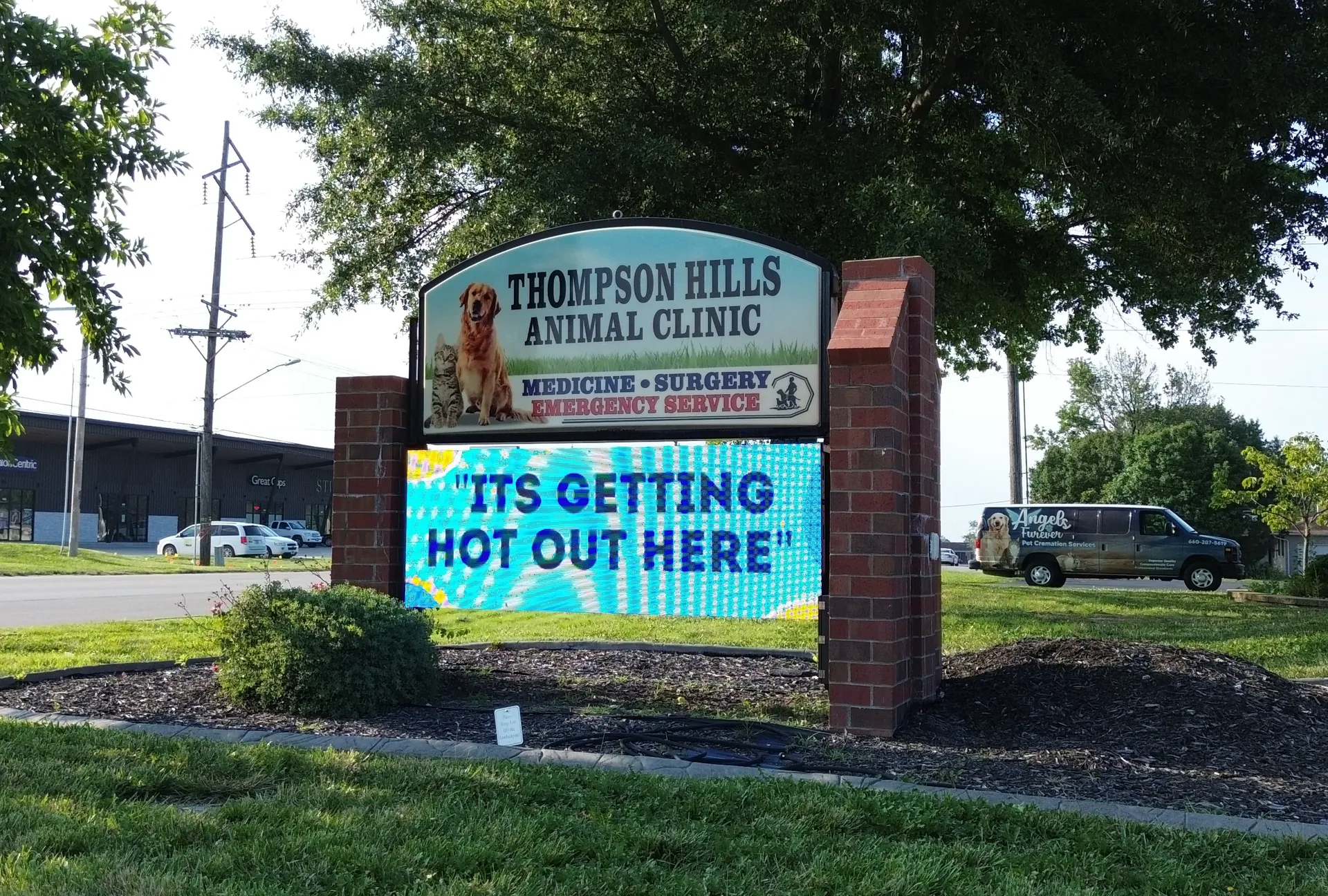
An LED display beneath the Thompson Veterinary Clinic sign shows a hot-weather message beside a roadway, with the clinic property and trees in the background.

Understanding Nit Depreciation: How to Keep Your LED Display Shining Bright

Investing in a commercial LED display is an exciting milestone for any business, and seeing that vibrant, maximum brightness on day one is undeniably striking. But if you want to get the best possible return on your investment, it is helpful to look past that initial “out-of-the-box” power. The true measure of commercial LED hardware is how gracefully it ages. Over time, all light-emitting diodes undergo a completely natural process called nit depreciation. By understanding the data behind how this works—and utilizing built-in smart features—you can actively protect your display and keep it looking brilliant for years to come. What is Nit Depreciation and the L70 Standard? Simply put, nit depreciation is the gradual reduction in light output from an LED diode over its operational lifespan. When commercial diodes are manufactured, the industry measures their longevity using a benchmark known as the L70 standard. This standard marks the specific threshold where a screen’s light output eventually degrades to 70% of its original, day-one brightness. For high-quality commercial-grade hardware, this journey to the L70 threshold is a marathon, typically spanning between 50,000 and 100,000 hours of use. While running a display at absolute peak brightness 24/7 will accelerate its journey toward that threshold, a few simple operational adjustments can vastly extend its prime viewing years. Sensor-managed auto-dimming can extend the useful brightness life of an LED display. The Data Behind Temperature, Efficiency, and Lifespan The specific curve of a diode’s aging process isn’t a mystery; it is directly dictated by operating conditions and power supply efficiency. Heat is the primary catalyst for lumen depreciation. Here is what statistical field data tells us about thermal stress and electrical load: Temperature Spikes Accelerate Aging: Operating an LED screen in environments where the internal cabinet temperature rises from a standard baseline of 25°C up to 45°C accelerates diode aging by approximately 35%. Extreme Heat Shifts Color: As internal temperatures surpass 50°C, the chemical makeup of the diodes reacts unevenly. Blue and green LED chips are highly sensitive to heat and can decay up to 25% faster than red chips under extreme thermal stress. Over time, this uneven degradation forces a subtle shift in the display’s color uniformity. Drive Current Matters: Pushing power supplies and diodes at 100% drive current guarantees the baseline L70 lifespan, but dialing it back pays huge dividends. Operating at an 80% drive current extends the functional lifespan by approximately 30%. Operating displays at just 60% of their maximum drive current can roughly double the hardware’s useful life. The encouraging takeaway here is that you do not need to push your hardware to the absolute limit to achieve stunning visual impact. Smart dimming lowers internal cabinet heat and reduces thermal stress on LED components. Preserving Your Lifespan with Auto-Dimming Ambient Sensors This is exactly where auto-dimming ambient light sensors transition from a nice-to-have feature into a vital preservation tool. A commercial display simply does not need 10,000 nits of output at midnight to capture attention. By integrating ambient sensors, your hardware does the heavy lifting for you, continuously calibrating its brightness output against the surrounding environmental light. This automated calibration immediately throttles back the drive current during overcast conditions, dusk, and nighttime hours. This single, automated action achieves three massive benefits for your display: It drastically reduces the thermal load inside the cabinet, preventing the heat spikes that degrade sensitive blue and green chips. It minimizes your ongoing power consumption and utility costs. It flattens the nit depreciation curve, allowing your diodes to easily push past that 100,000-hour mark while maintaining excellent color uniformity. By letting the sensors manage the workload, you ensure your technology works smarter, not harder, preserving your investment for the long haul. Frequently Asked Questions How long do commercial LED signs stay bright? Perceived brightness relies heavily on environmental contrast and surface clarity, not just internal diode power. While internal hardware naturally ages, a display maintains its visual punch for well over a decade through proper physical upkeep. Scheduling quarterly maintenance to clear accumulated environmental dust, pollutants, and hard water spots off the external louvers ensures that the light produced isn’t physically obstructed, keeping your visual impact sharp long after installation. Why do LED signs dim over time? Beyond internal electrical aging, the physical materials housing the technology react to environmental exposure. Constant bombardment from ultraviolet radiation slowly degrades the epoxy lens coatings covering the individual pixels, causing the clear plastic to become slightly opaque. Additionally, prolonged UV exposure leads to the gradual bleaching of the LED phosphors. Start Your Next LED Project with Confidence Getting the most out of your digital signage requires reliable hardware and straightforward advice. Reach out to our team today to discuss your project specifications and receive a custom, no-nonsense quote.  Call Now Contact Us
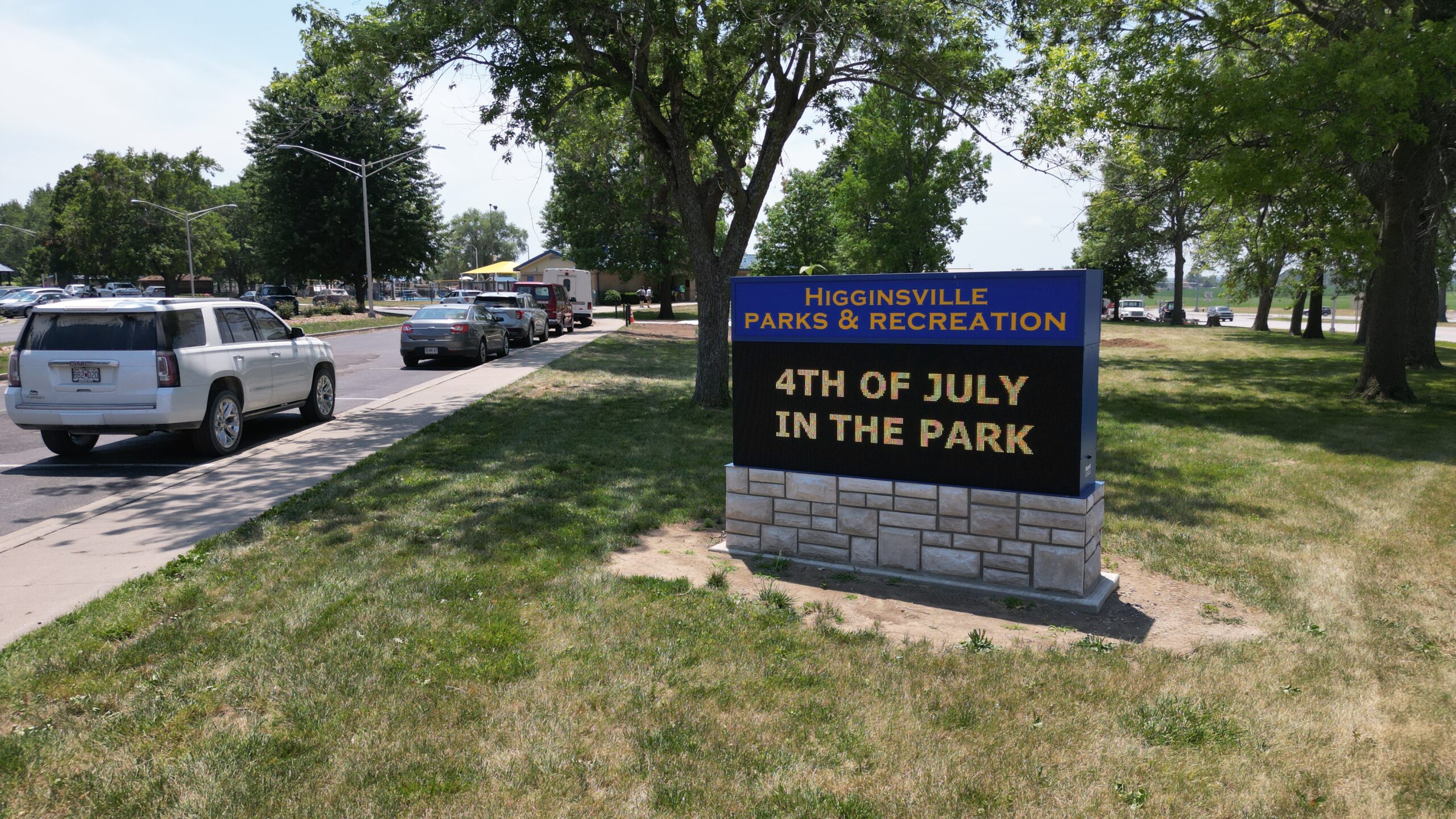
An LED electronic message center in a grassy park displays “Higginsville Parks & Recreation: 4th of July in the Park.” Cars and trees nearby.

It May Be time to Replace Your Digital Sign

This article explains how to tell when an older LED digital sign has reached the point where replacement is more cost-effective than continued repair. If you’ve ever caught yourself thinking, “It still works… mostly,” you’re not alone. A lot of businesses hang onto aging LED signs because they still light up. That makes sense. These signs are a real investment, and no one wants to replace equipment before it’s necessary. But over time, there’s a moment when keeping an older sign quietly starts working against you — even if it hasn’t fully failed yet. So how do you know when you’ve crossed that line? Repairs and results signs sharper visual You’re Fixing the Sign More Than You’re Using It This is usually the first warning sign. If service calls are becoming routine or replacement parts are getting harder to source, your sign is telling you something. Older LED systems—especially those built with through-hole technology—require more hands-on maintenance as they age. What starts as the occasional repair can quickly turn into ongoing downtime and rising costs. Industry service studies show that once more than 5% of LED modules begin failing each year, replacement is typically more cost-effective than continued repair. At that point, you’re no longer maintaining a sign—you’re managing risk. The Display Looks Dated (Even If It Still Works) Technology expectations have changed. If your sign struggles with modern file formats, shows noticeable pixel spacing, or can’t handle smooth motion graphics, it’s falling behind today’s standards. Modern LED signs support higher resolutions, richer color depth, and cloud-based content control. That difference isn’t subtle to customers. Research from Intel and Arbitron shows that digital signage can attract up to 400% more views than static displays and improve message recall by 83%. An outdated display doesn’t just look old—it underperforms. https://www.youtube.com/watch?v=HaeqGvw9MKI Your Brand Has Moved Forward, but Your Sign Hasn’t Businesses evolve. Logos get refreshed. Messaging gets sharper. If your sign still reflects an older version of your brand, it sends mixed signals before anyone walks inside. Customers may not consciously notice the mismatch, but they feel it. Consistent, modern branding builds trust. Outdated signage quietly works against it. The Screen Isn’t as Bright or Clear as It Used to Be Fading brightness, flickering pixels, or washed-out colors are classic signs of diode degradation. Even if the sign is technically operational, reduced brightness directly affects visibility—especially in daylight. For outdoor readability, industry standards recommend 5,000 to 7,000 nits for clear daytime viewing. Once an aging sign drops below 2,500 nits, it often loses its ability to compete with sunlight and attract drive-by attention. At that point, the sign may still be on—but it’s no longer doing its job. Your Energy Costs Keep Creeping Up Older LED signage consumes significantly more power than modern systems. Advances in LED drivers and diode efficiency mean newer signs often use 30% to 50% less electricity than models manufactured just 7–10 years ago. In some cases, businesses upgrading from legacy lighting technologies like neon or metal halide see energy reductions of 50% to 80%. Over time, those savings can offset a large portion of the upgrade cost. Your Business Is Growing or Changing Expansion, renovations, or multi-location operations are often the tipping point. Newer LED signs are easier to mount, easier to manage remotely, and designed to scale across locations without adding complexity. If your business is moving forward, your signage should be able to move with it. FAQs About Replacing an LED Digital Sign Is it more cost-effective to repair or replace an aging LED sign? According to 2025 cost-analysis reports from Action Services Group, if annual maintenance costs exceed 5% of the sign’s replacement value, a new system is the better investment. Repairing older “through-hole” technology often requires specialized parts that are increasingly rare, leading to a 30%–50% markup in service labor compared to modern modular systems. How much does a modern LED sign save in annual utility costs? Data from Sunme Lighting Commercial LED Guide (Nov 2025) indicates that modern LED signs are roughly 10x more energy-efficient than traditional neon or fluorescent systems, using only 6–10 watts per foot. Upgrading to high-efficiency diodes and automated dimming controls can reduce a facility’s signage energy consumption by up to 85%, resulting in significant monthly utility savings that offset the hardware cost. What technical “red flags” indicate a sign is losing its marketing impact? The industry benchmark for outdoor visibility is the “L70 Standard.” Reports from Signal-Tech (2025) state that high-quality LEDs typically maintain 70% of their original brightness for 50,000 to 100,000 hours. Once a display falls below 5,000 nits, it loses its “sunlight readability,” causing a measurable decline in brand recall and drive-by customer conversions. What is the typical return on investment for a sign upgrade? A 2025 study by AIScreen found that businesses installing new digital signage experience an average revenue increase of 15% through improved upselling and cross-selling. Additionally, according to FedEx Office surveys, 68% of consumers believe a business’s signage reflects the quality of its products, meaning a dim or glitchy sign can actively push potential customers toward competitors. If you’re evaluating whether your current LED sign is still delivering the visibility and value you expect, it may be worth reviewing your options and understanding what newer systems offer. Give us a call at 888-359-9558 for expert advice on your sign update.  Request a quote