Investing in a commercial LED display is an exciting milestone for any business, and seeing that vibrant, maximum brightness on day one is undeniably striking. But if you want to get the best possible return on your investment, it is helpful to look past that initial “out-of-the-box” power.
The true measure of commercial LED hardware is how gracefully it ages. Over time, all light-emitting diodes undergo a completely natural process called nit depreciation. By understanding the data behind how this works—and utilizing built-in smart features—you can actively protect your display and keep it looking brilliant for years to come.
What is Nit Depreciation and the L70 Standard?
Simply put, nit depreciation is the gradual reduction in light output from an LED diode over its operational lifespan.
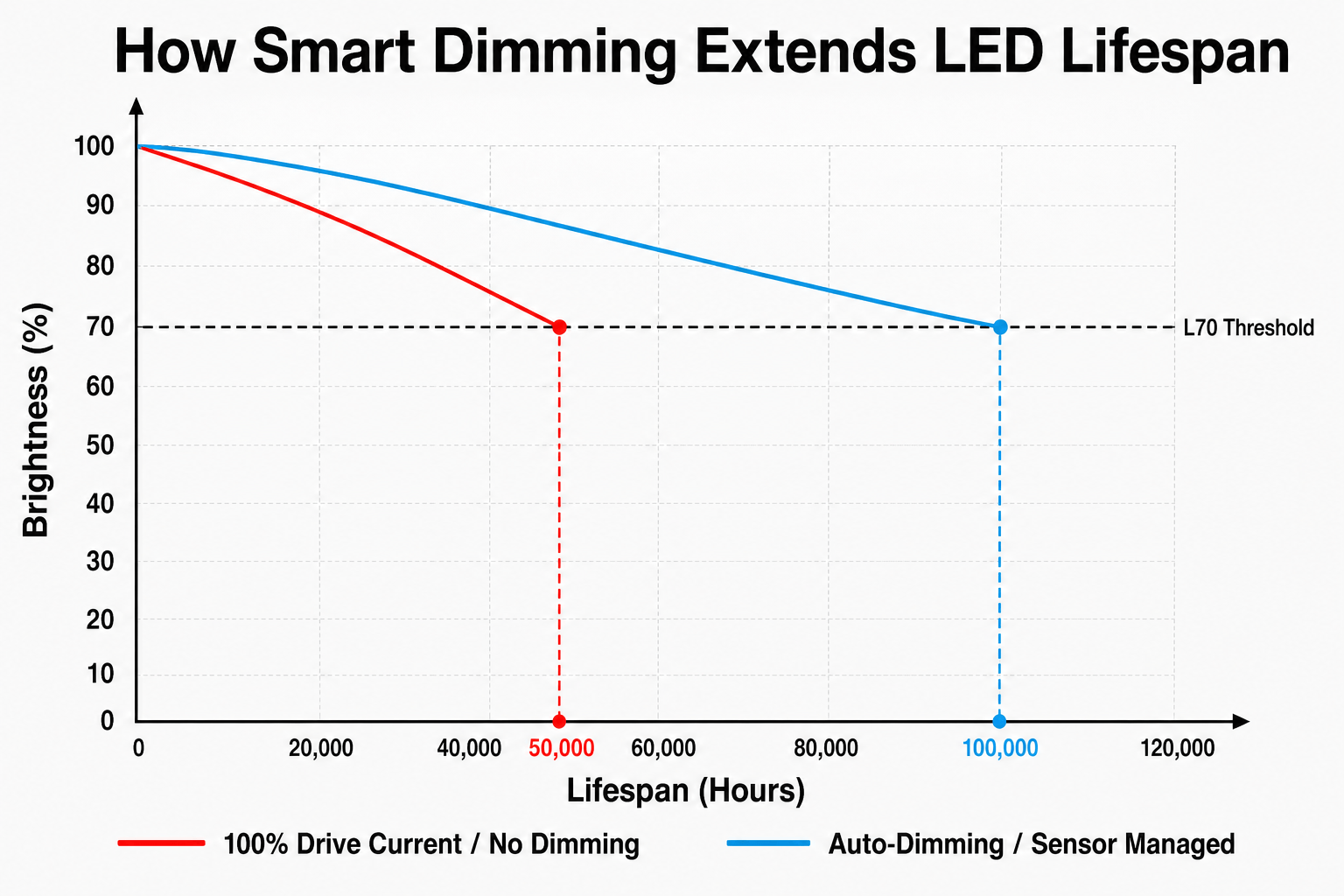
When commercial diodes are manufactured, the industry measures their longevity using a benchmark known as the L70 standard. This standard marks the specific threshold where a screen’s light output eventually degrades to 70% of its original, day-one brightness.
For high-quality commercial-grade hardware, this journey to the L70 threshold is a marathon, typically spanning between 50,000 and 100,000 hours of use. While running a display at absolute peak brightness 24/7 will accelerate its journey toward that threshold, a few simple operational adjustments can vastly extend its prime viewing years.
The Data Behind Temperature, Efficiency, and Lifespan
The specific curve of a diode’s aging process isn’t a mystery; it is directly dictated by operating conditions and power supply efficiency. Heat is the primary catalyst for lumen depreciation.
Here is what statistical field data tells us about thermal stress and electrical load:
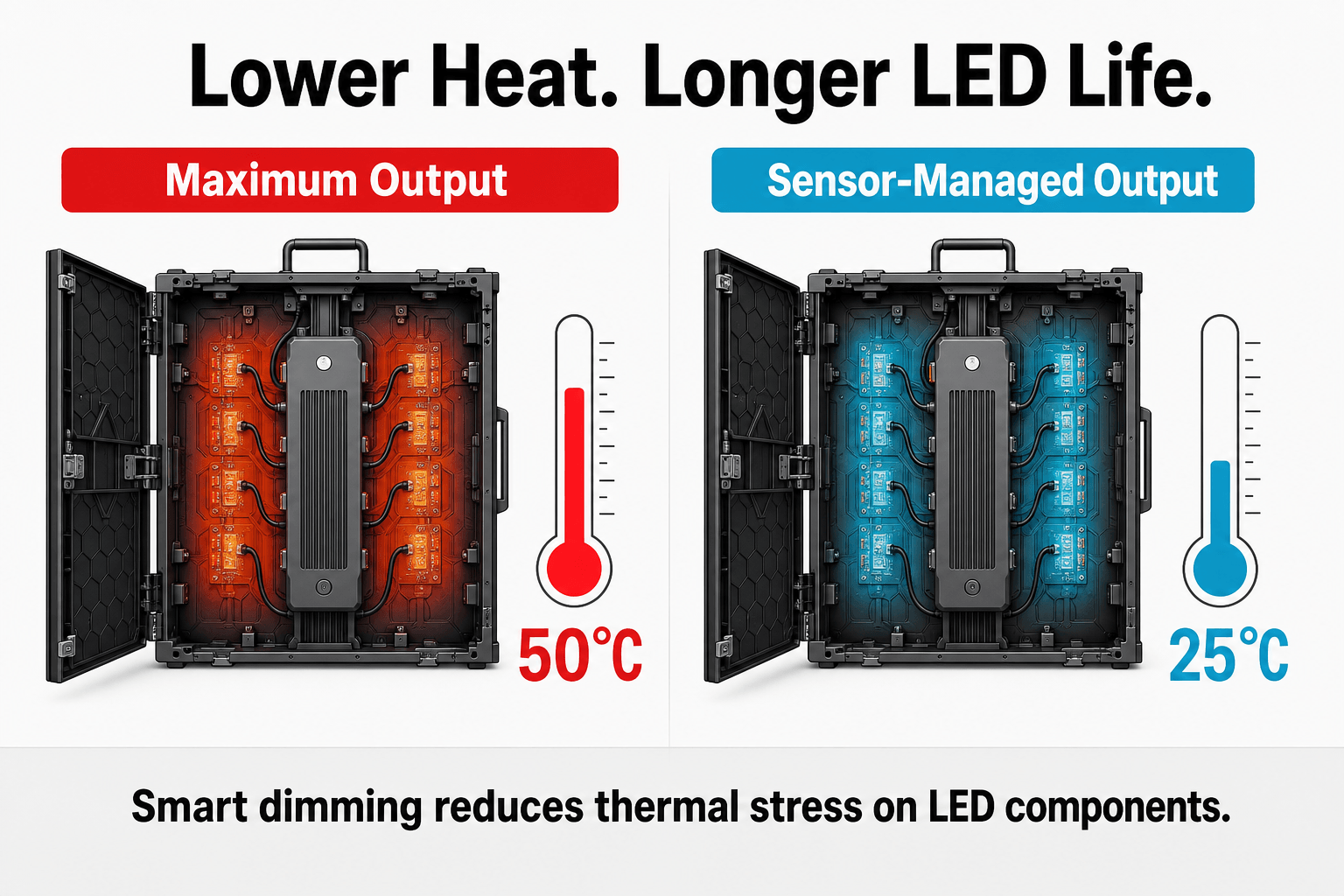
Temperature Spikes Accelerate Aging: Operating an LED screen in environments where the internal cabinet temperature rises from a standard baseline of 25°C up to 45°C accelerates diode aging by approximately 35%.
Extreme Heat Shifts Color: As internal temperatures surpass 50°C, the chemical makeup of the diodes reacts unevenly. Blue and green LED chips are highly sensitive to heat and can decay up to 25% faster than red chips under extreme thermal stress. Over time, this uneven degradation forces a subtle shift in the display’s color uniformity.
Drive Current Matters: Pushing power supplies and diodes at 100% drive current guarantees the baseline L70 lifespan, but dialing it back pays huge dividends. Operating at an 80% drive current extends the functional lifespan by approximately 30%. Operating displays at just 60% of their maximum drive current can roughly double the hardware’s useful life.
The encouraging takeaway here is that you do not need to push your hardware to the absolute limit to achieve stunning visual impact.

Preserving Your Lifespan with Auto-Dimming Ambient Sensors
This is exactly where auto-dimming ambient light sensors transition from a nice-to-have feature into a vital preservation tool.
A commercial display simply does not need 10,000 nits of output at midnight to capture attention. By integrating ambient sensors, your hardware does the heavy lifting for you, continuously calibrating its brightness output against the surrounding environmental light.
This automated calibration immediately throttles back the drive current during overcast conditions, dusk, and nighttime hours. This single, automated action achieves three massive benefits for your display:
It drastically reduces the thermal load inside the cabinet, preventing the heat spikes that degrade sensitive blue and green chips.
It minimizes your ongoing power consumption and utility costs.
It flattens the nit depreciation curve, allowing your diodes to easily push past that 100,000-hour mark while maintaining excellent color uniformity.
By letting the sensors manage the workload, you ensure your technology works smarter, not harder, preserving your investment for the long haul.
Frequently Asked Questions
How long do commercial LED signs stay bright? Perceived brightness relies heavily on environmental contrast and surface clarity, not just internal diode power. While internal hardware naturally ages, a display maintains its visual punch for well over a decade through proper physical upkeep. Scheduling quarterly maintenance to clear accumulated environmental dust, pollutants, and hard water spots off the external louvers ensures that the light produced isn’t physically obstructed, keeping your visual impact sharp long after installation.
Why do LED signs dim over time? Beyond internal electrical aging, the physical materials housing the technology react to environmental exposure. Constant bombardment from ultraviolet radiation slowly degrades the epoxy lens coatings covering the individual pixels, causing the clear plastic to become slightly opaque. Additionally, prolonged UV exposure leads to the gradual bleaching of the LED phosphors.
Start Your Next LED Project with Confidence
Getting the most out of your digital signage requires reliable hardware and straightforward advice. Reach out to our team today to discuss your project specifications and receive a custom, no-nonsense quote.