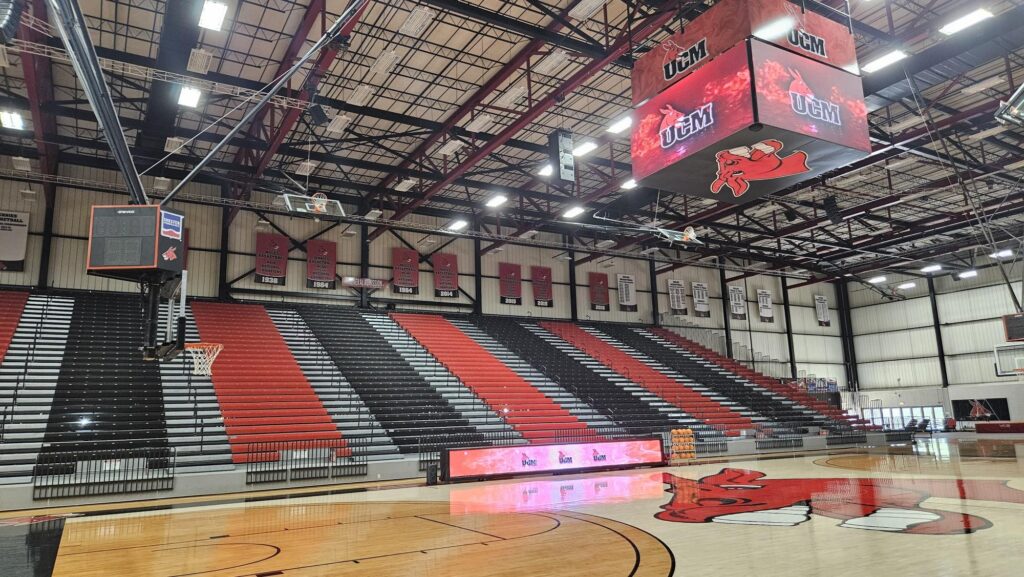
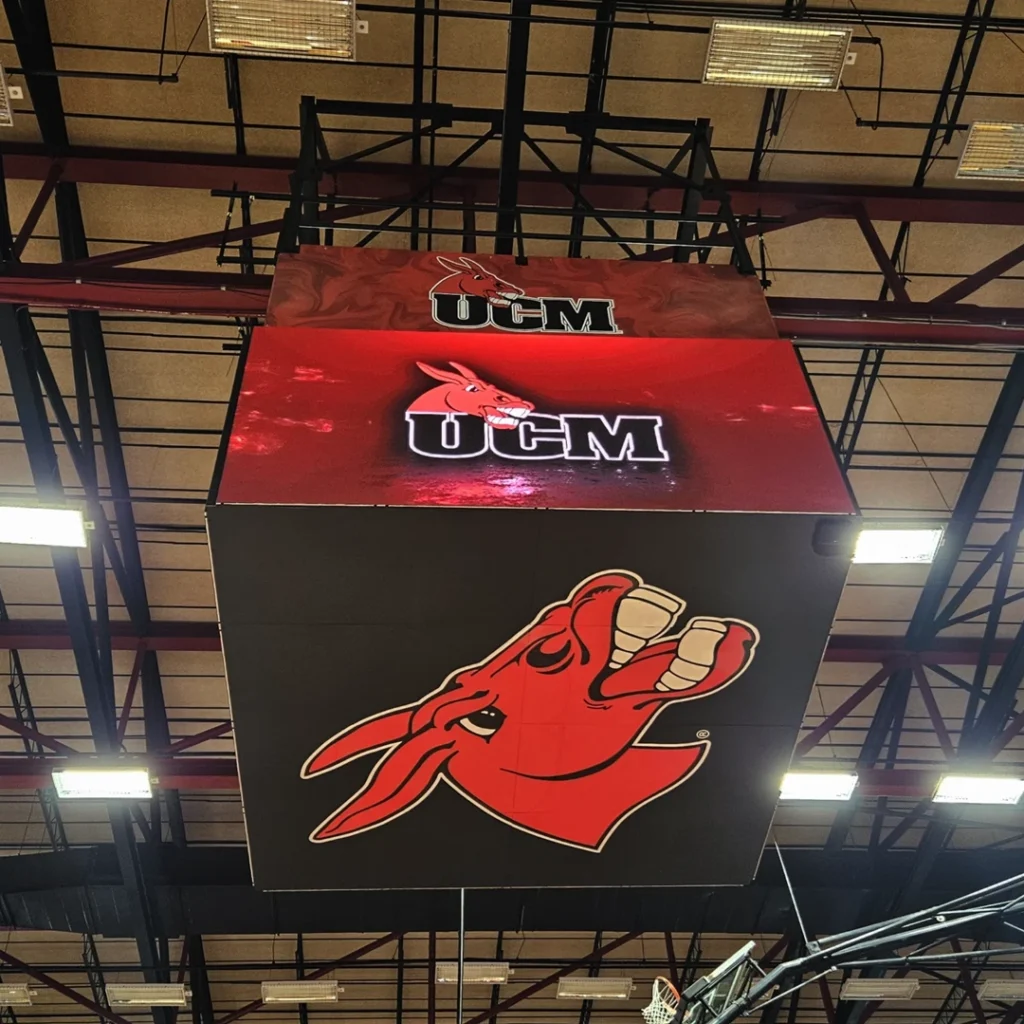
A center-hung video scoreboard can create a completely different experience inside a gym or arena. It becomes the visual focal point of the room, improves sightlines for spectators, and gives schools more flexibility for video, branding, sponsorships, and game-day presentation.
But unlike a wall-mounted display, a center-hung system also comes with a different set of planning requirements. That does not mean it is overly complicated or something to avoid. It simply means the project needs to be approached with the right expectations from the start.
The goal is not to turn buyers into engineers. It is to help schools understand the main pieces that need to be considered early so the project moves more smoothly once it reaches design, engineering, and installation.
Start with the rigging plan
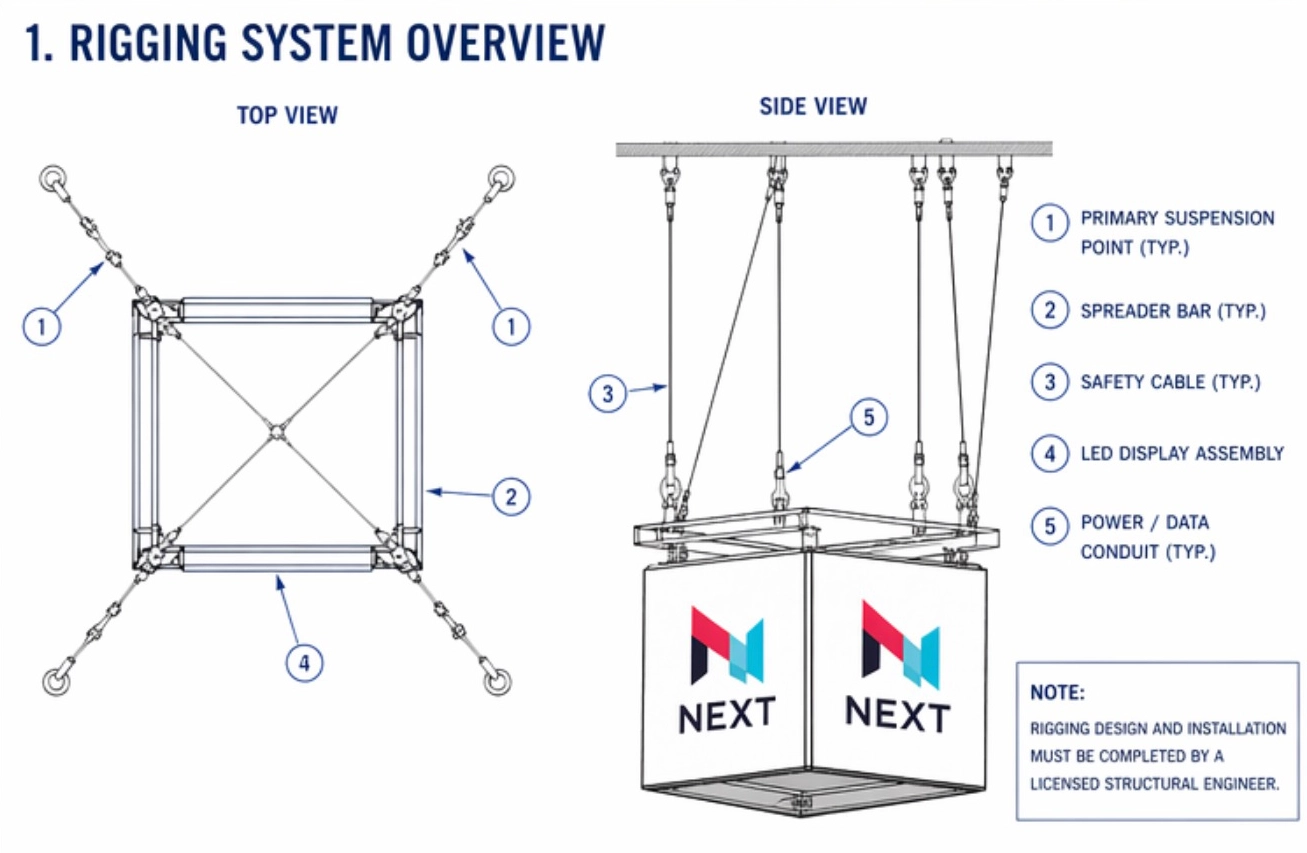
A center-hung display is suspended from the building structure, so one of the first questions is how that load will be supported. This is where the rigging plan comes in.
The rigging layout helps determine where the scoreboard will hang, how it will be balanced, and how the load will transfer back to the building. It also helps define the hardware and support points needed for a safe installation.
For the buyer, the main takeaway is simple: a center-hung board needs to be planned as part of the building structure, not treated like a standard wall sign.
Understand the attachment points
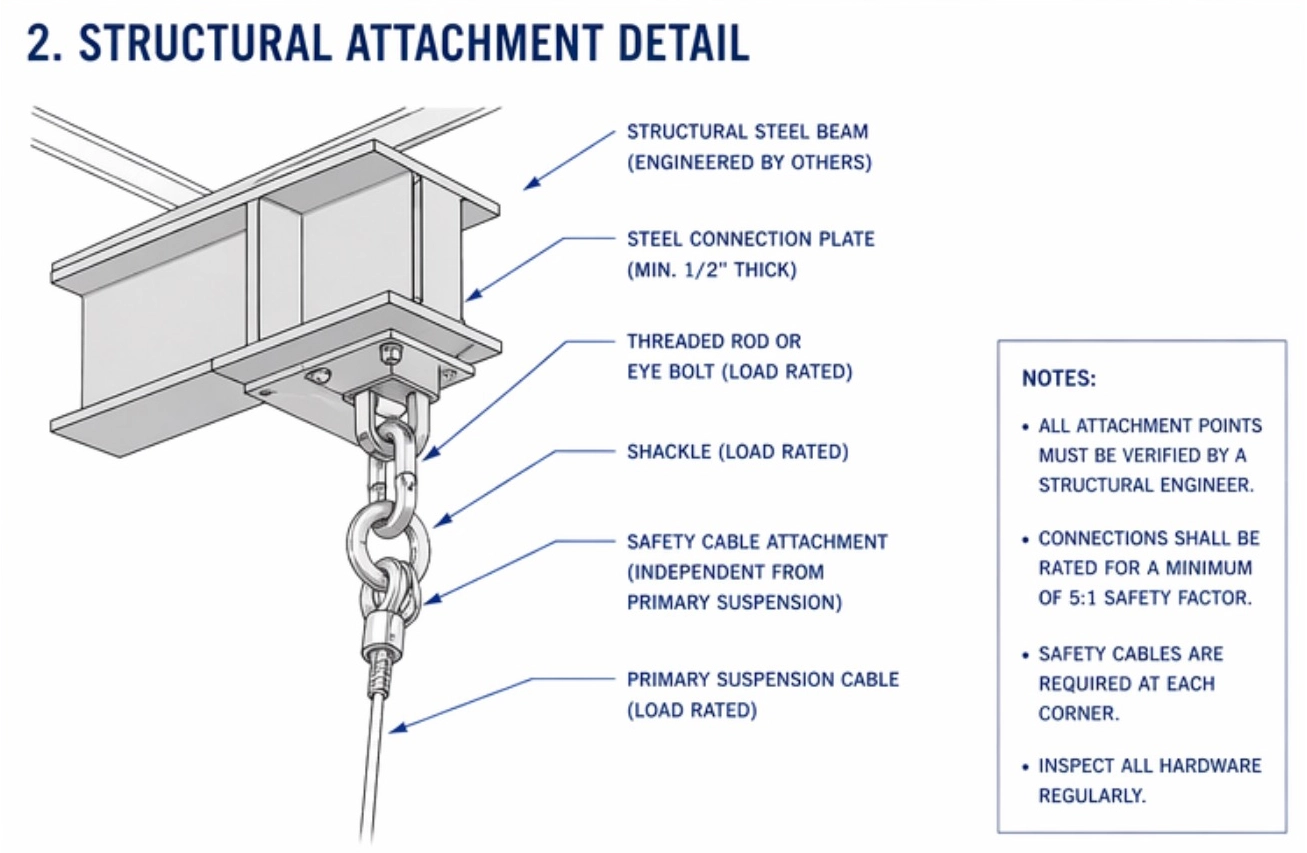
Once the location is established, the next step is confirming how the display will connect to the structure above it.
This is one of the most important parts of the project because the attachment details affect safety, load capacity, and long-term reliability. A properly engineered connection ensures the display is supported the way it should be and that the installation team has a clear path for mounting the system correctly.
From a planning standpoint, this is why early coordination matters. If the support structure is confirmed early, the project stays cleaner and more predictable.
Think about the display itself as a system
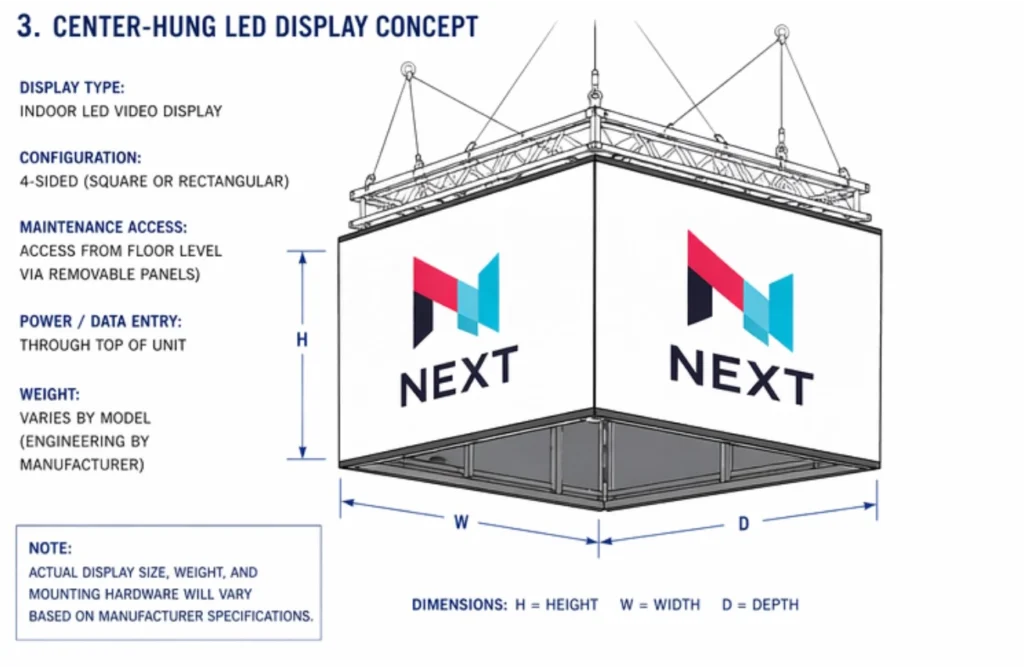
A center-hung video board is more than a box hanging from the ceiling. It is a system that includes the display structure, access considerations, power, data, and serviceability.
That is why it helps to think beyond the screen itself. Questions like these matter:
- How will power and data get to the unit?
- How will the display be accessed for service if needed?
- What size and shape make sense for the room?
- How will the display be viewed from different seating areas?
These are not red flags. They are simply part of making sure the finished installation works the way it should in everyday use.
Clearance and sightlines matter
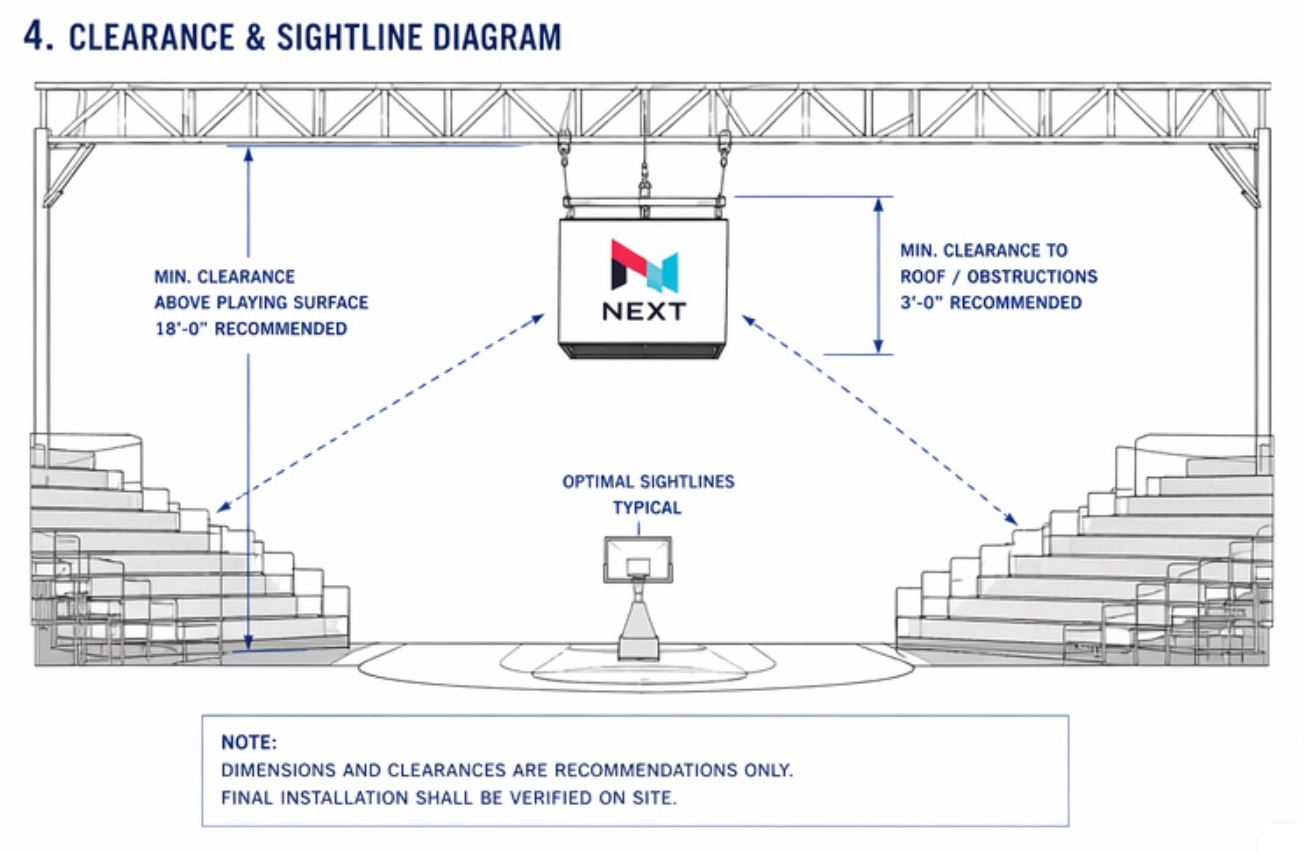
One of the biggest advantages of a center-hung scoreboard is visibility. When it is placed correctly, it can serve a larger portion of the seating bowl more evenly than a single end-wall display.
That said, clearance and viewing angles still need to be considered carefully. The board needs to be high enough to avoid interfering with the playing environment while still being positioned for comfortable viewing.
This is why sightline planning is part of the conversation early. A well-placed display feels natural in the room. A poorly placed one can create compromises that could have been avoided.
Why we’re showing these diagrams
Most buyers never get to see this side of the process until a project is already far along. We think it helps to show it earlier.
These drawings are here to make the planning process easier to understand. They are not meant to overwhelm anyone or suggest that the project is harder than it is. They simply show that center-hung scoreboards involve real coordination between the display, the structure, and the installation plan.
That is actually a good thing. It means the project can be approached thoughtfully, with fewer surprises later.
The right project starts with the right expectations
If a center-hung LED scoreboard is the right fit for your venue, it can deliver a huge visual upgrade and create a stronger game-day experience for athletes, fans, and sponsors alike.
The key is to start with a clear understanding of what the installation will require. When schools think through rigging, attachment, clearance, and viewing conditions early, the project is easier to plan and much easier to execute with confidence.
Frequently Asked Questions About Center Hung LED Scoreboards
What does a center-hung LED scoreboard cost?
The investment for a center-hung scoreboard can vary quite a bit depending on the size of the display, the resolution, and how the system is configured. Smaller gymnasium installations can start in the lower price ranges, while larger multi-sided video displays used in bigger venues can scale significantly.
What matters most is how the display is designed for your space. The right size, viewing distance, and layout will have a bigger impact than chasing specs or price alone.
How heavy is a center-hung scoreboard?
Weight depends on the size and configuration of the display. Smaller indoor systems may weigh a few thousand pounds, while larger multi-sided video boards in bigger venues can be substantially heavier.
The key thing to understand is that it’s not just about total weight—it’s about how that weight is supported. That’s why structural evaluation is always part of the planning process.
How are center-hung scoreboards mounted or supported?
Center-hung scoreboards are suspended from the building’s roof structure using engineered support systems. This can include steel rigging, cable systems, or a hoist system that allows the display to be lowered for maintenance.
The exact approach depends on the building and how the display will be used, but every installation is designed to safely distribute the load across the structure.
Do I need special structural support for a center-hung scoreboard?
In most cases, yes. A center-hung display needs to be supported by the building’s structural framework—not just surface-level materials.
Before installation, the structure is reviewed to confirm it can safely handle the load. If needed, reinforcement can be added during the planning phase. This is a normal part of the process and helps ensure long-term reliability.
How long does a center-hung LED scoreboard last?
Most commercial LED systems are built to last for many years of regular use. The LED components themselves are typically rated for tens of thousands of hours, which translates to well over a decade in most school and facility environments.
With proper installation and normal use, these systems are designed to deliver consistent performance over time.
.

Planning a Center-Hung Scoreboard Project?
If you’re considering a center-hung LED video board for your gym or arena, we can help you think through the practical details before the project gets too far down the road. From display size and sightlines to structural coordination and installation planning, we’ll help you understand what needs to be considered so you can move forward with more confidence.
Call 888-359-9558 to talk through your project.