Tag

LED Scoreboards for multi-purpose venues

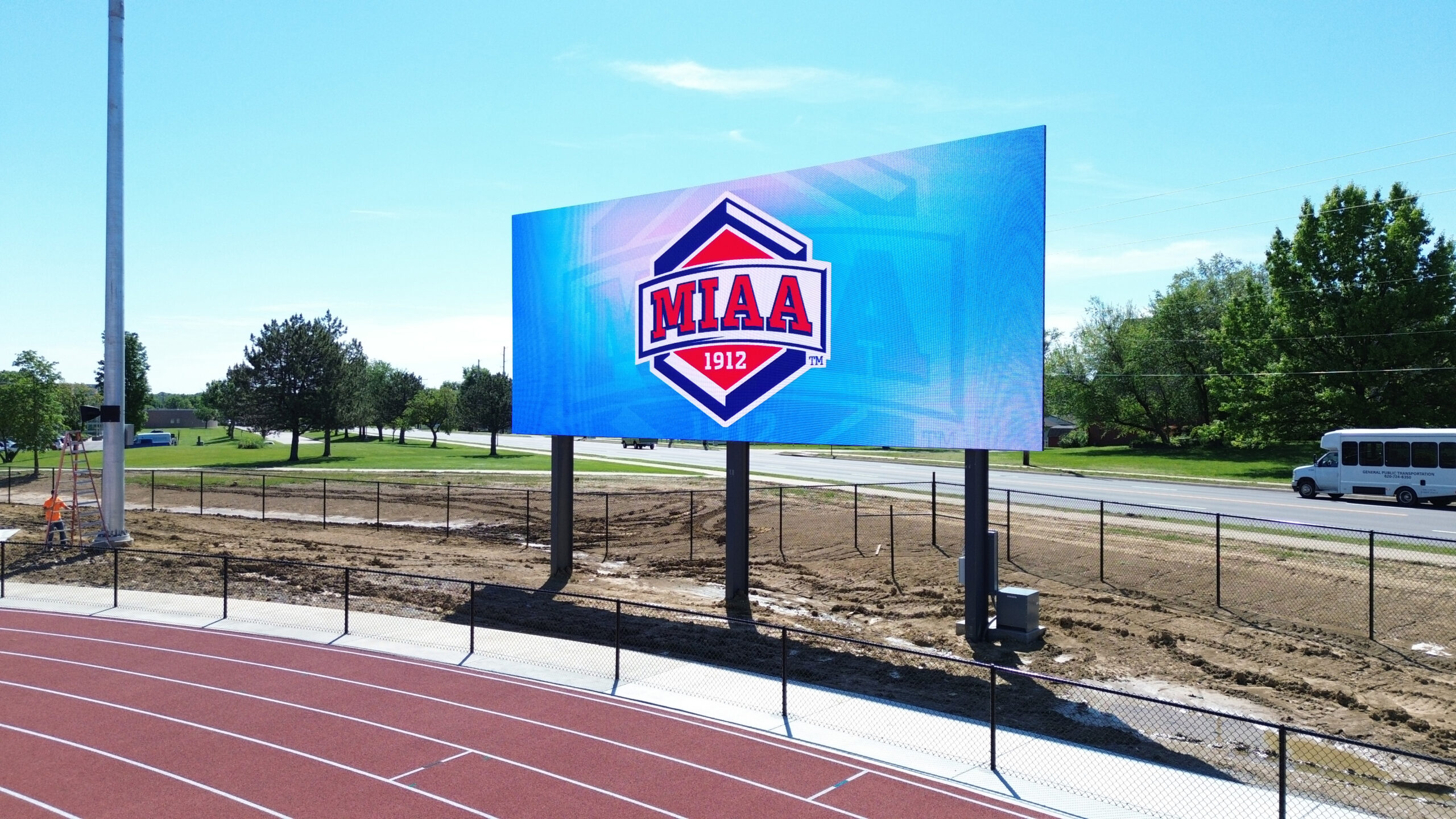
High-brightness LED electronic message center with MIAA 1912 logo by a running track; road, trees, and white bus in background.

Buying vs. Renting a Video Board: The True Cost for Schools

Renting a video board can look like the easier choice at first. There is no large purchase order. There is no long approval process. There is no equipment to maintain after the event. A vendor brings the board, sets it up, runs it, tears it down, and leaves. For a one-time event, that can make a lot of sense. However, when schools need a video board or LED scoreboard for recurring athletic events, the math changes quickly. Renting may feel cheaper because the first payment is smaller. But over multiple seasons, the cost can add up without creating any long-term value for the school. That is where many athletic directors, administrators, booster clubs, and business managers need to pause and ask a different question. Not just, “What does it cost this season?” But, “What does this cost over five years, and what do we have to show for it?” Why Renting a Video Board Feels Like the Smart Choice Renting appeals to schools for understandable reasons. A rented video board can solve an immediate problem. If a school has a championship game, tournament, graduation, homecoming event, or one-time community event, renting may seem practical. The benefits are easy to see: No major upfront capital expense No permanent installation decision No long-term ownership responsibility Vendor handles delivery, setup, and teardown Technical support may be included The school can test the experience before buying For schools working with tight budgets, those points matter. Nobody wants to make a large purchase without confidence that the investment will be used, supported, and valued. Renting can also feel lower risk. If the event is temporary, the need may be temporary too. However, that logic starts to break down when the video board is needed again and again. What the Rental Contract May Not Show You A rental quote usually shows the cost of one event or one rental period. That is helpful, but it does not always show the long-term pattern. Published rental pricing varies widely by screen size, location, outdoor rating, setup needs, and technician support. However, several LED rental sources show one-day LED video wall or screen rentals commonly falling in the thousands of dollars. CMG Visuals lists small LED wall rentals around $2,500–$5,000 per day and medium-to-large LED screens around 10–12 feet wide at roughly $3,500–$6,000 for one day. Insane Impact gives a similar starting range of about $3,000–$5,000 for a smaller one-day LED wall rental. Rent For Event lists outdoor LED screen rentals in Phoenix from $3,900/day for an 11.5’ x 6.6’ screen to $5,900/day for a 14.7’ x 8.2’ screen. Those numbers may not match every school, every market, or every event. But they do show why rental costs deserve a five-year calculation. A school that rents a board once may be making a smart short-term choice. A school that rents repeatedly for football games, tournaments, graduations, and special events may spend a significant amount without owning anything at the end. There may also be other details to ask about: Delivery fees Setup and teardown fees Technician or operator fees Weather policies Cancellation terms Power requirements Audio requirements Advertising rights Content control Damage responsibility Overtime or multi-day charges The headline rental price is only one part of the decision. The Ownership Math Schools Sometimes Skip Buying a school LED scoreboard is a bigger upfront investment. That part is obvious. What is less obvious is that ownership gives the school a long-term asset. The board can be used for more than one game, one season, or one event. A school-owned LED scoreboard can support: Football games Soccer games Track events Lacrosse games Graduations Pep rallies Band events Community events Sponsor recognition Student activities Emergency or schedule messaging School branding That changes the value calculation. A rental is a temporary expense. Ownership creates a reusable communication and revenue asset. The key question is not whether buying costs more on day one. It usually does. The real question is whether renting still looks cheaper after three, five, or ten years of repeated use. The Sponsorship Revenue Angle Changes the Conversation Sponsorship revenue is where ownership becomes especially important. A school-owned LED scoreboard can give local businesses a visible way to support athletics, students, and community events. Instead of selling only static banners or printed programs, schools can offer rotating digital sponsor messages during games and events. That does not mean every school will generate the same revenue. A large school with strong attendance, active boosters, and local business support may raise more than a small school with limited attendance or fewer sponsor prospects. However, even modest sponsor income can change the math. [INSERT GRAPHIC: Sponsorship Revenue Can Change the Math] A small school may not raise $15,000 a year. That is okay. Even $3,000–$5,000 per year can help offset the investment over time. Some high school athletic programs have reported generating meaningful advertising revenue after installing a digital scoreboard, especially when the sponsorship program is actively managed. Results vary by school size, attendance, community support, and how consistently the school sells advertising opportunities. Still, the larger point remains: scoreboard sponsorships can become a real funding source when the school owns the advertising inventory. Renting usually does not build this same long-term revenue opportunity for the school. If the rental vendor controls the board, the schedule, or the advertising inventory, the school ma so you have the sponsorship paragraph in the blog and you have a statement toy lose part or all of that sponsor value. The Sponsorship Revenue Angle Changes the Conversation Sponsorship revenue is where ownership becomes especially important. A school-owned LED scoreboard can give local businesses a visible way to support athletics, students, and community events. Instead of selling only static banners or printed programs, schools can offer rotating digital sponsor messages during games and events. That does not mean every school will generate the same revenue. A large school with strong attendance, active boosters, and local business support may raise more than a small school with limited attendance or
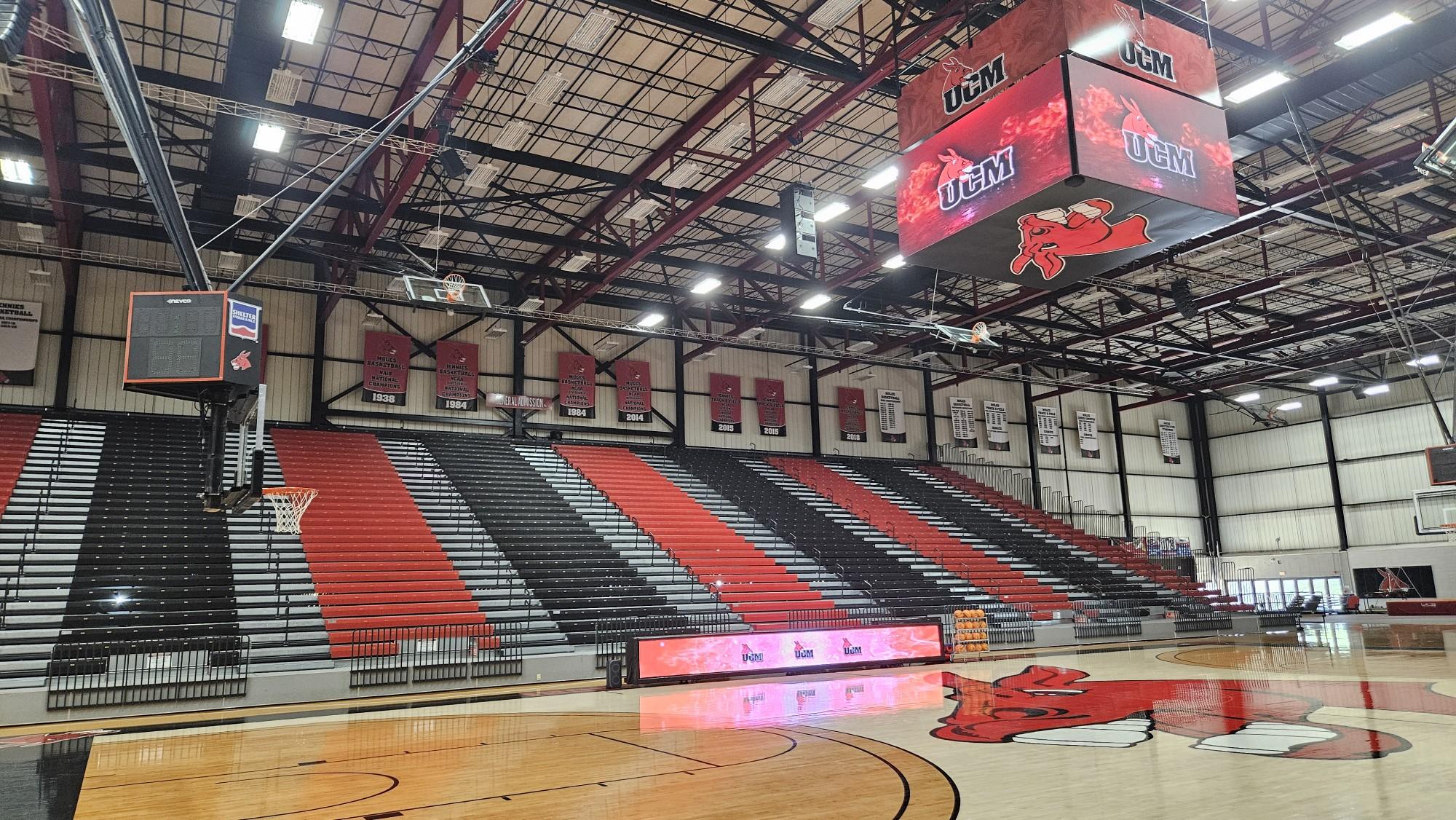
Spacious basketball gym with red, black, and white bleachers, banners, an LED electronic scoreboard showing UCM, and a red mule logo at center court.

What Schools Should Know Before Choosing a Center-Hung Video Scoreboard

https://www.youtube.com/watch?v=MalFYDwJiUk A center-hung video scoreboard can create a completely different experience inside a gym or arena. It becomes the visual focal point of the room, improves sightlines for spectators, and gives schools more flexibility for video, branding, sponsorships, and game-day presentation. But unlike a wall-mounted display, a center-hung system also comes with a different set of planning requirements. That does not mean it is overly complicated or something to avoid. It simply means the project needs to be approached with the right expectations from the start. The goal is not to turn buyers into engineers. It is to help schools understand the main pieces that need to be considered early so the project moves more smoothly once it reaches design, engineering, and installation. Start with the rigging plan A center-hung display is suspended from the building structure, so one of the first questions is how that load will be supported. This is where the rigging plan comes in. The rigging layout helps determine where the scoreboard will hang, how it will be balanced, and how the load will transfer back to the building. It also helps define the hardware and support points needed for a safe installation. For the buyer, the main takeaway is simple: a center-hung board needs to be planned as part of the building structure, not treated like a standard wall sign. Understand the attachment points Once the location is established, the next step is confirming how the display will connect to the structure above it. This is one of the most important parts of the project because the attachment details affect safety, load capacity, and long-term reliability. A properly engineered connection ensures the display is supported the way it should be and that the installation team has a clear path for mounting the system correctly. From a planning standpoint, this is why early coordination matters. If the support structure is confirmed early, the project stays cleaner and more predictable.   Think about the display itself as a system A center-hung video board is more than a box hanging from the ceiling. It is a system that includes the display structure, access considerations, power, data, and serviceability. That is why it helps to think beyond the screen itself. Questions like these matter: How will power and data get to the unit? How will the display be accessed for service if needed? What size and shape make sense for the room? How will the display be viewed from different seating areas? These are not red flags. They are simply part of making sure the finished installation works the way it should in everyday use. Clearance and sightlines matter One of the biggest advantages of a center-hung scoreboard is visibility. When it is placed correctly, it can serve a larger portion of the seating bowl more evenly than a single end-wall display. That said, clearance and viewing angles still need to be considered carefully. The board needs to be high enough to avoid interfering with the playing environment while still being positioned for comfortable viewing. This is why sightline planning is part of the conversation early. A well-placed display feels natural in the room. A poorly placed one can create compromises that could have been avoided. Why we’re showing these diagrams Most buyers never get to see this side of the process until a project is already far along. We think it helps to show it earlier. These drawings are here to make the planning process easier to understand. They are not meant to overwhelm anyone or suggest that the project is harder than it is. They simply show that center-hung scoreboards involve real coordination between the display, the structure, and the installation plan. That is actually a good thing. It means the project can be approached thoughtfully, with fewer surprises later. The right project starts with the right expectations If a center-hung LED scoreboard is the right fit for your venue, it can deliver a huge visual upgrade and create a stronger game-day experience for athletes, fans, and sponsors alike. The key is to start with a clear understanding of what the installation will require. When schools think through rigging, attachment, clearance, and viewing conditions early, the project is easier to plan and much easier to execute with confidence. Frequently Asked Questions About Center Hung LED Scoreboards What does a center-hung LED scoreboard cost? The investment for a center-hung scoreboard can vary quite a bit depending on the size of the display, the resolution, and how the system is configured. Smaller gymnasium installations can start in the lower price ranges, while larger multi-sided video displays used in bigger venues can scale significantly. What matters most is how the display is designed for your space. The right size, viewing distance, and layout will have a bigger impact than chasing specs or price alone. How heavy is a center-hung scoreboard? Weight depends on the size and configuration of the display. Smaller indoor systems may weigh a few thousand pounds, while larger multi-sided video boards in bigger venues can be substantially heavier. The key thing to understand is that it’s not just about total weight—it’s about how that weight is supported. That’s why structural evaluation is always part of the planning process. How are center-hung scoreboards mounted or supported? Center-hung scoreboards are suspended from the building’s roof structure using engineered support systems. This can include steel rigging, cable systems, or a hoist system that allows the display to be lowered for maintenance. The exact approach depends on the building and how the display will be used, but every installation is designed to safely distribute the load across the structure. Do I need special structural support for a center-hung scoreboard? In most cases, yes. A center-hung display needs to be supported by the building’s structural framework—not just surface-level materials. Before installation, the structure is reviewed to confirm it can safely handle the load. If needed, reinforcement can be added during the planning phase. This is a normal part of the process

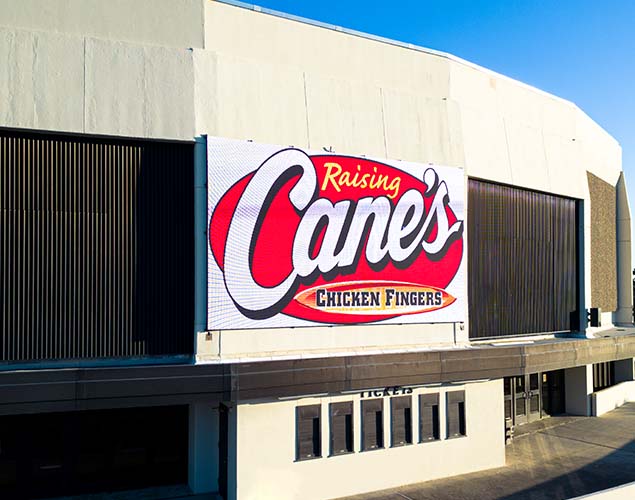
STAX outdoor LED sign at Raising Cane's in Baton Rouge, LA.

Scoreboards In Multi-Purpose Venues

Multi-purpose venues like arenas and event centers host a diverse range of events, from sports games and concerts to conventions and trade shows. The key to accommodating such varied needs lies in versatility—and LED scoreboards have risen to the challenge by offering unmatched functionality and flexibility.