Support that stays close to your project.
Privately held companies can offer accountability that feels closer to the customer.



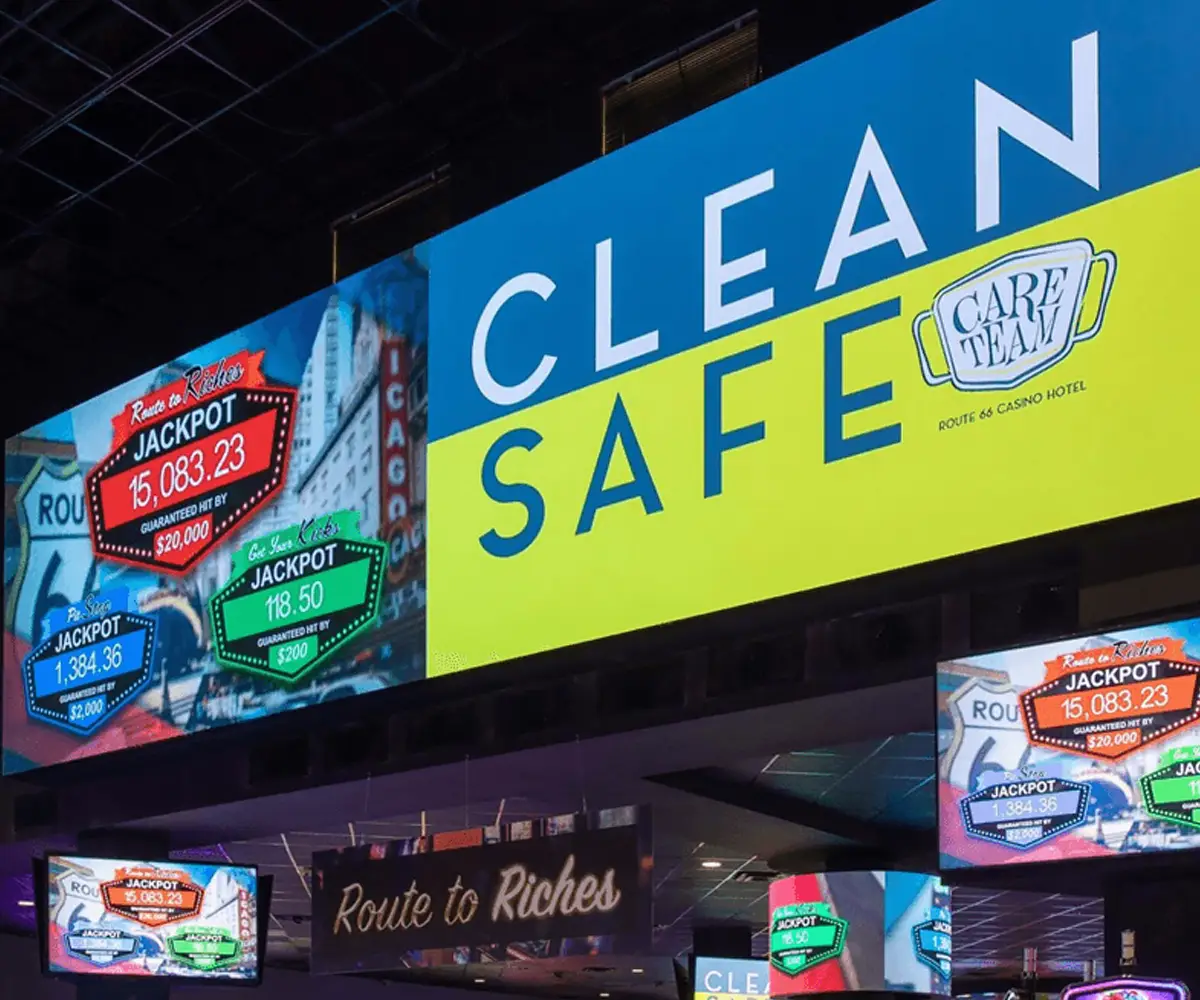
Large LED sign manufacturers have obvious advantages.
They have name recognition. They have long histories. They may have large sales teams, national visibility, investor information, and major projects attached to their names. For some buyers, that scale feels reassuring.
But scale is not the same thing as accountability.
When a school, church, business, municipality, or sign company buys an LED sign, the relationship does not end when the display ships. The real test often comes later, when someone has a question, needs support, wants help with content, has to troubleshoot communication, or needs a replacement part.
That is where personal accountability matters.
A smaller, privately held LED sign manufacturer may not have the same public-company footprint as the largest names in the industry. But it can offer something many buyers value just as much: a closer relationship with the people responsible for helping the project succeed.

Big companies can offer scale
There is nothing wrong with scale.
Large manufacturers often have broad product lines, established processes, national sales coverage, and deep project histories. Some are publicly traded. Others have major institutional, sports, or billboard projects that create strong name recognition.
Those strengths are real.
For very large projects, national rollouts, stadium-scale displays, or projects that require complex procurement oversight, a large manufacturer may be a logical option.
But not every LED sign project is a stadium project.
Many LED sign buyers are schools, churches, municipalities, local businesses, and sign companies serving customers in their own markets. These buyers often care about more than the size of the manufacturer.
- They care about whether someone will answer the phone.
- They care about whether the company understands their project.
- They care about whether support will feel personal after the sale.

Public companies answer to more than customers
Publicly traded companies operate in a different environment than privately held companies.
They answer to boards, investors, quarterly expectations, margin goals, reporting requirements, and shareholder value. That does not mean they do not care about customers. Many public companies build strong products and serve customers well.
But the accountability structure is different.
A public company has to balance customer needs with financial reporting, investor pressure, corporate priorities, and internal operating targets. Decisions may be shaped by scale, efficiency, standardization, and margin management.
A smaller privately held company can operate differently.
It may have more flexibility to stay close to the customer, the dealer, and the project. It can make decisions based on long-term relationships instead of quarterly investor expectations. It can treat customer satisfaction as the center of the business, not one competing priority among many.
That difference matters in a product category where support, service, and follow-through affect the life of the sign.
LED signs need long-term support
An LED sign is not a one-time purchase that disappears into the background.
It is a long-term communication tool. It needs to be installed correctly, updated regularly, supported after the sale, and maintained over time.
That means buyers should think carefully about the company behind the display.
Important questions include:
- Who helps after the sign is installed?
- How easy is it to get technical support?
- Are replacement modules and parts traceable?
- Who helps if communication stops working?
- Is the software easy to manage?
- Does the manufacturer support the dealer or installer?
- How clearly is the warranty explained?
- Does the company treat support as part of the relationship?
The answers to those questions can matter as much as the sign specifications.
A larger company may have formal support systems. A smaller company may offer more direct access to people who know the product, understand the project, and can help solve the problem.
The best choice depends on what kind of support the buyer values.
Personal accountability can change the experience
When a company is smaller, the relationship can feel more direct.
The people involved may know the dealer, the project, the location, and the customer history. They may understand why the sign matters to that school, church, business, or community.
That can make a difference when a project needs attention.
A customer may not want to feel like a ticket number. A dealer may not want to work through layers of corporate process to get an answer. A school or business may not want to explain the project from the beginning every time it needs support.
Personal accountability means the company feels closer to the result.
It means the manufacturer understands that a sign going dark is not just a technical issue. It can affect game-day operations, customer communication, sponsor commitments, school pride, public messaging, or a business’s daily visibility.
When the company is closer to the customer, the urgency can feel different.

Smaller does not mean less capable
A smaller manufacturer should not be judged only by size.
The better questions are about capability, support, and proof.
Buyers should look for:
- Real project experience
- Clear product specifications
- Outdoor-rated construction
- Reliable communication options
- Serviceable modules and components
- Safety listings from recognized testing organizations
- Warranty clarity
- Dealer or installer support
- Customer references
- Case studies or project examples
- Technical documentation
- Responsiveness before and after the sale
A smaller company with strong engineering, reliable support, and a clear service model may be a better fit than a larger company with a support process that feels harder to navigate.
At the same time, buyers should be careful. Not every small company is automatically better. Some companies may only assemble imported displays or rely heavily on marketing claims without strong support behind them.
Size alone should not decide the purchase.
Accountability, transparency, product quality, and long-term support should.

What buyers should ask before choosing an LED sign manufacturer
Whether a buyer is considering a large public company or a smaller privately held manufacturer, the evaluation should go beyond brand recognition.
Helpful questions include:
Who will support us after installation?
Buyers should know whether support comes from the dealer, the manufacturer, a call center, or a combination of teams.
How are replacement parts handled?
Ask whether modules, power supplies, and other components are traceable and available over time.
What happens if the sign has a communication issue?
Remote updates, cellular connections, software access, and diagnostics can affect day-to-day use.
How clear is the warranty?
Warranty length matters, but so do coverage details, response process, exclusions, and service expectations.
Can the company show real projects like ours?
A school should ask for school examples. A church should ask for church examples. A sign dealer should ask how the manufacturer supports dealer-led projects.
Will we have a real relationship with the company?
This matters when the project needs help, not just when the sale is being made.

Where NEXT LED Signs fits
NEXT LED Signs is privately held and focused on long-term customer and dealer relationships.
That matters because we are close to the projects we support. We work with sign companies, schools, businesses, churches, municipalities, and other organizations that need clear guidance, reliable products, and practical support.
We are not trying to be the largest public company in the LED sign industry.
We are focused on being a manufacturer that customers and dealers can reach, trust, and work with over time.
Our goal is to help each project succeed. That includes product planning, communication options, dealer support, technical guidance, serviceability, and long-term use.
Large companies can offer scale. NEXT offers a more personal kind of accountability.
Why NEXT LED Signs is the right choice
Choosing an LED sign manufacturer is not just about choosing a display.
It is about choosing the company that will stand behind the project.
For buyers who want a more direct relationship, practical support, and a manufacturer focused on customer and dealer success, NEXT LED Signs offers a strong alternative to larger, more corporate options.
We believe accountability should stay close to the people who live with the sign every day.
That is the difference a privately held manufacturer can make.
Let’s talk about your next opportunity.
Talk with a real person about dealer support, product options, and your next LED sign project.