Tag

digital signage solutions

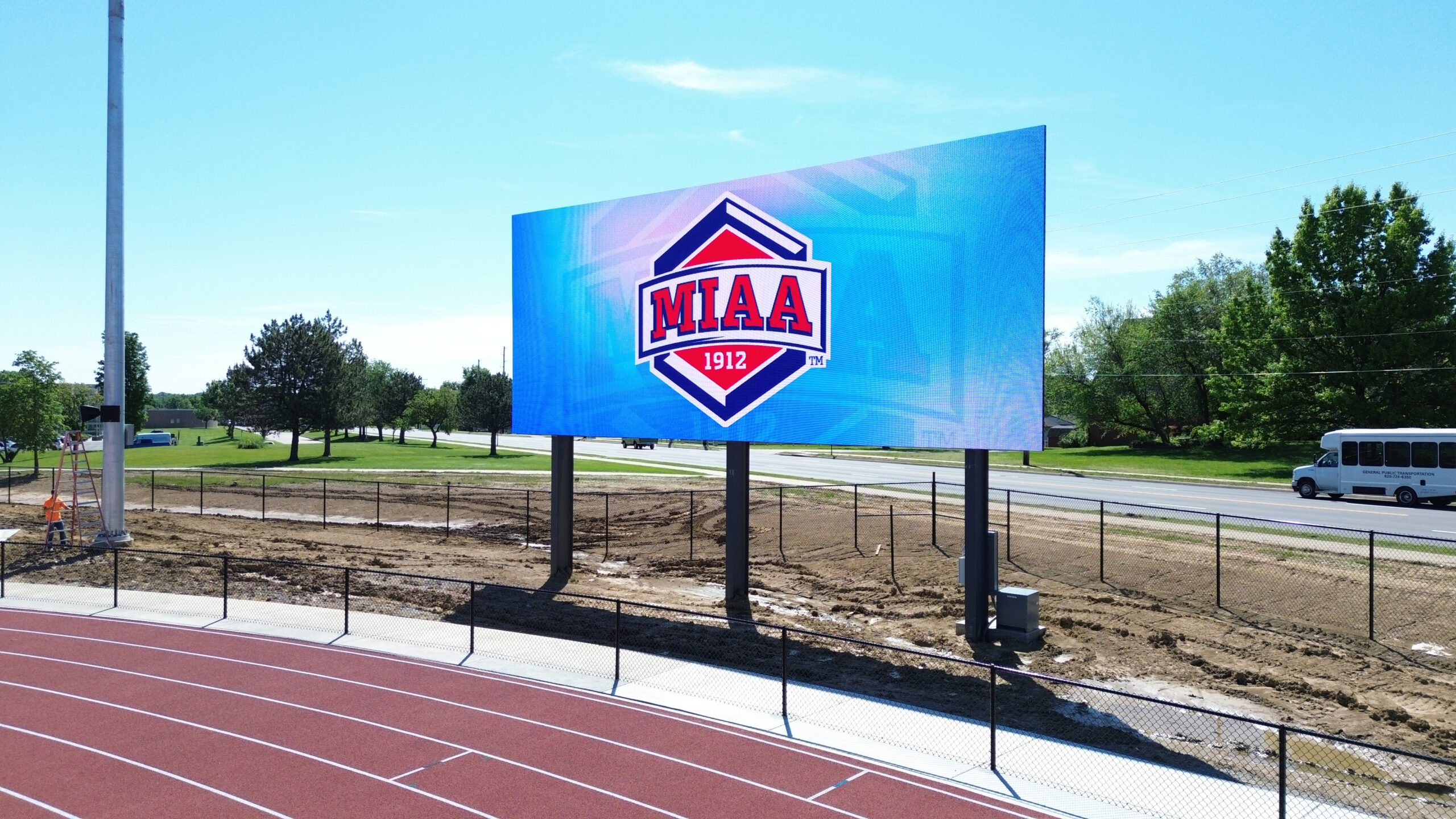
Pittsburg State outdoor track LED display showing an MIAA logo graphic, with the track, fence, field lights, and trees around it.

Buying vs. Renting a Video Board: The True Cost for Schools

Renting a video board can look like the easier choice at first. There is no large purchase order. There is no long approval process. There is no equipment to maintain after the event. A vendor brings the board, sets it up, runs it, tears it down, and leaves. For a one-time event, that can make a lot of sense. However, when schools need a video board or LED scoreboard for recurring athletic events, the math changes quickly. Renting may feel cheaper because the first payment is smaller. But over multiple seasons, the cost can add up without creating any long-term value for the school. That is where many athletic directors, administrators, booster clubs, and business managers need to pause and ask a different question. Not just, “What does it cost this season?” But, “What does this cost over five years, and what do we have to show for it?” Why Renting a Video Board Feels Like the Smart Choice Renting appeals to schools for understandable reasons. A rented video board can solve an immediate problem. If a school has a championship game, tournament, graduation, homecoming event, or one-time community event, renting may seem practical. The benefits are easy to see: No major upfront capital expense No permanent installation decision No long-term ownership responsibility Vendor handles delivery, setup, and teardown Technical support may be included The school can test the experience before buying For schools working with tight budgets, those points matter. Nobody wants to make a large purchase without confidence that the investment will be used, supported, and valued. Renting can also feel lower risk. If the event is temporary, the need may be temporary too. However, that logic starts to break down when the video board is needed again and again. What the Rental Contract May Not Show You A rental quote usually shows the cost of one event or one rental period. That is helpful, but it does not always show the long-term pattern. Published rental pricing varies widely by screen size, location, outdoor rating, setup needs, and technician support. However, several LED rental sources show one-day LED video wall or screen rentals commonly falling in the thousands of dollars. CMG Visuals lists small LED wall rentals around $2,500–$5,000 per day and medium-to-large LED screens around 10–12 feet wide at roughly $3,500–$6,000 for one day. Insane Impact gives a similar starting range of about $3,000–$5,000 for a smaller one-day LED wall rental. Rent For Event lists outdoor LED screen rentals in Phoenix from $3,900/day for an 11.5’ x 6.6’ screen to $5,900/day for a 14.7’ x 8.2’ screen. Those numbers may not match every school, every market, or every event. But they do show why rental costs deserve a five-year calculation. A school that rents a board once may be making a smart short-term choice. A school that rents repeatedly for football games, tournaments, graduations, and special events may spend a significant amount without owning anything at the end. There may also be other details to ask about: Delivery fees Setup and teardown fees Technician or operator fees Weather policies Cancellation terms Power requirements Audio requirements Advertising rights Content control Damage responsibility Overtime or multi-day charges The headline rental price is only one part of the decision. The Ownership Math Schools Sometimes Skip Buying a school LED scoreboard is a bigger upfront investment. That part is obvious. What is less obvious is that ownership gives the school a long-term asset. The board can be used for more than one game, one season, or one event. A school-owned LED scoreboard can support: Football games Soccer games Track events Lacrosse games Graduations Pep rallies Band events Community events Sponsor recognition Student activities Emergency or schedule messaging School branding That changes the value calculation. A rental is a temporary expense. Ownership creates a reusable communication and revenue asset. The key question is not whether buying costs more on day one. It usually does. The real question is whether renting still looks cheaper after three, five, or ten years of repeated use. The Sponsorship Revenue Angle Changes the Conversation Sponsorship revenue is where ownership becomes especially important. A school-owned LED scoreboard can give local businesses a visible way to support athletics, students, and community events. Instead of selling only static banners or printed programs, schools can offer rotating digital sponsor messages during games and events. That does not mean every school will generate the same revenue. A large school with strong attendance, active boosters, and local business support may raise more than a small school with limited attendance or fewer sponsor prospects. However, even modest sponsor income can change the math. [INSERT GRAPHIC: Sponsorship Revenue Can Change the Math] A small school may not raise $15,000 a year. That is okay. Even $3,000–$5,000 per year can help offset the investment over time. Some high school athletic programs have reported generating meaningful advertising revenue after installing a digital scoreboard, especially when the sponsorship program is actively managed. Results vary by school size, attendance, community support, and how consistently the school sells advertising opportunities. Still, the larger point remains: scoreboard sponsorships can become a real funding source when the school owns the advertising inventory. Renting usually does not build this same long-term revenue opportunity for the school. If the rental vendor controls the board, the schedule, or the advertising inventory, the school ma so you have the sponsorship paragraph in the blog and you have a statement toy lose part or all of that sponsor value. The Sponsorship Revenue Angle Changes the Conversation Sponsorship revenue is where ownership becomes especially important. A school-owned LED scoreboard can give local businesses a visible way to support athletics, students, and community events. Instead of selling only static banners or printed programs, schools can offer rotating digital sponsor messages during games and events. That does not mean every school will generate the same revenue. A large school with strong attendance, active boosters, and local business support may raise more than a small school with limited attendance or
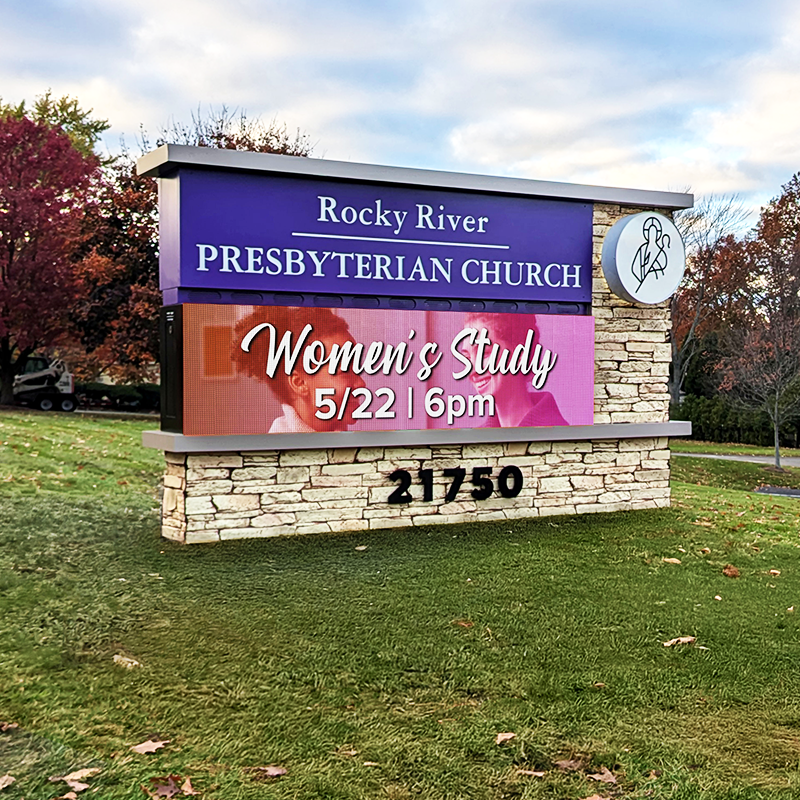
Next LED digital display installation for LED Signs for Churches | Rocky River Presbyterian Church. Searchable industry: Churches & Religious Organizations. Product: Unconfirmed.

Church LED Sign Content Ideas for Services, Holidays, and Community Outreach

What kind of church sign content keeps people informed and helps outreach efforts work harder? The best content usually does three things well: it is clear, timely, and easy to read. Service times, holiday events, family programs, and community outreach messages tend to perform better than crowded slides or vague wording because people only have a few seconds to process what they see. That matters even more for churches because many first-time visitors check a church online before attending. Pushpay reports that 80% of people visit a church’s website before attending in person, which means your sign often works as part of a larger first-impression system. At the same time, Barna reports that 44% of U.S. adults say they are more open to God today than they were before the pandemic, so the opportunity is there. A strong church LED sign helps turn that openness into awareness, interest, and action. Church sign content works best when it stays focused A church LED sign can do a lot, but that does not mean it should try to say everything at once. The most effective sign content is usually the simplest. If someone is driving by, they are not stopping to read a paragraph. They are scanning for one clear message, one event, one service time, or one reason to pay attention. That is why churches usually get better results when they focus on short, specific content themes instead of trying to fill every inch of the screen. A Christmas Eve service, a youth night, a free community dinner, a prayer gathering, or updated Sunday service times all give people a direct reason to notice the message. By contrast, a sign filled with too many words or too many ideas often becomes forgettable. This fits with what we know about how people interact with churches in general. Pushpay says 80% of people visit a church website before attending, which means the sign does not need to do all the explaining. It needs to create interest, build trust, and make the next step feel easy.  Service messages should stay clear and easy to act on Service-related content is one of the most important jobs a church sign can handle. That includes worship times, weekend schedule changes, midweek services, and special seasonal gatherings. These messages work best when they answer basic questions quickly. A good service message tells people what is happening and when. “Sunday Worship 9 and 11 AM” is stronger than a vague phrase because it removes uncertainty. If the church has a traditional and modern service, a children’s ministry check-in time, or a special Easter or Christmas schedule, the sign should make that information easy to understand at a glance. This matters because welcome and accessibility still shape whether someone takes the next step. Pushpay also reports that 75% of church visitors make a credibility judgment based on the website, which suggests clarity and confidence matter in church communication overall. The sign should support that same feeling. It should look organized, timely, and easy to follow. Holiday sign content should feel timely, not cluttered Holidays create some of the best outreach opportunities churches get all year. Easter, Christmas, Mother’s Day, fall kickoff, back-to-school season, and community service weekends all bring people who may not otherwise attend. But seasonal content works best when it stays clean and focused. A common mistake is trying to fit too much into one holiday slide. If a church tries to list every service, every event, every ministry, and every detail in one rotation, the message gets muddy. A stronger approach is to give each major point its own turn. One message might highlight the date and time for Easter services. Another might focus on a community egg hunt. Another might promote a Christmas Eve candlelight service. That kind of focus matters because people are often spiritually open, but they are not always ready to decode church language. Barna found that 44% of U.S. adults say they are more open to God today than they were before the pandemic, which means churches have real opportunity. Clear seasonal invitations help make that openness easier to act on.  Community outreach messages often connect with people first Not every first connection starts with Sunday worship. Sometimes it starts with a food drive, grief support group, blood drive, family movie night, school supply collection, or volunteer opportunity. Community outreach content helps a church show that it is active, present, and involved in real life. These messages are valuable because they widen the doorway. Someone who may not respond to “Join Us Sunday” might respond to “Free Community Dinner Friday” or “School Supply Drive This Week.” That kind of message gives people a low-pressure point of contact and lets the church communicate care in a visible, practical way. It also supports the broader opportunity churches have right now. Barna found that 74% of U.S. adults say they want to grow spiritually and 77% say they believe in a higher power. Community outreach content does not replace worship content, but it often helps people move from awareness to familiarity. That is an important first step. Readability matters as much as the message itself Even the best content idea can fail if the screen is hard to read. Good church sign content depends on design decisions just as much as wording. Contrast is one of the biggest factors. Daktronics recommends darker backgrounds rather than bright white backgrounds because white can feel harsh on LED displays and reduce visual comfort. Rich, saturated colors with strong contrast generally perform better. Daktronics also notes that all caps take longer to read, so mixed upper- and lowercase text is usually better for longer messages.  That is especially important for churches because sign content is often viewed from the road. A message should be readable quickly, with enough contrast between text and background that the words stand out immediately. If the design is too busy, if the background is too bright, or if the text treatment is too

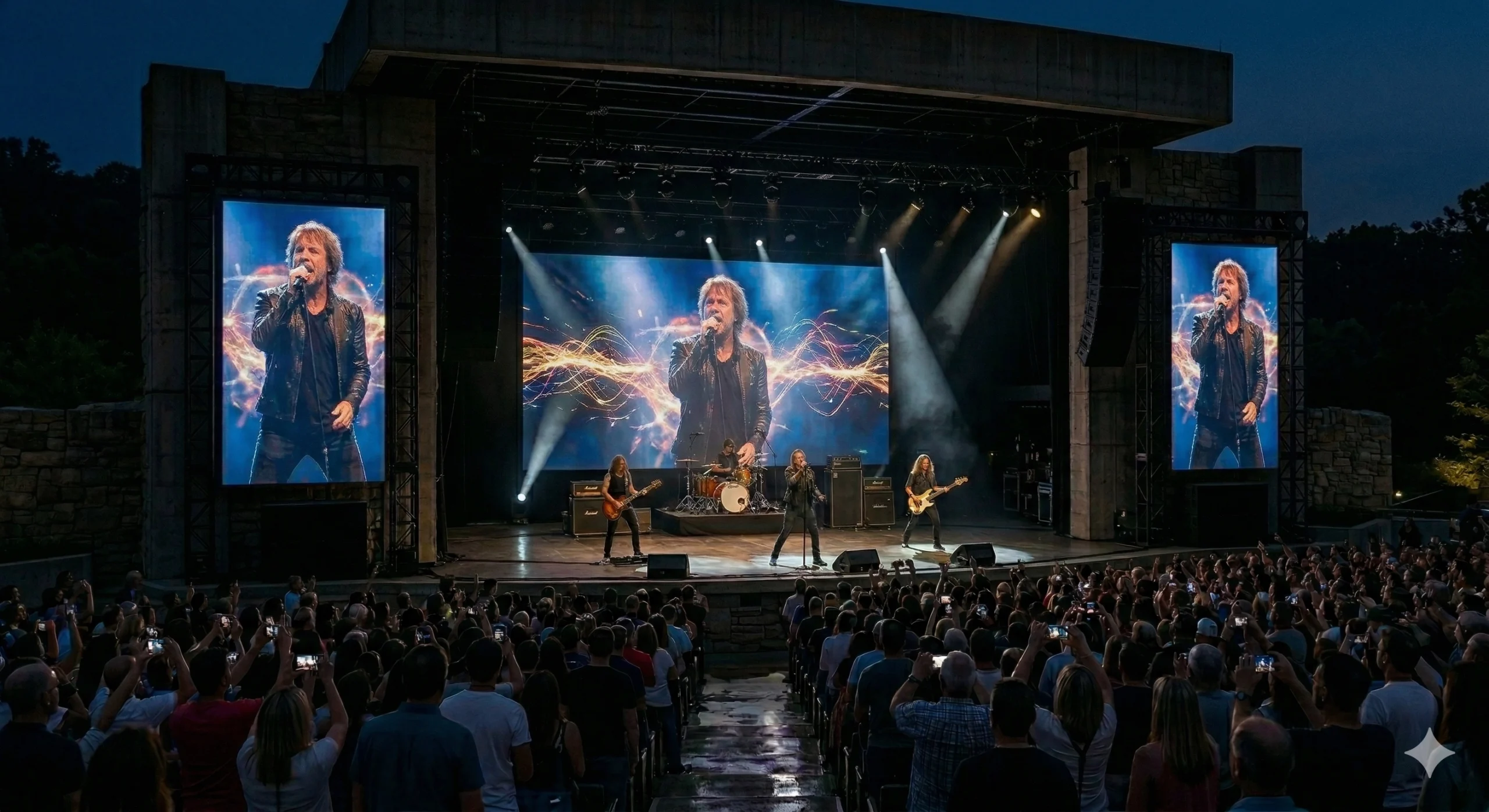
Outdoor rock band performs at night before a large crowd. Three LED signs show lead singer. Stage lit brightly.

High-Refresh-Rate LED is the New Standard for Outdoor Amphitheaters

For amphitheaters in 2026, great sound is only part of the story. Fans expect a venue to look unforgettable too. That matters even more now that concertgoers are constantly recording and sharing clips online. When people post from a show, they are not just capturing the artist. They are showing the stage, the screens, the atmosphere, and the overall energy of the venue. That is why LED video walls have become such an important part of amphitheater design. High-refresh-rate displays help eliminate the flicker that shows up on smartphone video. High-brightness outdoor screens stay visible even in afternoon sunlight. Edge-to-edge LED wraps around the stage can also make the performance feel more immersive, which supports fan engagement and stronger sponsorship value. Recent data from Sprout Social, Live Nation, AVIXA, Fortune Business Insights, and The Business Research Company all point in the same direction: venues that invest in better digital architecture are building experiences fans want to remember, share, and come back for. Why refresh rate matters more than most venues realize The audience is no longer limited to the seats inside the amphitheater. It also includes the people who watch clips later on TikTok, Instagram, and other social platforms. If your LED screens show scan lines, flicker, or that rolling distortion people sometimes catch on their phones, the venue instantly looks dated on camera. That is not just a technical problem. It is a branding problem. According to the 2026 Sprout Social Hospitality & Entertainment Index, 94% of fans post to social media during a show. That makes screen performance part of your public image. A high refresh rate, especially at 3,840 Hz or higher, helps keep the content looking solid and clean when fans record it on smartphones. Instead of black bars or water-like ripples, the video looks smoother, brighter, and more professional. In practical terms, that means your venue is not just performing well in person. It is also performing well online, where future ticket buyers are forming impressions. Source: Sprout Social Hospitality & Entertainment Index, 2026 / VMX Visual Technical Standards Why the screen is no longer just for the back row There was a time when amphitheater video screens were mostly there for magnification. The goal was simple: help the people farthest from the stage see the performer. That is no longer enough. Today, the screen is part of the experience itself. Venue owners are using 90-degree corner designs, stage wraps, and integrated LED architecture to create a bigger visual environment around the performance. Instead of acting like a support tool, the display becomes part of the show. That shift matters because fans are responding to the atmosphere as much as the performance. Live Nation’s 2025 Living for Live Global Study found that 77% of fans said the visual atmosphere of the stage made them feel part of something bigger. That kind of emotional connection helps explain why people are willing to pay more for a live event that feels immersive and memorable. When the visual environment feels intentional, the venue becomes part of the attraction. Source: Live Nation Entertainment, Living for Live Global Study, 2025 Why outdoor brightness affects real revenue Afternoon shows create a challenge that many amphitheaters know too well. If the sun washes out the screens, the content loses its impact right when sponsors and opening acts still need visibility. That is where brightness becomes a business issue, not just a spec sheet detail. Data from 2025 Pro AV Digital Signage Analytics shows that venues upgrading to high-brightness displays in the 5,000 to 10,000 nits range saw a 20% increase in daytime sponsorship recall. In other words, when the screens stay visible in harsh daylight, the sponsor message has a better chance of being noticed and remembered. That is a big deal in outdoor entertainment, where early sets, festival schedules, and daylight programming can make up a substantial part of the event window. If the screens look weak for those hours, part of the sponsorship value disappears with them. Source: AVIXA / Fortune Business Insights, 2025 Why sponsors want more than banners now Sponsors are also asking for more than static branding. They want the kind of digital control that lets a venue create a coordinated visual moment. With an integrated LED network, a venue can shift from artist content to sponsor content across multiple displays at once. Stage wings, concourse displays, entry points, and other screens can all work together during intermission, set changes, or special activations. That creates a level of presence a printed sign cannot match. The 2026 Sports & Entertainment Sponsorship Market Report points to this type of integrated activation as one reason the sponsorship sector is growing at a 6.6% compound annual growth rate. Brands are moving away from fragmented exposure and toward experiences that feel more exclusive and more immersive. Venues that can support that kind of coordinated activation are better positioned to attract premium sponsorship opportunities. Source: The Business Research Company, Sports Sponsorship Market Report, 2026 Why amphitheater LED design now shapes the entire venue experience For today’s venues, LED architecture does much more than support the performance. It shapes how the venue looks on camera, how the crowd feels in the moment, and how sponsors measure value afterward. That is why refresh rate, brightness, and integrated design matter so much. A high-refresh-rate screen helps the venue look polished in fan-generated video. A high-brightness display protects visibility during daytime performances. A fully wrapped stage environment creates the kind of immersive atmosphere that fans talk about long after the show ends. For amphitheater owners, that makes LED design part of the venue’s long-term reputation. The better the visual experience, the more likely fans are to share it, remember it, and associate that venue with a premium live event. Digital signage transforms the waiting room experience by educating, engaging, and informing patients while reducing frustration. With proven benefits, including shorter perceived wait times, increased efficiency, and enhanced communication, digital displays play a crucial role in modern

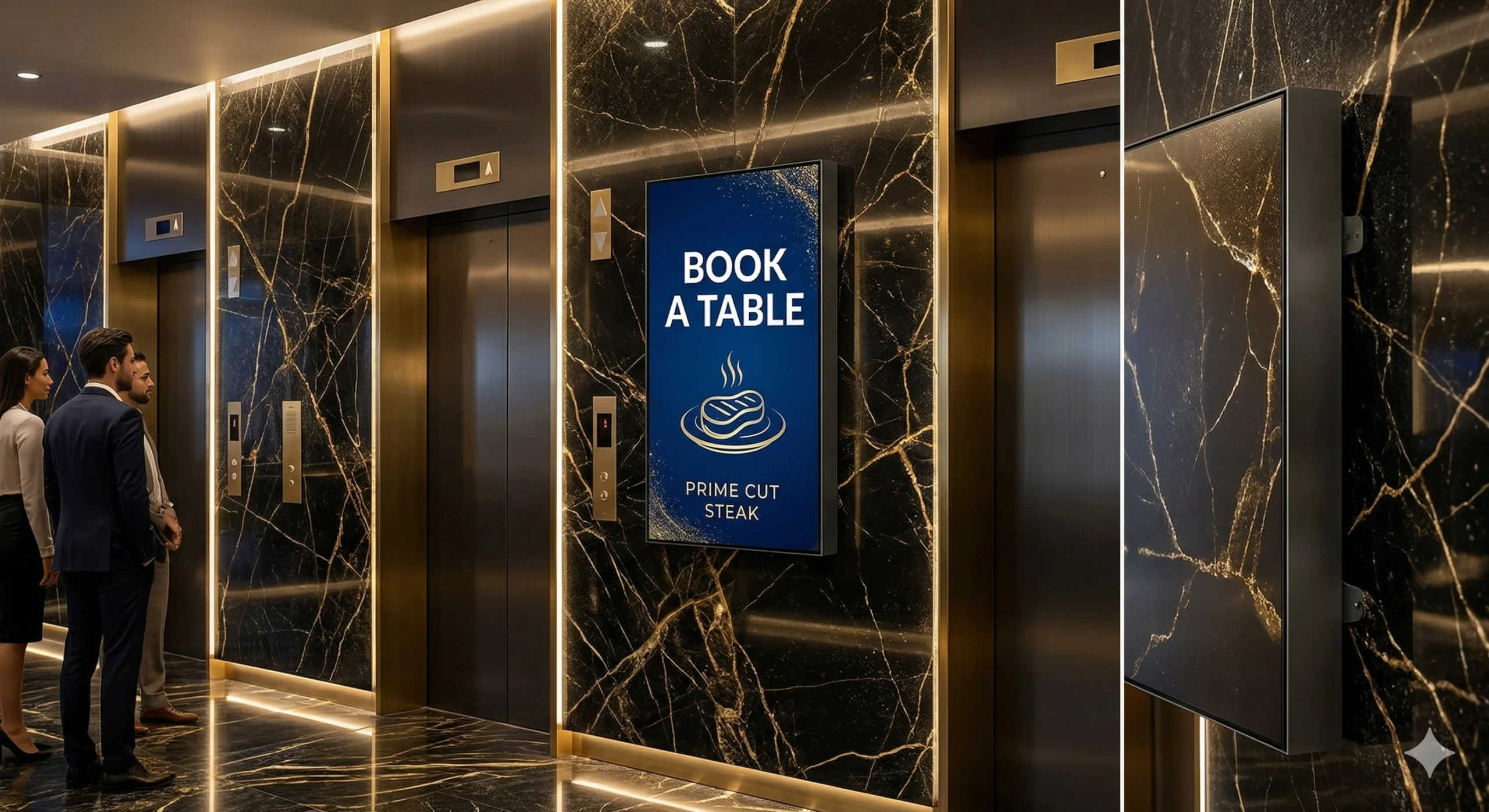
Two people by black marble elevators beside an LED sign showing BOOK A TABLE, steak graphic, and PRIME CUT STEAK.

Integrated Resorts Increase Non-Gaming Revenue with Immersive LED Architecture

Casino resorts are making money in a different way than they did a decade ago. The biggest gains are no longer tied only to the gaming floor. More of the financial pressure now sits on rooms, restaurants, bars, retail, and the overall guest experience. That shift is changing how properties think about design. Instead of treating hallways, elevator banks, check-in counters, and premium lounges as simple transition spaces, many resorts are turning them into digital environments that hold attention and support spending. Surface-mounted, edge-to-edge LED displays are helping create those spaces by adding motion, atmosphere, and visual storytelling where guests already spend time. Recent data from the Nevada Gaming Control Board, the Experience Design Institute, the 2026 Global Hospitality Analytics Report, the 2025 American Express Travel Global Trends Report, and the 2026 Sprout Social Hospitality Index all point to the same conclusion: when a resort feels immersive, guests stay engaged longer, spend more in non-gaming areas, and are more likely to share the experience with others. When the resort experience drives the revenue For years, the casino floor carried the weight. Restaurants, hotel rooms, and lounges supported the main attraction. That model is changing. According to the Nevada Gaming Control Board’s April 2025 Abstract covering the fiscal year ending June 30, 2024, non-gaming activities including rooms, food, and beverage accounted for 64.2% of total revenue for large-scale Nevada licensees. That number matters because it confirms that the guest experience away from the gaming floor is now doing more of the heavy lifting. That changes the design conversation. If most of a resort’s revenue is coming from hospitality rather than gaming, then the spaces between destinations start to matter more. A hallway is no longer just a hallway. A check-in line is no longer just a queue. A premium bar is no longer just a waiting area before dinner. Each one becomes a place where atmosphere, anticipation, and visual impact can influence guest behavior. Why dwell time matters more than ever When non-gaming revenue drives the majority of performance, guest attention becomes a real business asset. The longer someone stays engaged in a premium zone, the more opportunity a property has to increase food and beverage sales, retail activity, and overall spend. The Experience Design Institute’s 2025 white paper on immersive environments found that architecturally integrated digital spaces extended average guest dwell time by 18 minutes. The same research found a direct connection between time and spending: every additional 10 minutes a guest spent in a premium lounge or transition zone was associated with a 6.4% increase in food and beverage capture rates. That is why LED architecture has become more than décor. It gives resorts a way to slow the moment down. A visually compelling space feels intentional. It invites guests to pause, look around, and take in what is happening. That extra attention can translate into stronger spending in the spaces that now matter most. Turning check-in into a revenue opportunity One of the most overlooked spaces in many resorts is the front desk. Guests are standing there anyway, but too often the area does nothing except process arrivals. Ultra-wide LED ribbons behind the check-in counter can change that dynamic. Instead of showing a blank wall or static backdrop, the property can use motion content to introduce the guest to what matters most inside the resort. A steakhouse, headliner, rooftop lounge, spa, sportsbook, or premium cocktail bar can all be featured before the guest even reaches the elevator. That matters because it turns waiting time into preview time. The display is not just filling space. It is shaping the guest’s first impression and helping guide where they may spend later that day. The 2026 Global Hospitality Analytics Report found that properties using dynamic architectural features saw a 124% increase in profitability in the specific zones where those displays were installed, including bars and retail corridors. That kind of result helps explain why resorts are rethinking where digital displays belong and what they should do. Why tech-forward design now feels like part of luxury This shift is also being pushed by guest expectations. Younger high-spending travelers have grown up in visually rich digital environments, and they notice quickly when a property feels dated. The 2025 American Express Travel Global Trends Report found that 73% of Millennial and Gen Z travelers prioritize resorts that offer visually immersive and tech-integrated environments. That does not mean every space has to feel like a nightclub or a gaming arena. It means the environment has to feel current, considered, and memorable. For casinos and integrated resorts, that creates a new standard. Luxury is no longer defined only by finishes, furnishings, and square footage. It is also shaped by how the space feels in motion. A property that delivers strong visual energy in the right places can feel more current, more premium, and more shareable. The social media advantage of immersive design There is also a marketing benefit that goes beyond the guest already on site. Some spaces naturally encourage photos, video clips, and social sharing. That kind of response is hard to buy because it comes from the guest, not the brand. The 2026 Sprout Social Hospitality Index found that resorts featuring digitally enhanced architectural elements saw a 40% higher rate of user-generated content. That matters because every photo or short video shared from a visually distinctive resort becomes another layer of exposure. It helps reinforce the property’s identity and extends the experience into social platforms where future guests are already looking for ideas. In other words, immersive LED architecture does not just influence the people standing in front of it. It can also influence the next round of guests who see it later online. Why this matters for casinos now Casino resorts are under more pressure than ever to make every zone work harder. If non-gaming revenue now drives most of the business, then design decisions have to support that reality. LED architecture gives properties a way to turn underused spaces into active

Full color LED digital display at Southern University - Baton Rouge, LA.

The First 10 Minutes: How Large-Format LED Entryways Revolutionize Fan Engagement and Stadium ROI

Modern stadium management is shifting its focus from the “seat experience” to the “arrival experience.” With fan sentiment often cemented within the first 10 minutes of arrival, the stadium entryway has become the most critical real estate for engagement. This article explores the strategic implementation of large-format outdoor LED displays at primary gates—not merely as signage, but as revenue-generating “First Impression” engines. By leveraging high-brightness, edge-to-edge LED technology, venues can drive a 32% increase in pre-game sentiment, secure 20% higher sponsorship premiums through digital takeovers, and reduce concourse congestion by accelerating wayfinding. For the modern venue, the entryway LED is the bridge between a simple ticket scan and a premium fan experience. https://www.youtube.com/watch?v=jIXuvmORgkU The Gateway Effect: Why the Entrance is Your Most Valuable Screen The traditional “gate” was a utility—a place to scan a barcode and move through a turnstile. However, data from a 2025 Sports Tech Journal white paper suggests that the “arrival window” is where fans form their final opinion on the value of the event. Venues that greet fans with dynamic, high-impact LED displays see a measurable shift in behavior compared to those relying on static vinyl or outdated, low-resolution boards. When a fan approaches a gate flanked by NEXT LED 9×16 vertical displays showing real-time social feeds or a 16×9 overhead “Game Ready” countdown, the psychological transition from “pedestrian” to “fan” happens instantly. This “Gateway Effect” isn’t just about aesthetics; it’s about setting the emotional tone for the next three hours. Driving Revenue Before the First Pitch The financial argument for entryway LED is anchored in two primary areas: direct retail spikes and premium sponsorship “Takeovers.” 1. The Retail “Flash Sale” Trigger Statistical evidence from the 2025 Minor League Baseball season proves that the entryway is a powerful sales funnel. Venues that utilized their gate displays to promote limited-time “Flash Sales”—such as a “20% off jerseys for the next 30 minutes”—reported a 12% spike in team store revenue during the first quarter of the game. By hitting the fan with a high-brightness call-to-action the moment they enter, you capture “intent to spend” before they reach their seats and settle in. 2. Commanding the “Digital Takeover” Premium Sponsors are no longer satisfied with being one of ten logos on a rotating loop. They want the “unavoidable” experience. A 2024 Sports Business Institute study found that “Digital Takeovers”—where every screen at a gate is synchronized to show a single brand’s content during peak entry—command a 15–20% higher ad rate. Because fans are funneled through these gates in a predictable flow, the impressions are guaranteed and high-impact. Engineering the Experience: The NEXT LED Difference For an entryway display to be effective, it must overcome the two biggest enemies of outdoor signage: Direct Sunlight and Aesthetic “Bezels.” Sunlight-Readable Performance Entryway signs are often subject to harsh, direct afternoon sun. A standard “TV-style” screen will wash out, rendering the investment useless during the hours fans are actually arriving. Our high-nit outdoor displays are engineered to maintain color saturation and contrast even in blinding 2:00 PM sunlight, ensuring that “GAME TIME 1 PM” is as clear as a printed poster. Seamless Edge-to-Edge Integration A major flaw in many stadium installs is the “black box” look—screens trapped behind thick metal frames. NEXT LED specializes in edge-to-edge pixel construction. By eliminating the bezel, the display becomes an architectural feature of the concrete facade rather than an afterthought. When the pixels go to the absolute edge, the content feels integrated into the stadium’s “skin,” a look that is increasingly demanded by high-end architects and venue owners. Operational Efficiency: Wayfinding and Crowd Flow Beyond revenue, there is a logistical “ROI.” Dynamic wayfinding—using the entryway LED to show gate-specific directions or “Find Your Seat” prompts—has been shown to reduce the average time to seat by 4.5 minutes per fan. In a 30,000-seat stadium, saving four minutes per person drastically reduces “concourse clogging.” This allows security to manage lines more effectively and, more importantly, gets the fan into the concourse—where they are closer to food, beverage, and retail outlets—much faster. The Social Media “Trigger” Finally, your entryway is your best organic marketing tool. Stadiums with high-resolution, “photo-worthy” LED architectures at the main gate report a 28% increase in organic social media check-ins on platforms like Instagram and TikTok within the first hour of gates opening. When fans take a “selfie” in front of a borderless, vibrant sign, they are providing free, high-authenticity advertising for your venue to their entire social network. Frequently Asked Questions on Maximizing Revenue and Engagement at the Stadium Gate What is the average lifespan of an outdoor stadium LED screen? A high-quality outdoor LED display is engineered for approximately 100,000 hours, which typically translates to 12 to 15 years of reliable performance in a stadium environment. Regular preventative maintenance on power supplies and cooling systems ensures the display remains in peak condition for the full duration of its lifecycle. How much does a large-scale stadium LED video wall cost to install? Professional stadium LED installations generally range from $75,000 to over $500,000. Total cost is driven by the screen’s square footage, the pixel pitch resolution, and the structural engineering required for wind loads. When integrated at entryways, these displays often pay for themselves through premium sponsorship “digital takeover” packages.  What is the best IP Rating for outdoor stadium displays? For permanent outdoor stadium signage, a minimum rating of IP65 is required to ensure the unit is dust-tight and resistant to high-pressure water jets. Higher-end systems often utilize IP67-rated components to withstand extreme tropical storms or frequent high-pressure power washing without compromising the internal electronics or pixel face.  Can outdoor LED screens be seen clearly in direct afternoon sunlight? Yes, provided the display produces between 5,000 and 13,000 NITs of brightness. This extreme luminous intensity allows the LED pixels to compete with direct, 2:00 PM sunlight, maintaining high contrast and vivid color saturation that standard consumer-grade screens cannot achieve in an unshaded outdoor environment.  Can you see a stadium LED sign from an airplane?

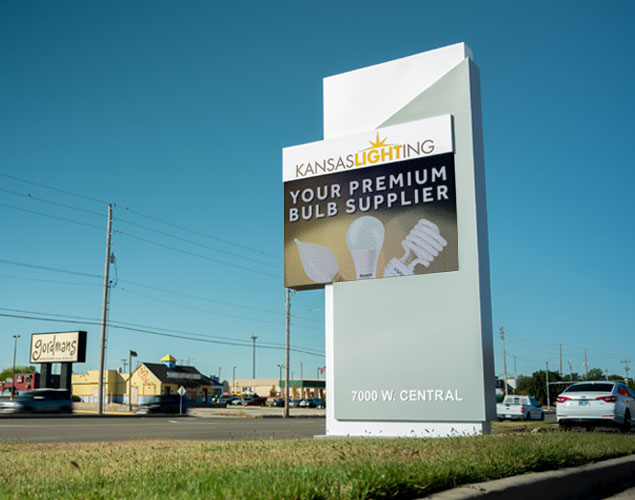
A tall white Kansas Lighting monument incorporates a vertical LED display with a premium-supplier message beside the retail property.

Your Digital Sign Isn’t Just a Screen—It’s Your Brand in Motion

When people talk about branding, they usually mean logos, websites, or maybe uniforms. But the thing that most people see first? That sign outside your building. Or the LED screen by your entryway. And if it’s bland, outdated, or inconsistent with the rest of your brand? That disconnect doesn’t go unnoticed. Your digital signage isn’t just a way to get noticed—it’s how people get to know you. The First Impression People Actually Notice Let’s be honest. People are busy. They’re walking past your storefront, driving by your church, or dropping their kid off at school—and they’re deciding in seconds whether you feel trustworthy, modern, or worth a second look. A bright, clear, and on-brand digital sign does what no poster or banner ever could: it gives your message motion, relevance, and presence. Stat: Digital signs capture 400% more views than static signage—and increase message retention by up to 83%. https://www.youtube.com/watch?v=QyKhlkgn-bY Consistency Builds Credibility Your font. Your colors. The tone of your messaging. These things aren’t small—they’re what makes your brand feel like you. When your digital sign echoes your visual identity—matching your website, logo, and voice—you create a sense of cohesion that builds credibility and trust. That goes for a local bakery just as much as a bank or school district. And with LED signs, staying consistent doesn’t mean staying stuck. You can change your message without changing your look. Relevance Is Real-Time Static signs age fast. Weather changes. Offers end. Events pass. With digital signage, you’re not locked into yesterday’s message. You can promote an event in the morning, thank attendees by afternoon, and push a special offer before dinner. And it’s not just about marketing—it’s about feeling present. When people see updated content, it tells them you’re paying attention. Fact: Businesses that use real-time content see a 33% increase in audience engagement. Great Signage Creates Emotional Connection People don’t remember “open 9–5.” They remember feeling included. A great LED sign doesn’t just inform—it creates connection. Highlight a student of the week. Celebrate a team win. Post a thank-you to veterans. Promote a local blood drive. These moments show your community that you see them. And when your sign does that consistently, people start associating your brand with more than just a product or service—they see heart. Brand Presence, Not Just Promotion This isn’t about being flashy. It’s about being intentional. LED signs let you express your values and your mission in ways a logo alone never could. Whether you’re sharing safety tips, weather alerts, or celebrating a milestone, your sign becomes a living part of how people experience your brand. Not just what you say—but how you say it, where you say it, and when. Digital Signs as Brand Ambassadors Your LED signs do more than promote—they embody your brand’s identity. By investing in professional digital signage content, you transform physical spaces into vibrant brand ambassadors, create stronger audience connections, and build a more recognizable, impactful presence. With the right strategy, your digital signage becomes an indispensable tool for long-term brand success. White-Glove Simplicity: Why Digital Signage Shouldn’t Feel Like Buying a Server Rack Feeling overwhelmed by digital signage options? You’re not alone. Most small business owners and city departments are handed spec sheets, voltage charts, and software manuals when they just want one thing: a sign that works and doesn’t become a full-time job. That’s where we come in. At Next LED Signs, we believe the buying and owning process should feel like ordering from a great restaurant: You know what you’re getting You trust it’ll be good And you don’t have to step into the kitchen Our white-glove process means: You get one point of contact, no jargon. And when it’s up? You’re supported without endless upsells Digital signage should be exciting, not exhausting. Our clients say things like: “That’s it? I thought this would be way harder.” And honestly, we like hearing that. Let us take the stress out of visibility. You run your business—we’ll light it up. FAQs: Making Digital Signs Work as Brand Extensions Q: Can a digital sign really make that big of a difference in brand perception?A: Yes. Signage is often the first branded experience someone has with your organization. Studies show that consistent brand presentation—especially across digital touchpoints—can increase revenue by up to 23%. Q: How does a digital sign help reinforce branding?A: When your sign reflects your brand’s colors, voice, and design style, it reinforces everything you’ve built elsewhere. It becomes a seamless extension of your website, social media, and physical space. Q: Do real-time updates actually matter to viewers?A: Absolutely. Businesses using real-time updates on digital signs see a 33% boost in engagement, especially when content is time-sensitive or community-focused. Q: What types of content work best for brand consistency?A: Community messaging, brand-aligned quotes, real-time updates, testimonials, team highlights, and holiday messages all help reinforce brand values and tone. Q: How long does a digital LED sign typically last?A: Most commercial LED signs are rated for 100,000 hours—that’s over 11 years of 24/7 operation. Why Choose NEXT LED Signs? We don’t just sell LED displays. We help you turn them into branded experiences that work. From design to installation to long-term support, our team is here to make sure your sign reflects who you are—and why you matter.Contact us today or give us a call to get started.

An LED electronic message center on a cement base by a roadside shows: “VS. A LIVE ART BATTLE PAINTING | SCULPTURE” outdoors.

How to Choose the Right Mounting Options for Your LED Sign

When it comes to LED digital signs, selecting the right mounting option is crucial for both functionality and aesthetic appeal. Whether you’re installing a digital sign at your storefront, in a shopping mall, or in an outdoor location, the mounting system you choose can affect the sign’s performance, visibility, and longevity.

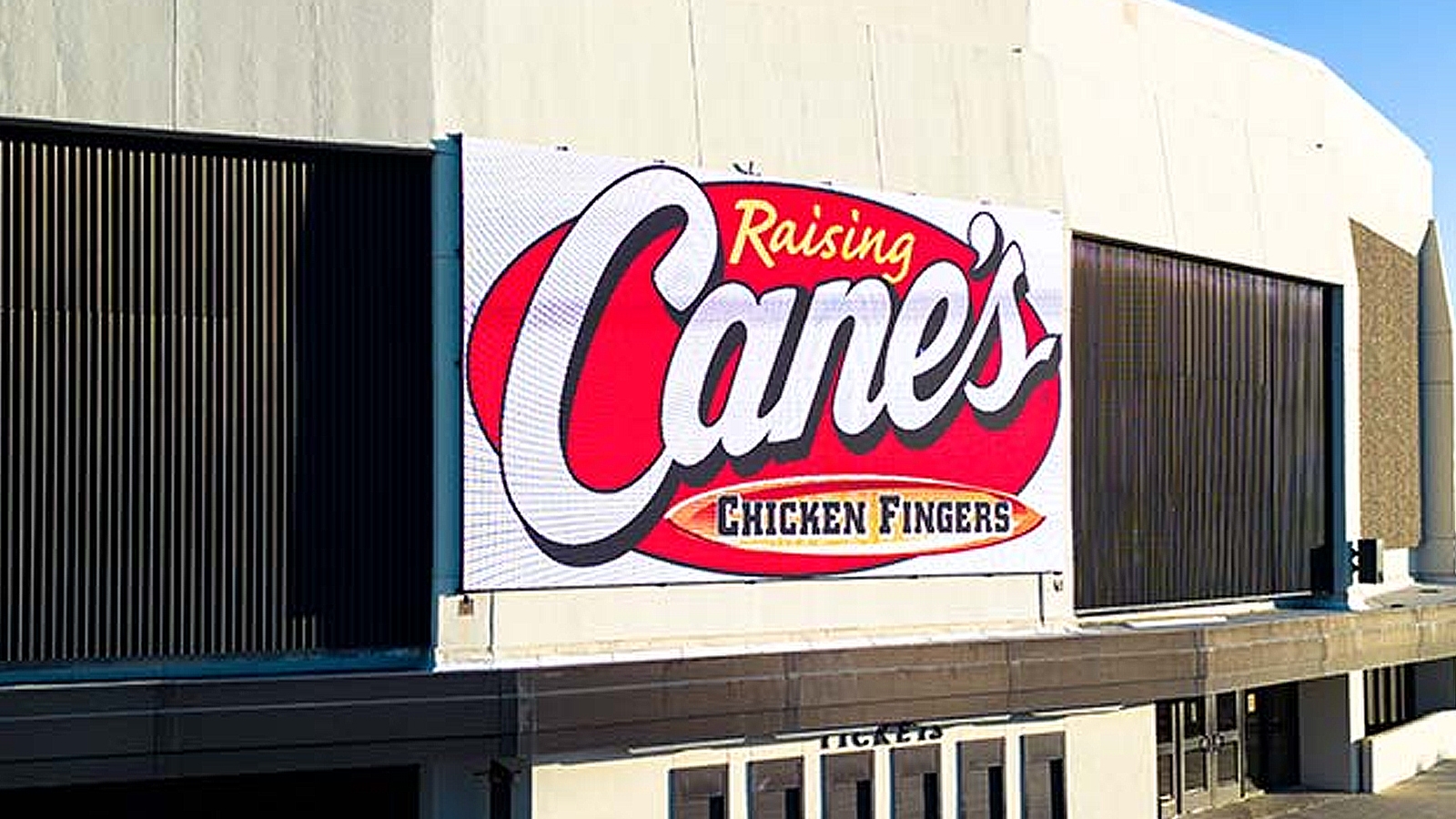
Southern University outdoor LED athletics display showing a Raising Cane’s sponsor graphic on the side of a sports building.

How to Choose the Right Software for Managing LED Signs

Managing LED digital signs efficiently requires more than just having high-quality hardware. To truly unlock the potential of your digital signage, you need the right software to control and schedule content, monitor performance, and ensure seamless operation.

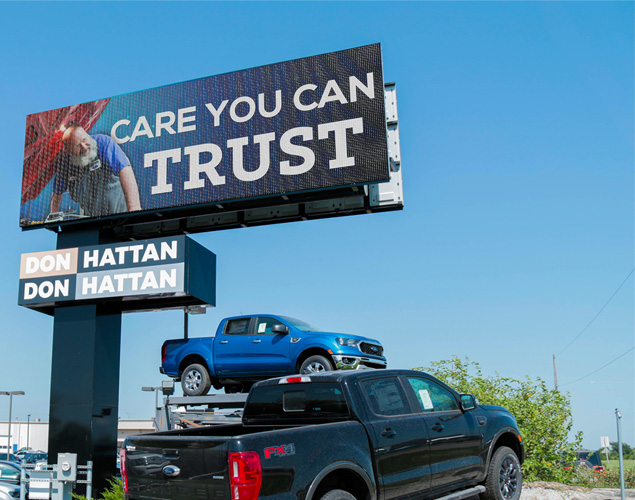
An LED billboard displays the message “Care You Can Trust” alongside a mechanic graphic. Below, two trucks are showcased in front of an electronic message center featuring the name “Don Hattan” twice. The sky is clear and blue.

LED Signs | A Powerful Marketing Funnel

We often find ourselves in conversations with our sales team and dealer partners about the incredible marketing power of LED signs. While it might seem like a straightforward concept—one that should be universally recognized—the true impact of this core product benefit is sometimes overlooked or taken for granted.

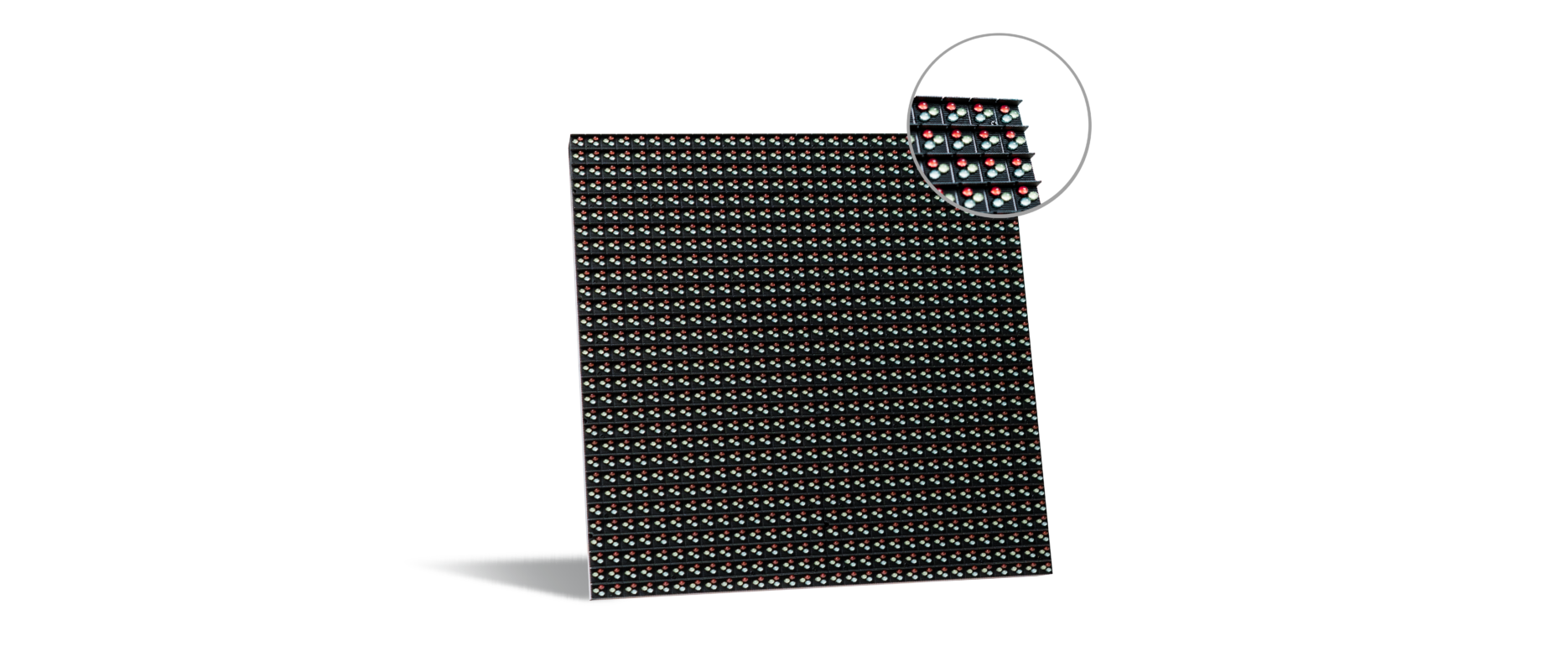
Product illustration shows a black ONYX LED module with a magnified view of its pixel arrangement.

Understanding Pixel Pitch and Pixel Matrix in LED Signs

Investing in LED signs is one of the best ways to make your business stand out. But before you commit to a display, understanding a few technical terms—pixel pitch and pixel matrix—is crucial to ensure you get the right solution. These two factors play a key role in the image quality, clarity, and overall performance of your digital sign.