Tag

fine pixel pitch

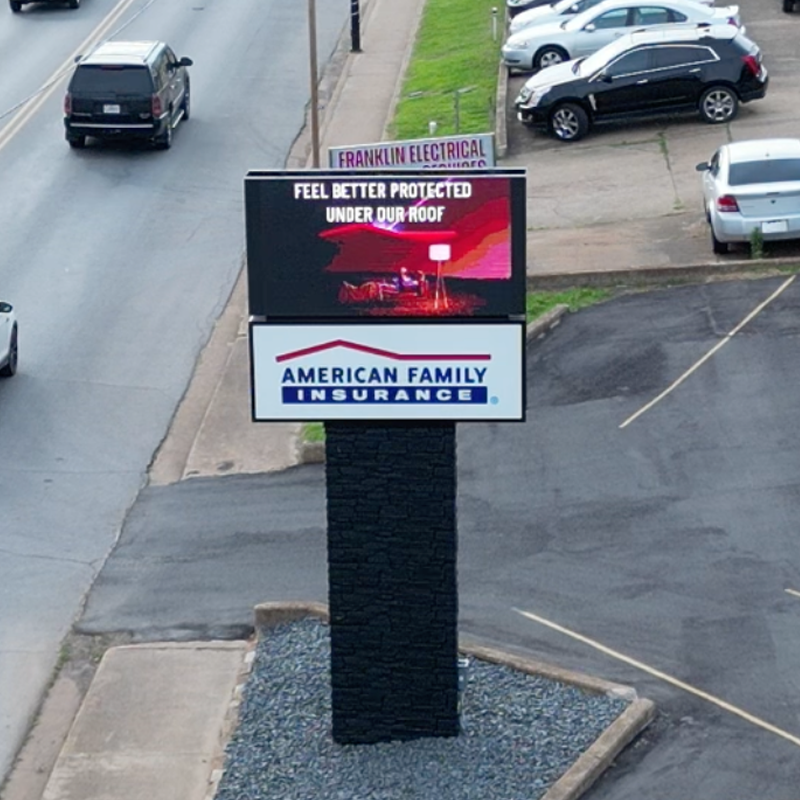
LED Signs for Professional Services featuring American Family Insurance.

Maximizing LED display visibility: brightness, pixel pitch, and scheduling best practices

LED displays only work when people can actually see—and understand—the message. This article breaks down how brightness, pixel pitch, and smart scheduling work together to improve visibility, message recall, and real-world results from your LED display investment. L An LED display has a short window to make an impression. Outdoors, that window is shaped by sunlight and viewing distance. Indoors, it’s shaped by lighting conditions and how close people are to the screen. In both cases, visibility comes down to a combination of brightness, resolution, and timing—not any single spec on its own. How Bright an Outdoor LED Display Needs to Be Outdoor LED displays have one primary challenge: staying readable in direct daylight. That’s why most outdoor signs are designed to operate in the 5,000 to 7,000 nit range. At that level, content holds its contrast and doesn’t wash out when the sun is high. Brightness also plays a role in how well messages stick. Research from Burkhart Advertising and Arbitron shows that high-brightness digital signage draws significantly more attention than static signs—up to four times as many views—and contributes to a 63% increase in brand awareness. Automatic brightness control matters just as much as peak output. A display that adjusts itself throughout the day maintains readability without becoming uncomfortable to look at at night. https://www.youtube.com/watch?v=IExQweVCd-Q Pixel Pitch and Viewing Distance Go Hand in Hand Pixel pitch is simply a measure of how tightly the LEDs are spaced. What matters is how that spacing lines up with where people are standing. For displays viewed from farther away, larger pixel pitches work well and keep costs in check. When viewers are closer, tighter spacing produces cleaner text and sharper images. A common planning guideline is to match pixel pitch to viewing distance at roughly 8 to 10 feet per millimeter of pitch. That’s why 10mm displays are common for roadside applications, while indoor screens use much tighter spacing. When pixel pitch doesn’t match the viewing environment, clarity suffers. The Digital Signage Federation has found that poorly matched pixel pitch can reduce message comprehension by as much as 45%, even when brightness is sufficient. Choosing Pixel Pitch for Indoor LED Displays Indoor environments usually call for tighter pixel spacing because viewers are closer and have more time to look at the screen. In retail, hospitality, and office settings, 2.5mm to 3.9mm is a common range that balances image quality and cost. For spaces where fine detail matters—such as boardrooms or feature video walls—1.2mm to 1.9mm delivers higher resolution at close viewing distances. The goal is to choose a pitch that fits the room and the audience, not one that exceeds what the space actually requires. Scheduling Content for Real Visibility Even with the right brightness and resolution, timing still matters. People don’t study LED displays—they glance at them. Rotating content every 6 to 10 seconds aligns with how people naturally take in information while walking or driving. Scheduling messages to match traffic patterns also improves relevance. Morning content works best in the morning. Evening promotions perform better later in the day. Studies from the Small Business Association show that dayparted digital signage can increase unplanned purchase intent by 15%, simply by showing the right message at the right time. Managing Glare and Maintaining Readability Glare is one of the most common obstacles to visibility, especially outdoors. It can be reduced through thoughtful placement, anti-glare finishes, and brightness sensors that respond to changing light conditions. Displays built with solid-state engineering also help by maintaining uniform brightness across the screen, preventing hot spots or uneven illumination that can make content harder to read. Visibility Comes from Balance Strong LED display performance doesn’t come from maximizing one specification. It comes from balancing brightness, pixel pitch, and scheduling so the display fits its environment. When those elements are aligned, messages are easier to read, easier to remember, and more effective at engaging the audience—without forcing viewers to work to understand what they’re seeing. Frequently Asked Questions on Maximizing Display Visibility OK let’s focus on things How many nits should an outdoor LED sign have? Most outdoor LED displays perform best between 5,000 and 8,000 nits, paired with automatic dimming to manage nighttime glare. What is pixel pitch and why does it matter? Pixel pitch describes the spacing between LEDs. It matters because it needs to match how far away viewers are to keep images sharp and readable. What is the ideal dwell time for a digital sign slide? Industry guidance typically places dwell time at 6–10 seconds, accounting for brief glances rather than prolonged viewing. How does dayparting improve digital signage results? Dayparting aligns content with time-of-day behavior, keeping messages relevant and increasing engagement. If you’re evaluating whether your current LED sign is still delivering the visibility and value you expect, it may be worth reviewing your options and understanding what newer systems offer. Give us a call at 888-359-9558 for expert advice on your sign update.  Request a quote

Next LED Signs image: Next Logo wh.

What’s Really Changing in LED Signage?

LED signage has moved from “new technology” to everyday expectation. Dealers and buyers ask all the time which trends really matter, and here’s what we’re seeing: sharper indoor walls, smarter outdoor efficiency, and digital strategies that deliver measurable outcomes. Whether you manage a school, run a retail chain, or work with municipal projects, these shifts are shaping how screens get specified and installed. What’s driving the growth in LED signage? The biggest driver is performance. Out-of-home advertising keeps climbing past record highs, and digital formats lead that growth. Favorability and “took action” rates outpace many traditional channels, which is why brands continue shifting dollars into DOOH. For buyers, it’s no longer about whether digital is worth it—it’s about which solutions deliver ROI. What this means for you: when clients or committees question the cost, show them measurable outcomes: higher recall, faster response, and trackable results. Are dvLED walls really replacing tiled LCD indoors? They are, and faster than many expected. Buyers want seamless displays without distracting bezels, crisp resolution at closer viewing distances, and longer life cycles with easier maintenance. We’re seeing dvLED replace LCD in lobbies, studios, gyms, control rooms, and universities. Pixel pitch is trending below 1.5 mm, and flagship installs are moving under 1.0 mm with microLED. What this means for you: match pitch to real viewing distance. Overspecifying inflates budgets, while underspecifying disappoints audiences who stand too close. Are outdoor LED signs just brighter, or actually smarter? Brightness still matters, but efficiency is the bigger story. Adaptive dimming, tuned power supplies, and new driver ICs are cutting watts per square meter while keeping daylight visibility. Cities, schools, and businesses are also asking about EMC compliance, weatherproof ratings, and diagnostics—because uptime and reliability determine real ROI. What this means for you: always ask vendors for typical power draw, not just maximum. Request dimming curves by time of day and remote diagnostic options to protect your investment. How does programmatic DOOH change opportunities for buyers? Programmatic used to be limited to big-city billboards. Now, venues, QSRs, schools, and municipalities use it to sell space and reach audiences in real time. Advertisers want moments that matter—lunchtime at a drive-thru, pregame at a stadium, pickup time at a school. Proof of play and campaign lift are non-negotiable now. What this means for you: if your network can support daypart scheduling and fast creative swaps, you unlock new revenue streams. Cloud control with cellular keeps updates simple, even for small IT teams. Does digital signage really change customer behavior? Yes—and the numbers prove it. Retailers report significant sales lift when messages run at the point of decision. Queue screens reduce perceived wait times by more than 30%, cutting frustration and improving satisfaction. When content entertains or informs, audiences stay engaged—and engaged audiences act. What this means for you: map content to the exact moments your audience makes decisions. Commute windows, lunch rush, dismissal times, and event days all deserve unique messaging. What indoor applications are expanding fastest? Corporate & civic hubs: lobby welcome walls, town-hall stages, and emergency messaging. Education: digital marquees, gym scoreboards, and video walls for ceremonies. Healthcare & hospitality: wayfinding displays, patient communication, and lobby storytelling. Spec tip: look for service-friendly cabinets—front access and modular design reduce downtime and service costs. What outdoor applications are getting funded right now? Retail & QSR: roadside displays, drive-thru boards, and promotions that shift by inventory and time of day. Municipal & K-12: safety alerts, schedule updates, and grant-friendly energy profiles. Venues & arenas: sponsor takeovers, countdowns, and live fan engagement. Spec tip: publish brightness targets for day and night, then automate dimming. This saves energy and keeps neighbors on your side. How should ROI be measured in 2025? Pick two clear metrics per site and track them weekly. Retail/QSR: sales lift for promoted items, add-on purchase rates. Education/municipal: estimated impressions during peak traffic, response to calls to action. Events/venues: sponsor impressions, redemption or scan rates. What this means for you: link content changes directly to those metrics. It proves value and makes renewals easier. What questions should buyers ask vendors today? “What’s the typical power use at my brightness targets?” “Can you show EMC and weatherproofing certifications?” “How are diagnostics and part swaps handled remotely?” “What pixel pitch fits my viewing distance?” “What’s the five-year estimate for service and power costs?” What’s the bottom line? The trends shaping indoor and outdoor LED signage are clear: finer pixel pitch, smarter power management, and content strategies that create measurable results. Buyers want more than just specs—they want screens that fit real-world use. Get the pitch right, balance brightness, and map content to daily moments, and your screens will return value faster than you expect. Plan your project with NEXT LED Signs If these trends match your goals, let’s build a plan that fits your site. We map real viewing distance, set day and night brightness targets, and keep power use in check. Then we show you how the screen will look on location. What you get: A site-specific recommendation on pixel pitch EMC, weather, and service-access recommendations A rendering of your prop[osed signs A clear quote with in-stock options and fast 5-day shipping Contact NEXT LED Signs to request your site plan and photo rendering. We’ll help you choose the right display, schedule content by daypart, and launch with confidence. FAQs (real buyer questions in 2025) What pixel pitch is best for indoor video walls?A quick rule: viewing distance ÷ 8. At 10 feet, ~1.5 mm looks sharp. How bright should an outdoor sign be?Bright enough for midday sun, but dim automatically at dusk and night. Modern controls cut energy use and reduce glare. Is DOOH valuable for small venues or cities?Yes. Programmatic campaigns let even small networks sell space at higher rates when tied to time and context. Can cellular connectivity manage sign content?Yes. Cellular is secure, reliable, and keeps updates fast without IT overhead.