Tag

Indoor LED Displays

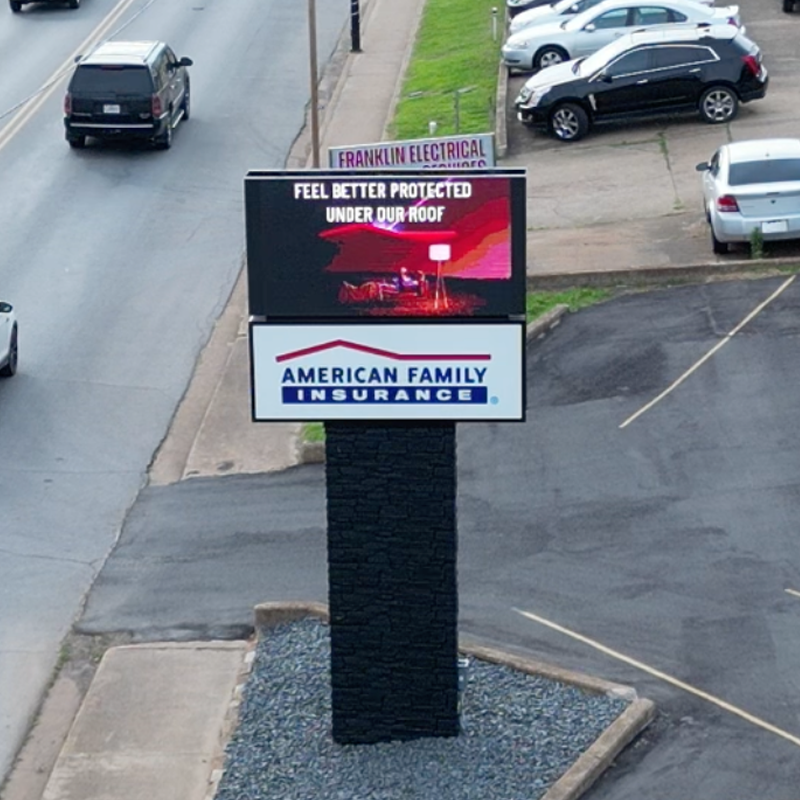
LED Signs for Professional Services featuring American Family Insurance.

Maximizing LED display visibility: brightness, pixel pitch, and scheduling best practices

LED displays only work when people can actually see—and understand—the message. This article breaks down how brightness, pixel pitch, and smart scheduling work together to improve visibility, message recall, and real-world results from your LED display investment. L An LED display has a short window to make an impression. Outdoors, that window is shaped by sunlight and viewing distance. Indoors, it’s shaped by lighting conditions and how close people are to the screen. In both cases, visibility comes down to a combination of brightness, resolution, and timing—not any single spec on its own. How Bright an Outdoor LED Display Needs to Be Outdoor LED displays have one primary challenge: staying readable in direct daylight. That’s why most outdoor signs are designed to operate in the 5,000 to 7,000 nit range. At that level, content holds its contrast and doesn’t wash out when the sun is high. Brightness also plays a role in how well messages stick. Research from Burkhart Advertising and Arbitron shows that high-brightness digital signage draws significantly more attention than static signs—up to four times as many views—and contributes to a 63% increase in brand awareness. Automatic brightness control matters just as much as peak output. A display that adjusts itself throughout the day maintains readability without becoming uncomfortable to look at at night. https://www.youtube.com/watch?v=IExQweVCd-Q Pixel Pitch and Viewing Distance Go Hand in Hand Pixel pitch is simply a measure of how tightly the LEDs are spaced. What matters is how that spacing lines up with where people are standing. For displays viewed from farther away, larger pixel pitches work well and keep costs in check. When viewers are closer, tighter spacing produces cleaner text and sharper images. A common planning guideline is to match pixel pitch to viewing distance at roughly 8 to 10 feet per millimeter of pitch. That’s why 10mm displays are common for roadside applications, while indoor screens use much tighter spacing. When pixel pitch doesn’t match the viewing environment, clarity suffers. The Digital Signage Federation has found that poorly matched pixel pitch can reduce message comprehension by as much as 45%, even when brightness is sufficient. Choosing Pixel Pitch for Indoor LED Displays Indoor environments usually call for tighter pixel spacing because viewers are closer and have more time to look at the screen. In retail, hospitality, and office settings, 2.5mm to 3.9mm is a common range that balances image quality and cost. For spaces where fine detail matters—such as boardrooms or feature video walls—1.2mm to 1.9mm delivers higher resolution at close viewing distances. The goal is to choose a pitch that fits the room and the audience, not one that exceeds what the space actually requires. Scheduling Content for Real Visibility Even with the right brightness and resolution, timing still matters. People don’t study LED displays—they glance at them. Rotating content every 6 to 10 seconds aligns with how people naturally take in information while walking or driving. Scheduling messages to match traffic patterns also improves relevance. Morning content works best in the morning. Evening promotions perform better later in the day. Studies from the Small Business Association show that dayparted digital signage can increase unplanned purchase intent by 15%, simply by showing the right message at the right time. Managing Glare and Maintaining Readability Glare is one of the most common obstacles to visibility, especially outdoors. It can be reduced through thoughtful placement, anti-glare finishes, and brightness sensors that respond to changing light conditions. Displays built with solid-state engineering also help by maintaining uniform brightness across the screen, preventing hot spots or uneven illumination that can make content harder to read. Visibility Comes from Balance Strong LED display performance doesn’t come from maximizing one specification. It comes from balancing brightness, pixel pitch, and scheduling so the display fits its environment. When those elements are aligned, messages are easier to read, easier to remember, and more effective at engaging the audience—without forcing viewers to work to understand what they’re seeing. Frequently Asked Questions on Maximizing Display Visibility OK let’s focus on things How many nits should an outdoor LED sign have? Most outdoor LED displays perform best between 5,000 and 8,000 nits, paired with automatic dimming to manage nighttime glare. What is pixel pitch and why does it matter? Pixel pitch describes the spacing between LEDs. It matters because it needs to match how far away viewers are to keep images sharp and readable. What is the ideal dwell time for a digital sign slide? Industry guidance typically places dwell time at 6–10 seconds, accounting for brief glances rather than prolonged viewing. How does dayparting improve digital signage results? Dayparting aligns content with time-of-day behavior, keeping messages relevant and increasing engagement. If you’re evaluating whether your current LED sign is still delivering the visibility and value you expect, it may be worth reviewing your options and understanding what newer systems offer. Give us a call at 888-359-9558 for expert advice on your sign update.  Request a quote
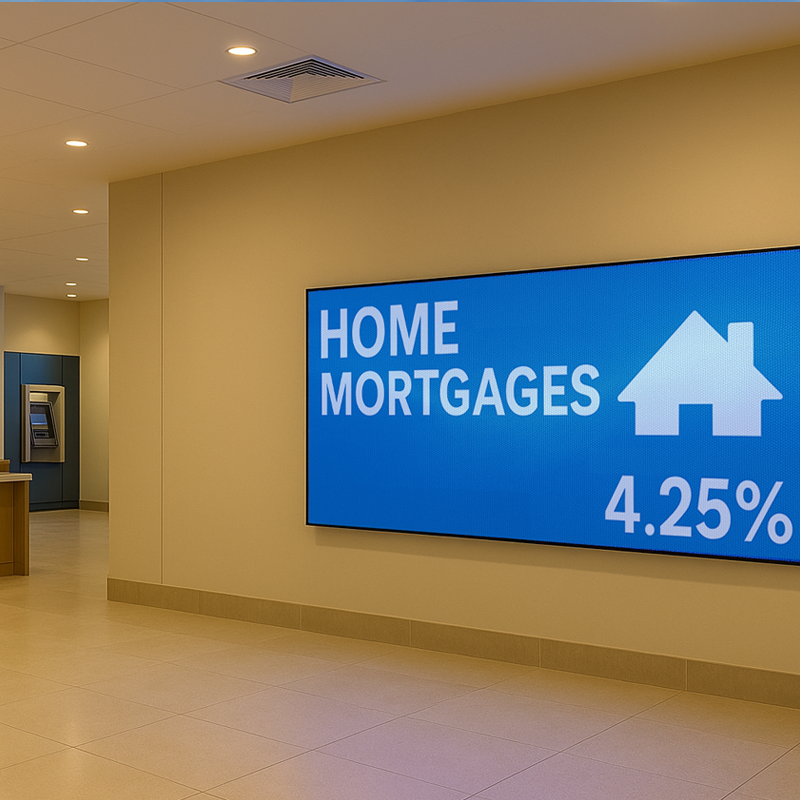
Indoor Digital Signs for Banks featuring Next LED Signs.

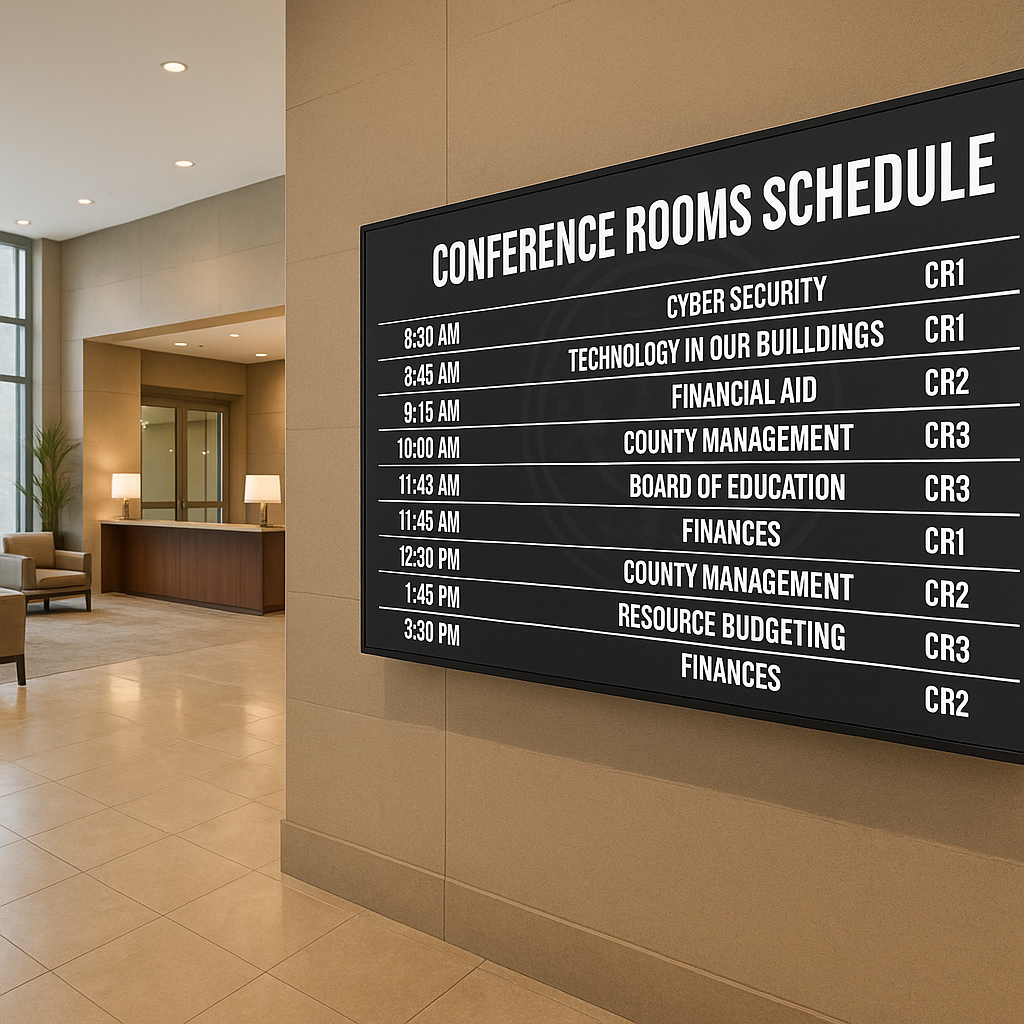
Indoor Digital Displays Improve Wayfinding Efficiency

Finding your way through a busy building can be frustrating—especially in hospitals, schools, airports, and office complexes. That’s where indoor LED displays shine. These digital signs help people navigate large spaces quickly, confidently, and without confusion. Why Wayfinding Matters Good wayfinding improves the experience for visitors and staff. It cuts down on delays, missed appointments, and the need for one-on-one directions. In places like healthcare facilities, every second counts—and clear signage helps make sure people get where they’re going on time. Plus, wayfinding signs don’t just guide—they can inform. Event schedules, emergency messages, and service alerts can all be displayed in real time. LED Displays Make It Clear Traditional signs are static. Once printed, they stay the same—unless you replace them. Digital LED displays let you update directions, schedules, or alerts instantly. Whether you need to reroute traffic due to construction or show live updates during an event, your sign can adapt. And because LED displays are bright and clear from a distance, people spot them faster and follow instructions more easily. Industry Adoption and Market Growth Education Sector 70% of colleges have integrated digital displays for wayfinding, classroom information, and event scheduling. Retail & Public Spaces Digital signage engages 10% of U.S. residents over age 12, proving its effectiveness in attracting attention. Navigation Efficiency & Customer Satisfaction Implementing digital wayfinding solutions increases navigation efficiency by 40% and enhances visitor experience by 30% in complex venues like shopping centers and healthcare facilities. Market Expansion The global digital signage market continues to expand, with an estimated CAGR of 7.7%. Revenue is projected to grow from $25.1 billion in 2022 to $34.7 billion by 2026, fueled by increasing demand for digital wayfinding solutions. Flexible for Any Facility We design indoor signs that fit right into lobbies, hallways, entry points, and more. With slim profiles, high-resolution output, and quiet operation, these displays work seamlessly in: Hospitals Convention centers Universities Museums Office buildings Transit hubs Frequently Asked Questions How do LED displays improve wayfinding?Digital signs can increase wayfinding success by over 30% compared to static signs, according to a study by the Society for Environmental Graphic Design. Clearer instructions mean fewer people getting lost or missing appointments. Can the displays be updated in real time?Yes. With cloud-based software, staff can update directions or alerts in seconds. This is especially useful for facilities with shifting schedules, emergency notices, or high foot traffic. Are LED signs easier to read than printed signs?Absolutely. LED displays are brighter and more visible from a distance. In well-lit buildings or dim corridors, digital signs maintain their clarity—reducing confusion and eye strain. Can I show more than just directions?Definitely. Many facilities display room schedules, meeting notices, safety instructions, or service updates alongside wayfinding messages. It’s a flexible, multi-use solution. Do LED wayfinding signs reduce labor or costs?They do. Digital signage reduces the need for printed signs and personal assistance. One large hospital reported a 25% drop in staff time spent redirecting patients after installing LED wayfinding displays. At Next LED Signs, we provide state-of-the-art LED signage solutions designed to meet the needs of businesses worldwide. Whether you want to enhance retail experiences, streamline public communication, or improve operational efficiency, we can help. Let’s bring your vision to life. Contact Next LED Signs today to explore cutting-edge digital signage solutions tailored to your industry.

Indoor Digital LED Signs featuring Next :ED Signs.

Indoor LED Displays Are Reshaping Workplace Communication

LEDs (Light Emitting Diodes) have skyrocketed in popularity thanks to their energy efficiency, eco-friendliness, affordability, and long lifespan. They’re the backbone of modern digital signage and scoreboards, offering businesses a reliable and impactful way to display information and attract attention.

Among the various types of LEDs, SMD (Surface Mounted Devices) and DIP (Dual Inline Package) LEDs stand out as the most common technologies. While they share the same foundational principles, they bring unique advantages to the table.

Indoor Digital LED Signs featuring YMCA of Wichita.

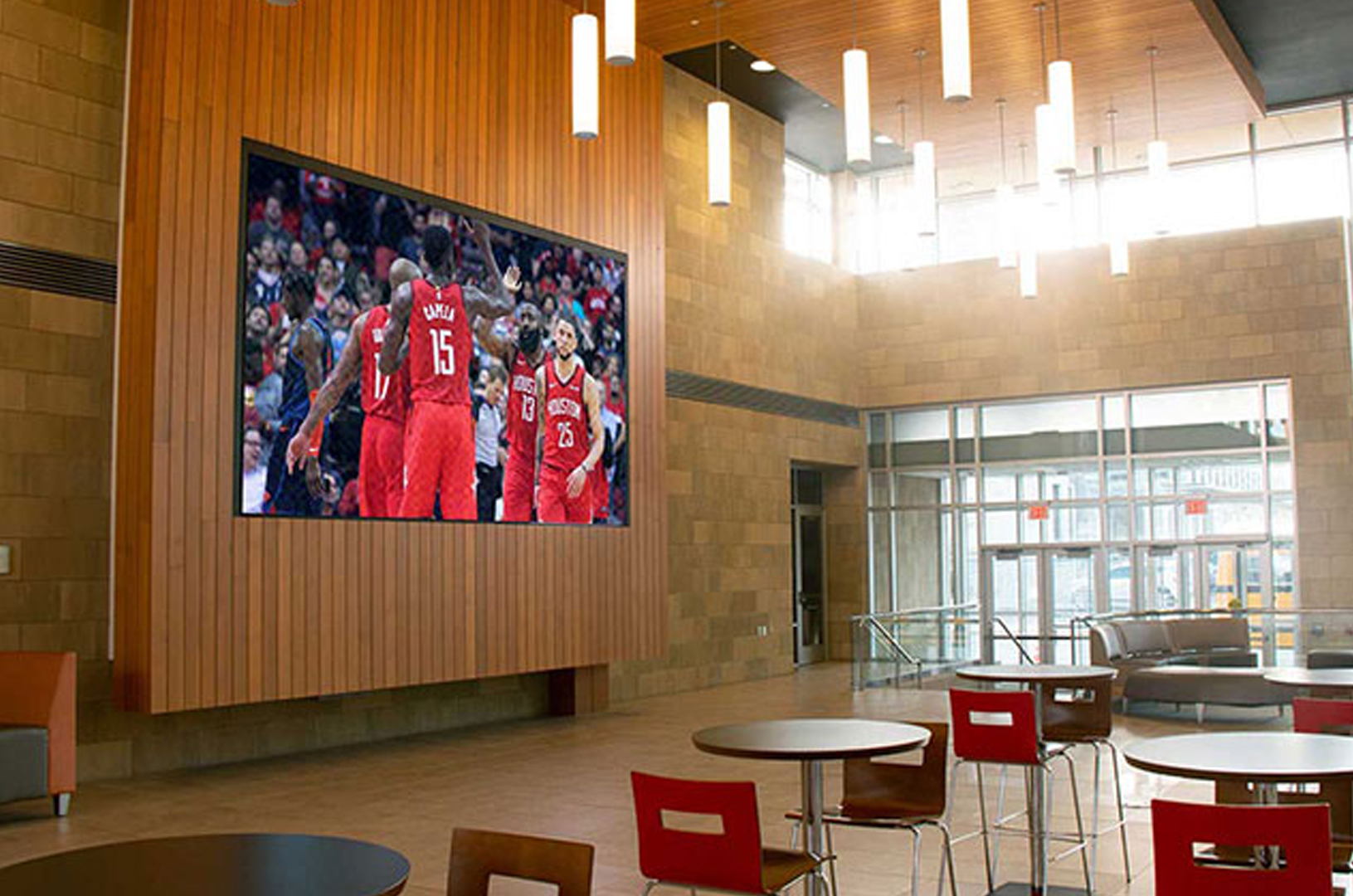
Why LED Video Walls Outshine Projection Displays in Large Venues

LEDs (Light Emitting Diodes) have skyrocketed in popularity thanks to their energy efficiency, eco-friendliness, affordability, and long lifespan. They’re the backbone of modern digital signage and scoreboards, offering businesses a reliable and impactful way to display information and attract attention.

Among the various types of LEDs, SMD (Surface Mounted Devices) and DIP (Dual Inline Package) LEDs stand out as the most common technologies. While they share the same foundational principles, they bring unique advantages to the table.

Indoor Digital Signs for Banks featuring Next LED Signs.

How to Choose the Right Indoor LED Display for Your Space

Indoor LED displays are a smart choice for businesses that want to communicate visually with impact. Whether you’re managing a lobby, retail floor, meeting space, or control room, the right LED sign makes it easier to deliver clear, eye-catching messages. But not all LED displays are created equal. To get the most out of your investment, you need to consider factors like viewing distance, pixel pitch, ambient lighting, and content needs. Let’s break it down. Why Indoor LED Displays Make Sense LED technology has quickly outpaced older options like LCD panels or projectors. Here’s why: They’re self-illuminating, so they remain bright and legible in any lighting. They’re modular, which means they scale to nearly any size or shape. They’re durable and energy-efficient, offering years of dependable service. LED signs are designed for attention. That’s why companies are using them in offices, retail stores, airports, hotels, conference centers, and even emergency command rooms. Fact: Indoor LED signs can operate for 100,000+ hours—that’s over 11 years of 24/7 use. Pixel Pitch: What It Is and Why It Matters Pixel pitch is the space between each LED diode, measured in millimeters. The lower the number, the tighter the pitch—and the sharper the image at close range. Here’s a quick reference: 0.9mm–1.5mm: Perfect for viewers within 6–10 feet (e.g., lobbies or meeting rooms) 1.5mm–2.5mm: Great for 10–20 foot distances (e.g., corridors or waiting areas) 2.5mm+: Ideal for distant viewing (e.g., indoor arenas or large halls) Tip: A tighter pitch boosts readability. In fact, when the pitch matches the viewing distance, message clarity improves by up to 70%. Ambient Light and Viewing Angles Lighting plays a big role in display performance. In well-lit spaces or areas with large windows, traditional displays often struggle with glare or washed-out images. That’s where LED shines—literally. LED screens stay bright and vibrant even in direct sunlight. They offer wider viewing angles (up to 180°), so content stays visible off-center. Stat: LED displays provide 10× better visibility in high ambient light compared to projection systems. What Will You Be Displaying? Choosing the right display isn’t just about size or brightness. You also need to think about what you’ll be showing. Detailed videos or high-res graphics? Go for a small pixel pitch with high refresh rates. Scrolling text or status updates? You can go with a higher pitch and simpler configuration. Also, if you plan to rotate different types of content throughout the day (e.g., live data, promotions, welcome messages), you’ll want a display that can handle fast transitions without flicker or lag. Benchmark: LED displays with refresh rates of 3,840 Hz or higher deliver smooth playback, even with fast-moving visuals. Efficiency and Longevity LED signs aren’t just more attractive—they’re also more cost-effective over time. They require less maintenance than LCDs or projectors. They consume 30–50% less energy thanks to modern power-saving features like auto-dimming. And they last longer, with less image degradation over time. Calculating Total Cost of Ownership It’s true—LED displays can cost more upfront. But over the life of the sign, that cost evens out. When you factor in: Reduced power usage Lower maintenance needs Longer operational life …you end up saving money in the long run. Many businesses see full ROI in 2–4 years, especially in high-visibility locations. Frequently Asked Questions About Indoor LED Displays Q: What pixel pitch is best for indoor LED displays at close viewing distances?A: For viewers within 6 to 10 feet, a pitch between 0.9mm and 1.5mm is recommended. According to recent display studies, matching pitch to proximity improves text and graphic clarity by up to 70%. Q: How do LED signs perform in bright indoor environments?A: LED displays are 10× more visible than projection screens in high ambient light. They remain vibrant even in sunlit or glass-heavy spaces, with 180° viewing angles for maximum reach. Q: What’s the difference between pixel pitch and resolution in LED displays?A: Pixel pitch is the spacing between diodes and affects how sharp the image appears at a given distance. Resolution refers to the total number of pixels. Smaller pixel pitch often means higher resolution per square foot. Q: Are indoor LED signs energy efficient?A: Yes. Indoor LED signs use 30–50% less energy than traditional LCDs or projectors. Most commercial-grade units feature built-in auto-brightness controls to minimize energy waste. Q: How long does a commercial indoor LED display last?A: Most indoor LED signs are rated for 100,000 hours of operation. That’s equivalent to over 11 years of continuous use—making them a reliable long-term asset. Why NEXT LED Signs Is the Right Choice for Indoor LED Displays At NEXT LED Signs, our indoor LED displays  deliver unmatched clarity, reliability, and performance. Whether you need a high-resolution video wall for your corporate lobby or a dynamic message board for a retail space, our team will help you choose the right pixel pitch, size, and configuration to match your environment. Every display we build is engineered for long-term operation, with low energy use and seamless integration. From planning to installation and ongoing support, we’re here to make sure your indoor LED display works exactly how—and where—you need it to.

How to Choose the Right Mounting Options for Your LED Sign

Your Digital Sign Isn’t Just a Screen—It’s Your Brand in Motion

When people talk about branding, they usually mean logos, websites, or maybe uniforms. But the thing that most people see first? That sign outside your building. Or the LED screen by your entryway. And if it’s bland, outdated, or inconsistent with the rest of your brand? That disconnect doesn’t go unnoticed. Your digital signage isn’t just a way to get noticed—it’s how people get to know you. The First Impression People Actually Notice Let’s be honest. People are busy. They’re walking past your storefront, driving by your church, or dropping their kid off at school—and they’re deciding in seconds whether you feel trustworthy, modern, or worth a second look. A bright, clear, and on-brand digital sign does what no poster or banner ever could: it gives your message motion, relevance, and presence. Stat: Digital signs capture 400% more views than static signage—and increase message retention by up to 83%. https://www.youtube.com/watch?v=QyKhlkgn-bY Consistency Builds Credibility Your font. Your colors. The tone of your messaging. These things aren’t small—they’re what makes your brand feel like you. When your digital sign echoes your visual identity—matching your website, logo, and voice—you create a sense of cohesion that builds credibility and trust. That goes for a local bakery just as much as a bank or school district. And with LED signs, staying consistent doesn’t mean staying stuck. You can change your message without changing your look. Relevance Is Real-Time Static signs age fast. Weather changes. Offers end. Events pass. With digital signage, you’re not locked into yesterday’s message. You can promote an event in the morning, thank attendees by afternoon, and push a special offer before dinner. And it’s not just about marketing—it’s about feeling present. When people see updated content, it tells them you’re paying attention. Fact: Businesses that use real-time content see a 33% increase in audience engagement. Great Signage Creates Emotional Connection People don’t remember “open 9–5.” They remember feeling included. A great LED sign doesn’t just inform—it creates connection. Highlight a student of the week. Celebrate a team win. Post a thank-you to veterans. Promote a local blood drive. These moments show your community that you see them. And when your sign does that consistently, people start associating your brand with more than just a product or service—they see heart. Brand Presence, Not Just Promotion This isn’t about being flashy. It’s about being intentional. LED signs let you express your values and your mission in ways a logo alone never could. Whether you’re sharing safety tips, weather alerts, or celebrating a milestone, your sign becomes a living part of how people experience your brand. Not just what you say—but how you say it, where you say it, and when. Digital Signs as Brand Ambassadors Your LED signs do more than promote—they embody your brand’s identity. By investing in professional digital signage content, you transform physical spaces into vibrant brand ambassadors, create stronger audience connections, and build a more recognizable, impactful presence. With the right strategy, your digital signage becomes an indispensable tool for long-term brand success. White-Glove Simplicity: Why Digital Signage Shouldn’t Feel Like Buying a Server Rack Feeling overwhelmed by digital signage options? You’re not alone. Most small business owners and city departments are handed spec sheets, voltage charts, and software manuals when they just want one thing: a sign that works and doesn’t become a full-time job. That’s where we come in. At Next LED Signs, we believe the buying and owning process should feel like ordering from a great restaurant: You know what you’re getting You trust it’ll be good And you don’t have to step into the kitchen Our white-glove process means: You get one point of contact, no jargon. And when it’s up? You’re supported without endless upsells Digital signage should be exciting, not exhausting. Our clients say things like: “That’s it? I thought this would be way harder.” And honestly, we like hearing that. Let us take the stress out of visibility. You run your business—we’ll light it up. FAQs: Making Digital Signs Work as Brand Extensions Q: Can a digital sign really make that big of a difference in brand perception?A: Yes. Signage is often the first branded experience someone has with your organization. Studies show that consistent brand presentation—especially across digital touchpoints—can increase revenue by up to 23%. Q: How does a digital sign help reinforce branding?A: When your sign reflects your brand’s colors, voice, and design style, it reinforces everything you’ve built elsewhere. It becomes a seamless extension of your website, social media, and physical space. Q: Do real-time updates actually matter to viewers?A: Absolutely. Businesses using real-time updates on digital signs see a 33% boost in engagement, especially when content is time-sensitive or community-focused. Q: What types of content work best for brand consistency?A: Community messaging, brand-aligned quotes, real-time updates, testimonials, team highlights, and holiday messages all help reinforce brand values and tone. Q: How long does a digital LED sign typically last?A: Most commercial LED signs are rated for 100,000 hours—that’s over 11 years of 24/7 operation. Why Choose NEXT LED Signs? We don’t just sell LED displays. We help you turn them into branded experiences that work. From design to installation to long-term support, our team is here to make sure your sign reflects who you are—and why you matter.Contact us today or give us a call to get started.

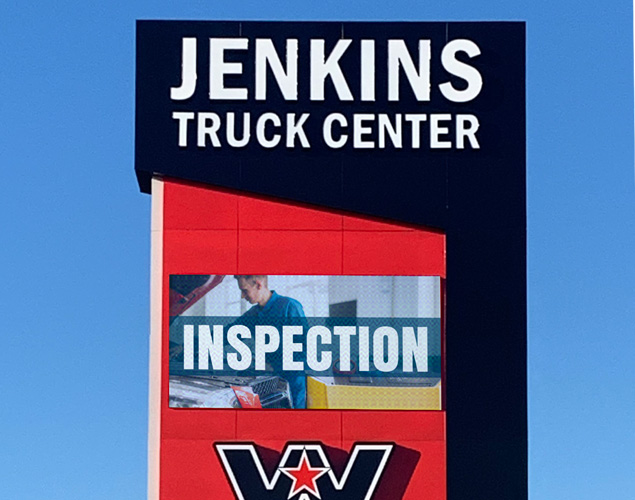
ONYX outdoor LED sign at Jenkins Truck Stop in Springfield, MO.

Drive Auto Sales with High-Impact LED Signs and Digital Displays

Attract more customers, boost visibility, and increase your dealership’s sales with high-quality LED signs and digital displays from Next LED Signs. Whether you’re showcasing new inventory, advertising limited-time offers, or simply looking to stand out, our cutting-edge digital signage is the perfect solution to help your auto dealership thrive.

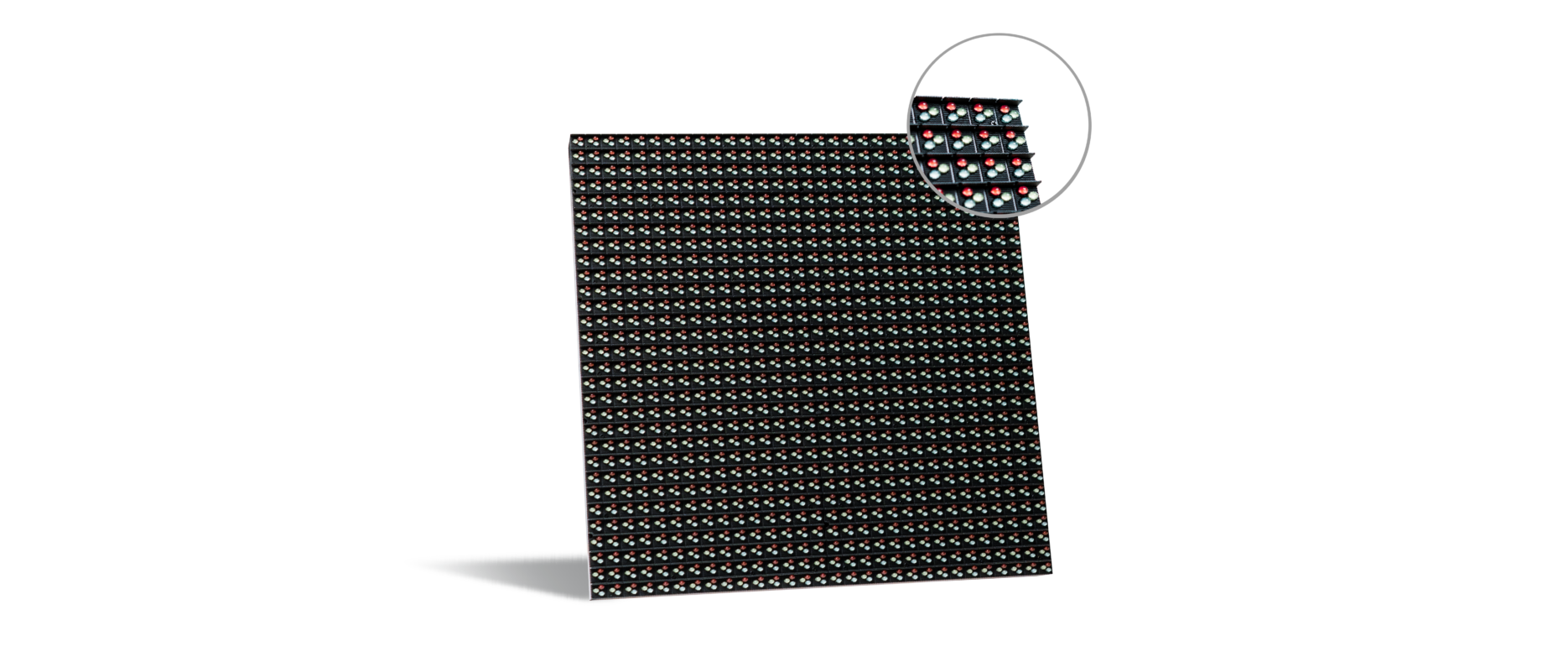
ONYX 10 mm Module Photos

Understanding Pixel Pitch and Pixel Matrix in LED Signs

Investing in LED signs is one of the best ways to make your business stand out. But before you commit to a display, understanding a few technical terms—pixel pitch and pixel matrix—is crucial to ensure you get the right solution. These two factors play a key role in the image quality, clarity, and overall performance of your digital sign.

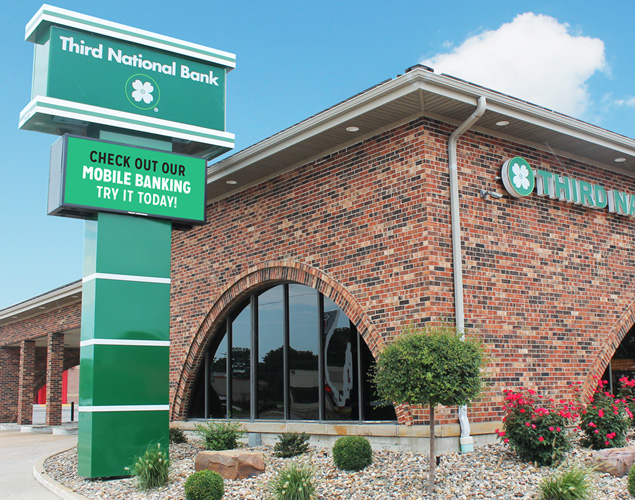
FLEX outdoor LED sign at Third National Bank in Sedalia, MO.

The Importance of Color Calibration in LED Signs

LED signs are essential tools for businesses and organizations aiming to capture attention and communicate effectively. However, their effectiveness depends on one critical factor: color calibration.